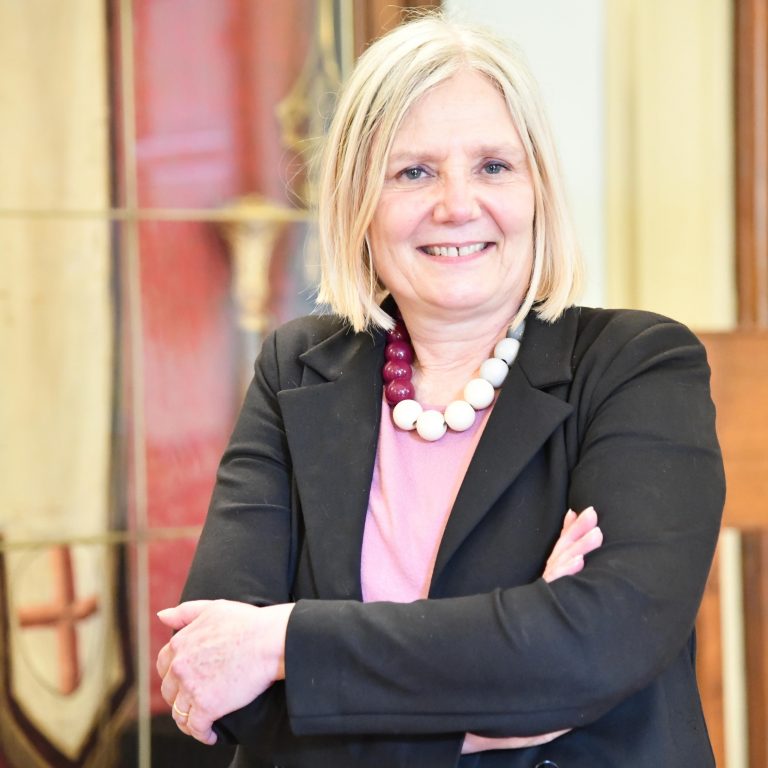
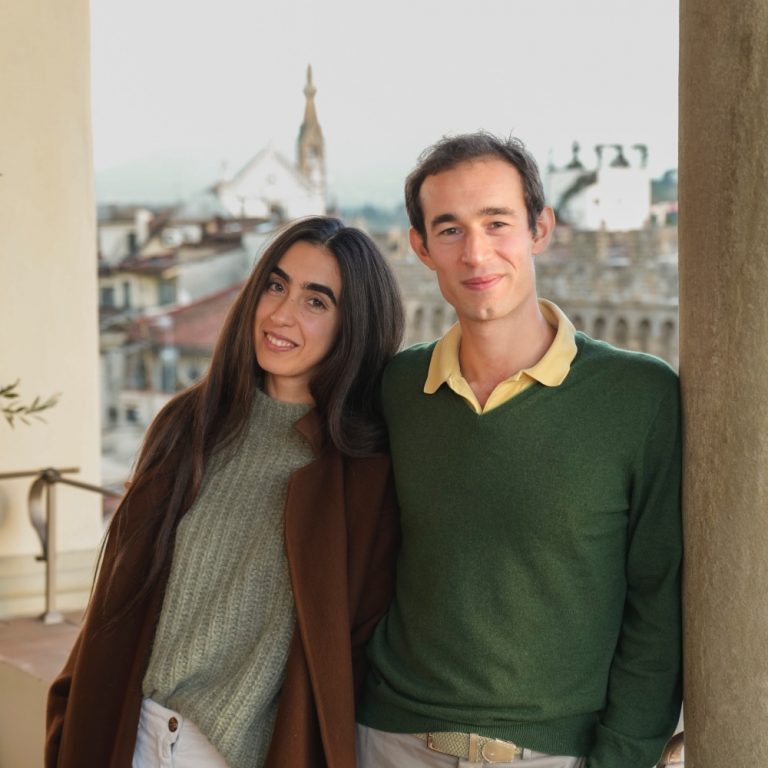
A longtime resident in Florence, Giampiero Gallo has a very busy career as professor of economics, which has given him the opportunity to live and work in many different cities across Europe and the United States. Married, with two children, he has lived in Florence since coming here to study at the University of Florence, where he received a degree in economics, summa cum laude, in 1982. After earning a Ph.D. in economics from the University of Pennsylvania in Philadelphia, with a specialization in econometrics and international economics, he has taught at universities in Europe and did research for institutions as varied as the World Bank in Washington, DC; the Bank of Italy in Rome; the United Nations; and the Tuscan Region. Passionate about traveling on two wheels, he is also a city council member in Florence mayor Matteo Renzi's majority group and commissioner for Bicycle-related Policies of the City of Florence. TF spoke to Gallo about the present and future of cycling in the city.
We hear there's a new and improved cycling service in Florence, Mille e una bici ('A thousand and one bikes').
First, it is important to note that the service offered in Florence is not a bike-sharing one, like those you'd find in other European and Italian cities, but a rental service, which has only six pick-up points. So thinking that what we have now is a bike-sharing scheme is a mistake most make. With Mille e una bici, we've expanded the number of rental points from the original ones at the station in Santa Maria Novella, piazza Santa Croce and piazza Sant'Ambrogio to three more points: at the train stations of Rifredi, Campo di Marte, and Leopolda.
Mille e una bici builds on the existing rental service, managed by the Cooperativa Ulisse, and aims to improve it. For example, I've asked Ulisse to ensure regular opening hours, improve their customer service and start renting better bikes. So far, it has replaced the old bikes; there are now 250 new ones. Ulisse will also offer on its website, www.cooperativaulisse.it, a section where renters can track in real time what bikes are available at which rental stations.
Who uses the bike rental service? How popular is it?
The service rents about 15,000 bikes every year, a sizable amount for a city like Florence. In the warmer months, we reach about 1,500 to 2,000 rentals a month. More than half of renters are commuters and residents who use the bikes for the entire day, some every day of the week. We know this because commuters and residents pay a reduced fee, and we can account for them. Tourists make up the difference. Conversely, bike-sharing schemes like those in other cities are intended for those who take the bike for a half an hour, which is free; after that, prices increase considerably, so if you need it for the entire day, it is no longer cost-effective. With the rental service, you can use the bike for one euro a day on average.
I hear the bike rental also gives a second chance to the disadvantaged. Who works for the Ulisse cooperative?
Cooperativa Ulisse is a ‘social cooperative' that provides work and skill-building opportunities to those who have some kind of social difficulty and are disadvantaged. Ulisse has repair workshops in Florence's Solliciano prison and the city's youth detention centre, as well as at a former convent near Porta Romana, in via Giano della Bella, where old bikes are repaired and then sold. The project provides job skills to people who are in jail so they have alternatives when they are released. There are about a dozen inmates involved, between Solliciano and the youth jail. We like this idea: providing a service to the city and at the same time addressing social issues. It also gives us a chance to have the cooperative learn the city's cycling habits.
Rome implemented its bike-sharing program in 2007 and Milan followed soon thereafter. Why has it taken so long to start a bike-sharing scheme here in Florence?
Rome's scheme did not work because of maintenance issues: the bikes were being vandalized, broken and stolen, but they weren't being repaired or replaced fast enough. We've waited because we want to get it right the first time. The damage to image is something that we in Florence are very cautious about: if you're not successful, you not only waste funding but you are severely penalized in the eyes of residents. Bike sharing is not a trial-and-error kind of thing. For example, even Milan had opened tender twice before getting it right.
What most cities in Italy realized was that maintaining a bike-sharing service is actually more expensive than the initial investment. To give you an idea of what it would cost for Florence: Each bike of the type that was adopted in Paris or Barcelona costs 2,000-2,500 euro, which includes the construction and proper operation of the pick-up points, technology and so forth. The ongoing rate to set up a similar bike-sharing scheme in Florence is about 1.5 million euro for 750 bikes and 50 stations that would cover the entire historic centre (that density of stations is needed because successful bike-sharing schemes have pick-up points no more than 300 meters apart). Maintenance and personnel costs are estimated at 1.5 to 2 million per year. We would need a maintenance facility in the city centre, too, and that gets complicated with all of the city's historical monuments and the Sovraintendenza.
We have already started the process, identifying 50 stations so far, all inside the viali. We have designed a network that will extend to piazza Alberti, to service the parking lot there; Campo di Marte; and the Statuto station. We will use ad revenue to finance Florence's future bike-sharing schemes. As you can see, the process is quite complicated, but we are working on it.
What else are you working on for the future?
We want to promote cycling in the northwest corner of Florence, in the Novoli area, which will soon attract more and more people. There will be about 4,000 more commuters every day, with the new courthouse; the new Economics, Law & Politics Faculty of the University of Florence attracts somewhere between 4,000 and 5,000 students, professors and staff; GE, Mulitplex and offices of the Tuscan Region are also there. It is an area that has a lot of potential for changing habits. If we provide good, safe ways for reaching places by bike, then people will think it is the normal thing to do, rather than take the car.
How long do you think it will take to connect the city's bike paths?
Several infrastructure projects must be completed first, including the new Foster station and high-speed train line, as well as the two remaining Tramvia lines. This means a lot of disruption in traffic in the near future. We need to wait for these to be finished before we can connect the bike paths. In the meantime, we need to convince residents that going to work by bike is the best option. We also need businesses to start providing amenities that encourage their employees to cycle to work, like showers and other services. We have to change people's mentality, and that will take time.
Are more bike racks in the city centre in the works?
We now have 14,000 parking spots for bikes in Florence. We estimate that 2,000 spots are filled with abandoned bikes. We want to extend the network of racks, giving priority to areas in front of schools, cinemas and workplaces.
The city of Florence has also recently participated in The Times' Cities Fit for Cycling campaign. What's the campaign's main aim and how does Florence fit?
It was launched in the United Kingdom and picked up by the Federazione Italiana Amici della Bici (http://fiab-onlus.it). It's an eight-point manifesto on making cities safer for cyclists. One major concern is the blind spots of drivers of buses and large trucks, which can be dangerous for cyclists, and the campaign wants to force truckers to get sensors. In the end, however, the campaign doesn't add much to what we are already doing in Florence. We know that we need to raise awareness and that we need more infrastructure for cyclists. Florence has about 60 km of bike paths, which is above average for a city of its size. The problem is that few paths are connected to one another. Unsurprisingly, the places where paths are unconnected are the most difficult because of traffic patterns and geographic location. One of our main aims is closing the network because safety is provided by continuity. As I said earlier, I also want to extend the paths in the northwest because a lot of people could then commute to work by bike.
In any city, a bike is convenient if the total distance travelled is below 5km. Measure 5km in Florence and you've covered most of the city. It is comparative in terms of distance and time, and in the end, it is good for your health. Biking from my classroom in Novoli to Palazzo Vecchio takes me 17 minutes; there's no way I could do that by car or bus.
Another safety issue that I am particularly worried about is the lack of lights on bikes at night. Although it is a law that cyclists ride with lights on their bikes at night, few use them.
About 90 percent of cyclists in the city go around without lights. Not only are they in danger but they are posing a danger to others because they can't be seen.
As a pedestrian, I am at the bottom of the transit food chain, often nearly sideswiped by motor vehicles, scooters and cyclists. Is there anything in the works for a ‘good manners guide' for cyclists in the city?
Nothing of the sort exists yet, but I do want to set up a website where all cyclists in Florence can find news about cycling in the city, for example, road works, the temporary removal of bikes left at racks, new cycling paths, initiatives and events. What people do not understand is that they have to share the road, and this means motorists, cyclists, scooters and pedestrians alike. In the meantime, to find a set of rules for cyclists, see Firenze in Bici, www.firenzeinbici.net [in Italian].
What services or new bike paths for the 2013 championships will then be used by locals?
We just formed a local committee headed by vice mayor Dario Nardella. I think it's a good occasion to put the spotlight on cycling, not as a sports event, but also as an everyday activity and way to get around. I think the training paths built for the championships can be turned into cycling paths, so we have make sure they are in areas in which paths are needed. We want to hold fun events during the championships, like an acrobatics competition for MBX bikes and a bike-messenger competition that would also showcase our local messengers, like Ecopony and Bartolini, in addition to other events.
During those two weeks [late September 2013; see TF 129], the city will literally shut down because every race will be ending in Florence and there is no way that motor traffic will be allowed. The championships in Copenhagen turned into a big party and we want to create the same kind of energy.