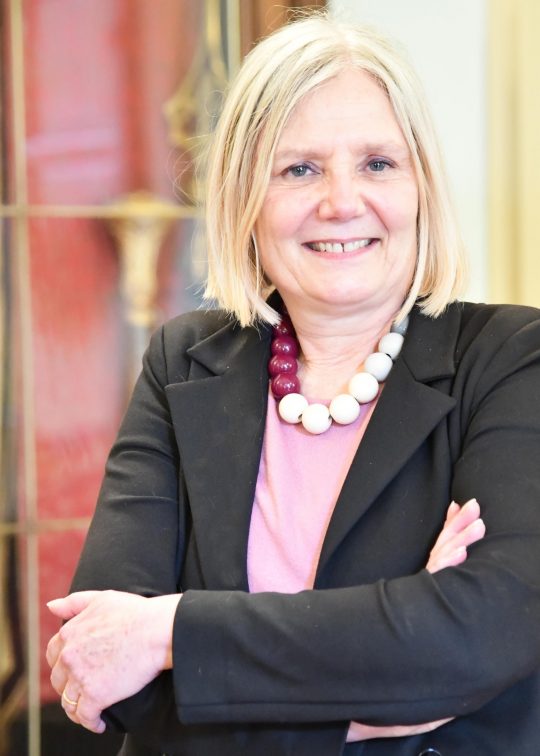
Angelika Stepken
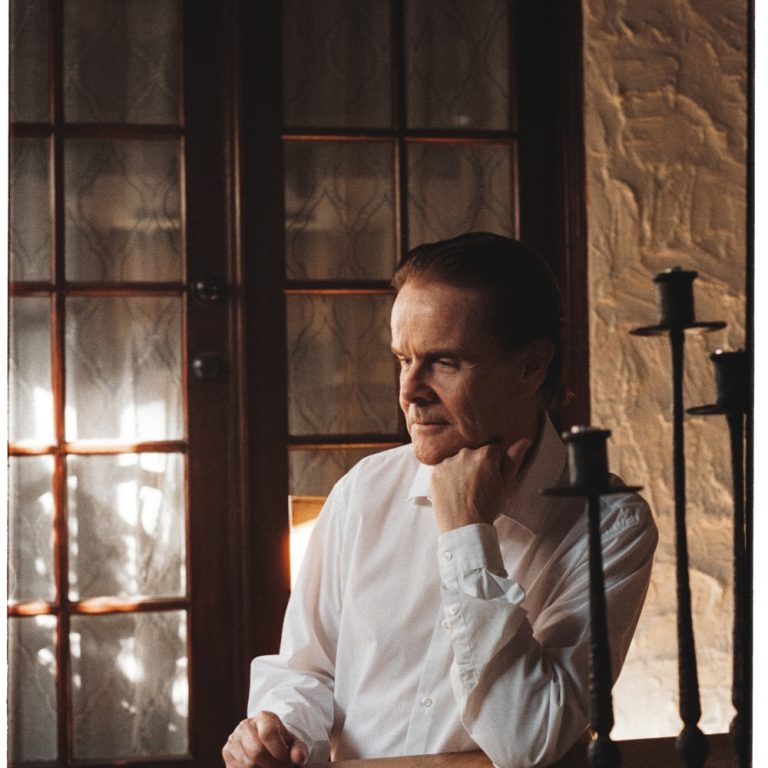
For more than a century, Villa Romana has been the Florence base for artists visiting from Germany. Often still early in their careers, these artists are recipients of the Villa's annual fellowship, the Premio. From their creative presence comes the atmosphere of experiment, production and imaginative reserve that pervades the nineteenth-century hillside mansion on via Senese. Many observers now regard the Villa as the most informative venue in Florence for advanced, new international visual art. Its public gallery organises regular exhibitions and the current show brings together four artists from Italy, Germany and Denmark who respond, through installation, film and collage, to the enquiring spirit that animates work by Ketty La Rocca, the quietly influential Florentine artist who died in 1976 at age 37. As TF discovered on meeting Villa director Angelika Stepken, the exchange between artists from different backgrounds is key to the Villa's role.
How did Villa Romana become a German cultural institute?
Around 1900, knowledge of Italy was still considered as essential to training artists because of its classical tradition. New national states like Germany established academies in this country but, at the same time, a movement among artists developed to organise their activities separate from the state system. Villa Romana is a product of that second course. It was set up in 1905 by artists, chief among them was Max Klinger. With help from private supporters, he bought the Villa to create a house that artists could visit in order to work in these special surroundings.
Is it still a private foundation?
Yes, but one that is open to the public. The Villa has been fortunate to have received support from the Deutsche Bank since the 1920s. The German federal government gives funds and Siemens is sponsoring our music programme for three years. In the past, it was quite a private place with few public events and lively parties. Now the Villa has regular opening hours with free admission. There is usually a show to see, and often a concert or another arts event to attend.
You arrived at Villa Romana in November 2006. What was the attraction for you of it?
The opportunity to bring about a fresh start. My predecessor had been director for 34 years and the role of the Villa had become quite undefined. Also, a house for artists is a special place. I like to talk to artists, to watch and ask questions, so this appointment appealed to me. Villa Romana gives a social setting to art but, above all, production and reflection come first; everything else follows.
What is your background? You grew up in Germany.
I come from the city of Moers, near Düsseldorf. When I was 18, I left for Berlin to study art history, philosophy and political science at the Free University. But before I could complete my degree I'd started writing about art for the city's evening newspaper. So I became an art critic and reportage journalist, and after two years, went freelance. I liked the position: I discovered contemporary art and how to pose questions. However, before the Wall came down West Berlin was a small, slow city compared to today's vibrant capital.
You worked in German museums before coming to Italy?
Yes, but before that I worked as an independent curator, organising my first exhibition in 1987. As well as Germany, I've worked in China, Turkey and Scandinavia. In Lodz in Poland, I put together a show that looked at the relevance of western artistic traditions in the wake of that country's recent experience of communism. I had avoided on purpose working within institutions and opened my own space. I called it a ‘museum'-ironically as it was tiny, only 18 square meters. Its theme was to make visible the process of creating exhibitions, and it allowed artists and visitors to examine ideas of what a museum could be.
Then you became a museum director. What had changed?
With unification, state support for the arts declined and a freelance existence became precarious. I decided to try my approach, which encourages discussion, in a public gallery. So, for eight years from 1998, I was director of a beautiful, classical space, the Badische Kunstverein in Karlsruhe. We worked with artists from Germany and abroad on one-person and ambitious thematic exhibitions. For example, we introduced a year-long project, divided into what we called ‘chapters,' that asked about the impact artistic experimentation had on the changed social dynamic accompanying the new spirit of capitalism after 1968.
The Villa's activity has always been centred on the Premio. Past winners include major figures in the last century's avant-garde, such as Max Beckman, Käthe Kollwitz, Georg Baselitz and Martin Kippenberger. Today the prize is no longer restricted to German artists?
The artists considered for the Premio must live in Germany, but they can be any nationality. The quality of their work is paramount. A jury comprising an artist and a curator or writer proposes artists who can do well in this environment. Together we discuss the candidates and award four fellowships each year. The artists stay for 10 months, receiving a stipend, accommodation and a studio. An exhibition introduces them when they arrive but after that we make no particular requirement. Instead, we offer them time, which is increasingly rare in today's fast-moving art world. Time to work, reflect, meet interesting people and make discoveries.
Is Florence a sympathetic setting for contemporary artists?
It is a challenge, which artists accept in different ways. All talk about the encounter with history; it is ever-present but individual responses vary greatly. Artists can engage with the city or not. After all, Florence is not only its museums but also about tourism, interesting science and education. It provides a good base for moving around Italy, to tap into its mood, history and Mediterranean culture. There is a reason for being in this highly informed region that is not confined to Florence.
The annual fellows are not the only artists invited to the Villa.
Guest artists also visit for two or three months, from locations outside northern Europe, such as Tirana, Beirut and Cairo. This is an aspect I want to develop. At the Villa, artists with different backgrounds and heritage mix together, making some very promising exchanges and connections. In this way, Florence can be a meeting point between Germans and artists from the southern and southeastern Mediterranean.
Is this encounter between cultures echoed by the exhibition programme?
Our exhibitions communicate with the public while the fellowships are naturally more private. But the two are often linked. Eleni Kamma, a guest artist in 2010-11, returns this year with an exhibition examining spectacle and speculation. Our shows often look at Italian figures or locations through the eyes of a foreign artist. Last year, Singapore artist Ming Wong, who works in Berlin, showed his film inspired by Pasolini's movie Theorem, while Aglaia Konrad focused her project on Carrara's marble quarry. Later this year we will show Albanian artists and magical paintings by German and Polish artists responding to the Renaissance master, Pontormo. As you can see, the scope of exhibitions is wide, geographically and technically, and we try to link up different levels of reality in Florence or deal with its history and future.
You recently added to the original building.
We needed a place to talk and think. Although the Villa has 40 rooms, there was no open space for a lecture or concert. The solution to both budgetary and building restrictions was a pavilion located among the cypress, olive and fruit trees in the 1.5 hectare garden surrounding the house. A generous private donation enabled us to commission Avatar, a young Florentine architectural practice. Their imaginative design is ecology-based, using ordinary wood pallets for the wall structure. Because we work with theatre, film and music as well as artists, and because the arts today are not limited to categories, the pavilion provides a good platform for performers and audiences to interrelate.
What differences do you see between the art worlds of Germany and Italy?
By comparison with Germany, it is harder to interpret the priorities of the Italian art system; communication is on a more private level. Galleries come and go and cultural politics do not take a long view, which can cause problems for artists and those who work with them. There are certainly advantages in not having the overdeveloped institutions common elsewhere in Europe and America, but certain structures are needed. These are absent in Italy, where responsibility for the public and an interest in its welfare and space are not central to the system. This attitude extends through many relationships because personal interest is on a different level than in Germany.