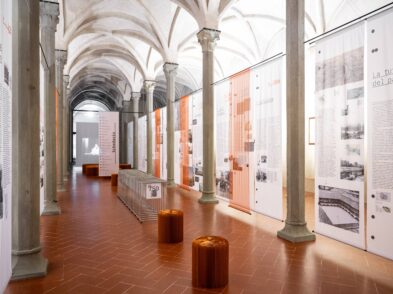
On November 4, 1966, the Arno burst its banks, sweeping mud and water through Florence’s streets, homes, churches, libraries and museums. Thousands of artworks and priceless books were damaged, and the city faced the monumental task of recovering from one of the worst disasters in its modern history. Sixty years later, Florence is commemorating the alluvione with a programme of exhibitions, performances, conferences and educational initiatives that looks beyond the destruction to celebrate the extraordinary solidarity that followed. From the international volunteers known as the Mud Angels to the scientists and restorers who pioneered new techniques for saving damaged masterpieces, the anniversary honours those who helped Florence recover while asking how its cultural heritage can be protected from future disasters.
For the official calendar of events, visit www.firenze2026.it.
Official commemorations
The city’s anniversary commemorations will take place on November 4. A solemn Mass will be held at the Basilica of Santa Croce, followed by a procession to the Arno River and a presentation dedicated to the Mud Angels by the Italian President, Sergio Mattarella, in the Salone dei Cinquecento (by invitation only). A virtual exhibition of David Lees’ photographs of the flood will be held from 10am to 7pm in the Sala d’Arme at the Palazzo Vecchio.
Tours
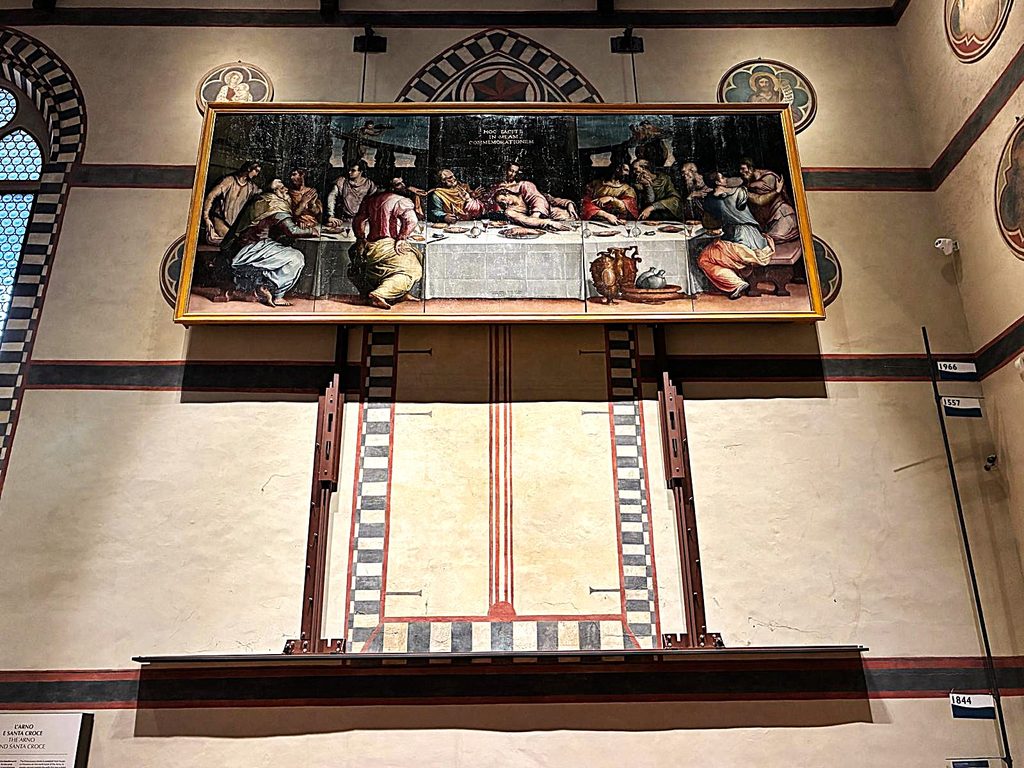
Opera di Santa Croce is organizing special guided tours titled Dramma e rinascita: l’Arno e Santa Croce (Tragedy and Rebirth: the Arno and Santa Croce), taking place on Saturday, November 14 and 21 (first tour at 2.15pm, second tour at 4pm). The tour follows the traces of the destruction left by the 1966 flood as well as the development in art restoration that emerged in the aftermath. Tours can be booked at santacroceopera.it. On the morning of November 5, students from the Alberti–Dante Institute will lead educational tours titled Santa Croce e l’alluvione (Santa Croce and the Flood).
Music, culture and international friendship
More than 70 Rhode Islanders will be travelling to Florence for Rising from the Arno, running from November 1 to 8. Highlights include an opera performance featuring principal soloists from the Accademia del Maggio Musicale Fiorentino at Teatro Niccolini on November 3; a children’s chorus at the Basilica of Santo Spirito on November 5; and Mozart’s Requiem at the Basilica of Santa Croce on November 7, performed by musicians from the Rhode Island Philharmonic Orchestra alongside the Orchestra del Maggio Musicale Fiorentino. A roundtable bringing together business leaders from Rhode Island and Tuscany will explore opportunities for future cultural and commercial collaboration, extending the anniversary’s focus on the enduring relationships forged through the international response.
Remembering the Mud Angels
On November 5 and 6, Mud Angels Legacy: Generations of Students Serving Florence is coordinated by the University of Florence and participating American universities: California State University, Florida State University, Gonzaga University in Florence, Smith College and Syracuse University. The programme combines educational activities with reflections on how the spirit of volunteerism born in 1966 continues to shape the relationship between the universities and the city.
Franco Zeffirelli and the international response
In the immediate aftermath of the flood, Florentine filmmaker and theatre director Franco Zeffirelli set out to document the devastation and bring Florence’s plight to an international audience. On November 4, he enlisted his friend Furio Colombo, then a RAI correspondent in the United States, to help produce a documentary. Created at remarkable speed, Per Firenze was broadcast by RAI on November 23, just 19 days after the disaster. Actor Richard Burton narrated both the Italian and English versions, helping the film reach audiences worldwide and rally support for the city’s recovery. These efforts are revisited in Florence: Days of Destruction, an exhibition at the Zeffirelli Museum from November 4 to 29. Through photographs taken by Zeffirelli in the hours after the flood, correspondence, letters from artists and cultural figures, press coverage and original documents relating to the film, the exhibition traces how his response helped turn Florence’s tragedy into an international campaign of solidarity. Screenings of Per Firenze offer visitors the opportunity to revisit this powerful record of the disaster and the worldwide response it inspired. Open Tuesday to Sunday, 10am–6pm. Included with museum admission.
The science behind saving masterpieces
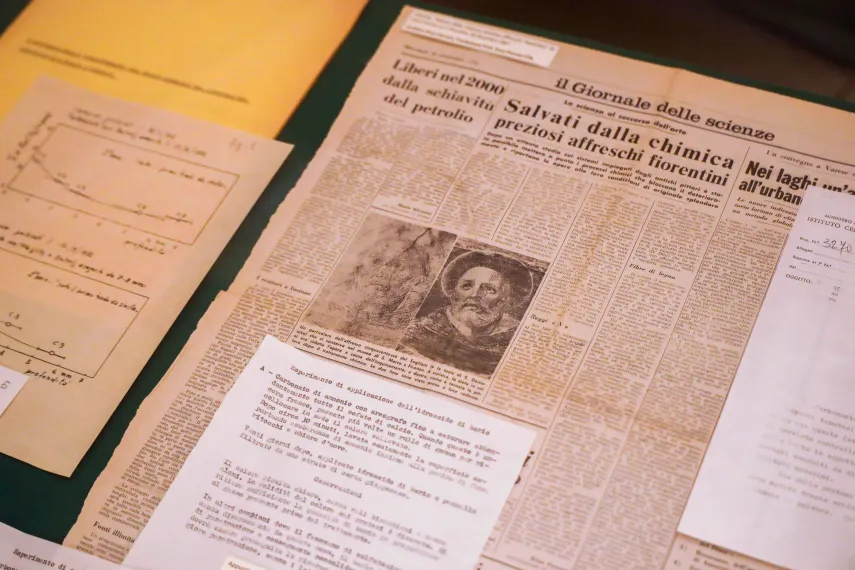
The flood also transformed the science of art conservation, prompting researchers and restorers to develop new approaches to works damaged by water, mud and chemical contamination. An exhibition at the Municipal Historical Archive, running until November 7, explores the contribution of Florentine chemist Enzo Ferroni, whose research helped establish new scientific methods for restoring damaged artworks. Titled Dalle carte dell’Archivio Enzo Ferroni: l’alluvione e il restauro delle opere d’arte. La “generosa collaborazione” di un chimico visionario, the exhibition draws on documents, photographs, correspondence, research notes and scientific materials to trace the development of Ferroni’s work. A professor of physical chemistry at the University of Florence, where he later served as rector from 1976 to 1979, Ferroni collaborated with fresco restorer Dino Dini to develop the Ferroni-Dini method, which advanced the conservation of mural paintings. Featured works include Taddeo Gaddi’s Last Supper in the refectory of the Basilica of Santa Croce and paintings by Beato Angelico at San Marco. The exhibition highlights how the crisis brought scientists, art historians and restorers together, helping establish a more rigorous, scientific approach to conservation. Techniques developed in Florence after the flood continue to influence the field internationally.
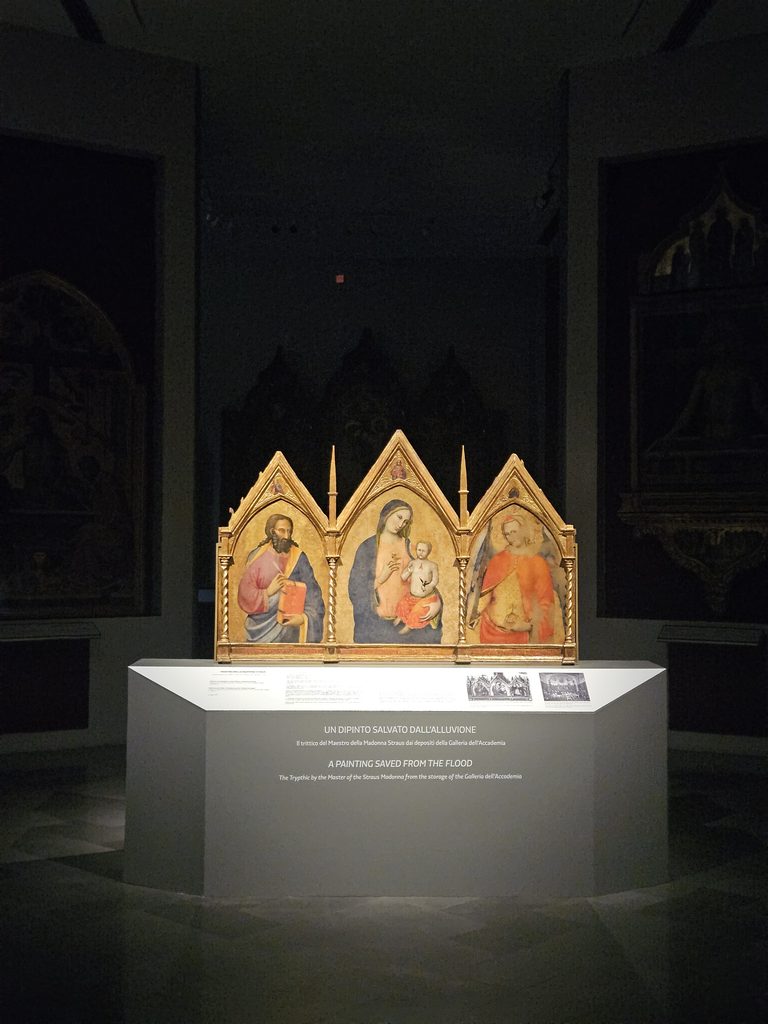
Another story of recovery is being brought back into focus at the Galleria dell’Accademia di Firenze, which is displaying a triptych by the Master of the Straus Madonna, an anonymous Florentine painter active between the late 14th and early 15th centuries. Dating to around 1380–85, the Madonna and Child with Saints Matthew and Michael the Archangel was severely damaged when floodwaters reached the Oratory of Santa Maria Vergine della Croce al Tempio, where it was housed in 1966. The painted surface and gilded background were restored in workshops at the Fortezza da Basso, and the work was subsequently presented at the 1972 exhibition Firenze restaura. Normally kept in storage, the triptych is on display in the Accademia’s Late Gothic painting rooms, accompanied by historical photographs documenting the damage and restoration process. The exhibition runs until January 31, 2027.
Unseen photographs of a city in the mud
A different perspective on the disaster emerges in Con la bici nel fango. Fotografie inedite dell’Alluvione dalla donazione Carlo Balleggi, an exhibition of previously unpublished photographs donated to the Florence Flood Documentation Centre (CEDAF) in 2018. It opens on November 3 at the University of Florence’s Humanities Library in piazza Brunelleschi. Balleggi was 24 when the flood struck. In the days that followed, he cycled through the city centre on his way to the offices of TWA in piazza Santa Trinita, where he helped clear premises damaged by the water. His bicycle allowed him to stop whenever a scene caught his attention, producing an impromptu photographic record of a city struggling to recover. The exhibition runs until December 31 during library opening hours. A presentation is scheduled for the afternoon of November 3, accompanied by a video interview with Balleggi. On the morning of November 4, the library will also host the presentation of the catalogue for the 2024 exhibition 1966 ed oltre. Libri e documenti dell’Università di Firenze recuperati dall’alluvione, dedicated to books and documents recovered from the flood.
Exploring the archives

The flood’s impact on Florence’s documentary heritage is the focus of RI-EMERGERE: The Flood Through the Archives, opening at the Florence State Archive on November 4 and running until February 6, 2027. Tracing the disaster and the national and international rescue effort that followed, the exhibition also explores six decades of conservation and restoration through archival documents, photographs, restored materials and interactive installations. It highlights the continuing work of archivists to identify, restore and return damaged documents to their rightful places, while acknowledging the gaps in the historical record that remain. Some materials are still being recovered from rooms known as l’Alluvionato, a lasting reminder of the flood’s impact on the institution. Visits by reservation: as-fi.eventi@cultura.gov.it.
The Accademia dei Georgofili is marking the anniversary with Georgofili, 4 novembre 1966, a free photographic and documentary exhibition running until December 17. When floodwaters broke through the institution’s cellar walls, books, archives and artworks were threatened. The exhibition recounts the emergency response and the collective effort by volunteers and scholars to safeguard Florence’s cultural memory. New archival and artistic donations add fresh material to the story, reflecting on the disaster and six decades of work to preserve its legacy. Open Monday to Friday, 9am–12.30pm and 3–6pm. Free admission.
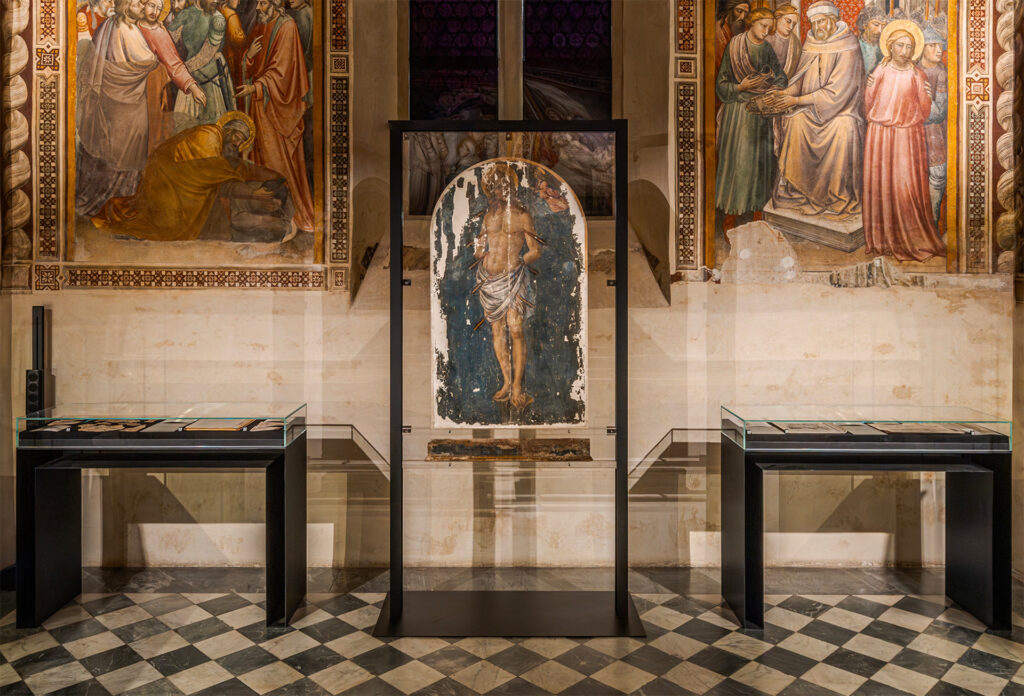
The Officina Profumo-Farmaceutica di Santa Maria Novella is funding the restoration of Saint Sebastian, a Renaissance painting by Francesco Botticini dating to 1475–80 and now part of the Uffizi Galleries. Severely damaged when the Arno flooded Florence in November 1966, the panel underwent an extensive conservation procedure in 1967, when surviving fragments of paint were transferred onto a new support. The forthcoming restoration, to be carried out by the Opificio delle Pietre Dure, will preserve the traces of the disaster as part of the painting’s history. Until November 22, the work is on display at the Officina’s historic premises in the exhibition Frammenti non dimenticati. Firenze, 1966, which explores the flood’s impact on the company and its collections through archival documents, photographs and objects, some still bearing the marks of the disaster.

The National Archaeological Museum of Florence and the Innocenti Museum are marking the anniversary with two exhibitions exploring the flood’s impact on their collections and the subsequent restoration efforts. Saved from the Mud: Recovering Florence’s Archaeological Heritage runs at the Archaeological Museum from November 4 to March 7, 2027, while The 1966 Flood in Piazza Santissima Annunziata: The Innocenti and the Archaeological Museum Amid Water, Mud and Rescue Efforts is at the Museo degli Innocenti from from November 4 until December 31. Both feature historical photographs, restored artefacts, archival documents and objects still covered in mud. The Archaeological Museum’s exhibition also traces the origins of the Tuscany Archaeological Restoration Centre, established in the aftermath of the disaster and now internationally recognized for its conservation work. Both exhibitions will be free to the public on November 4. Furthermore, the National Archaeological Museum of Florence will open exceptionally from 6 to 10pm on November 4 with guided tours every hour. On November 5, at 4pm, I Was There (Io c’ero) features personal accounts of the flood and its aftermath, including that of Filippo Delpino, who was a young research fellow at the time and is now a distinguished Etruscologist. Free admission, booking required at man-fi@cultura.gov.it.
Read more about the exhibitions.
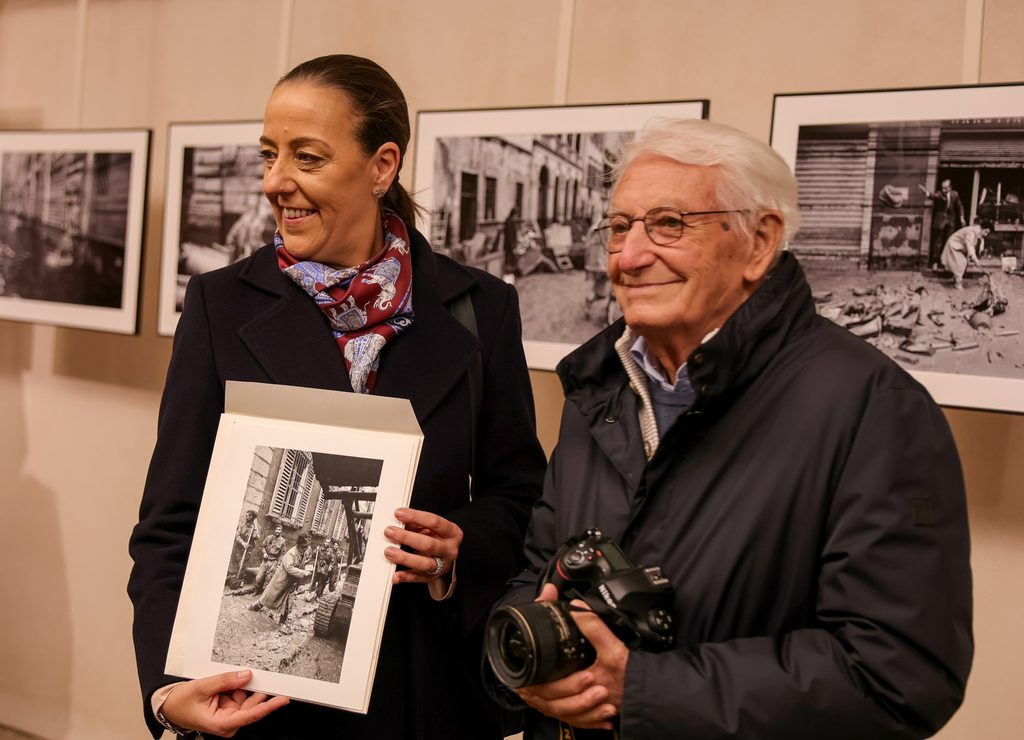
From November 5 to 17, Palazzo Medici Riccardi brings together some 50 photographs by photojournalist Giorgio Lotti, who captured the flood firsthand, alongside images and documents from the Italian Army’s archives. Promoted by the Metropolitan City of Florence with Fondazione MUS.E, the exhibition fills the palazzo’s Archaeological Route and Marble Museum, offering a close encounter with those who bore witness to the flood and those who rallied to the city’s side in its time of crisis. Entry is free, subject to availability. Alongside the exhibition, the palazzo’s Hall of Mirrors hosts two special events on November 7: at 10.30am, a talk on the history of the Medici Museum, set up in the palazzo in the late 1920s and dismantled after the flood, while at 4pm, Florentine illustrator Roberto Innocenti shares his memories of 1966 as he presents Angeli del fango (Mud Angels), which he illustrated for author Beth Kephart. Both events will be in Italian.
Concerts
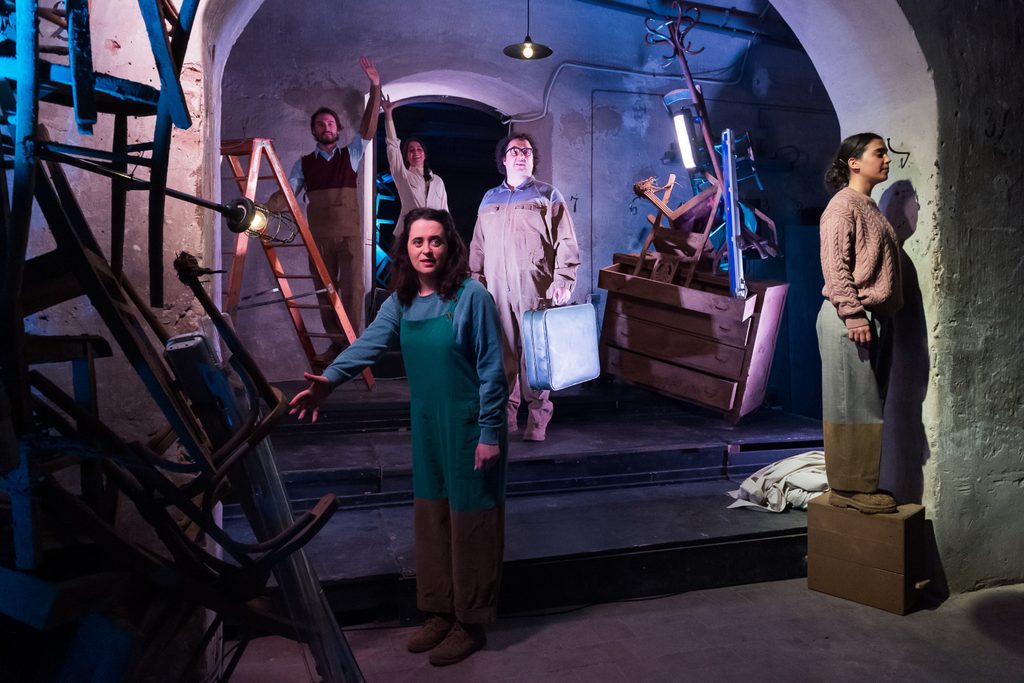
The Teatro della Toscana marks the 60th anniversary of the 1966 Florence flood with Angeli del fango – Gli esseri umani quando piove, a new production by playwright Martina Vianovi celebrating the young volunteers who arrived from around the world to help rescue the city’s people and cultural heritage. Blending tragedy with the Florentine humour, the play reflects on how collective action can turn devastation into hope, from clearing mud-filled streets to salvaging thousands of waterlogged books. The production premieres in the underground spaces of the Teatro della Pergola from November 3 to 13, before moving to Pontedera and touring municipalities across the Metropolitan City of Florence through November. The anniversary programme also includes FLUSSO | BALLO 1966, a participatory choreographic project by Virgilio Sieni, with performances in Florence on November 14 and at Teatro Era in Pontedera on November 17.
Community exhibitions
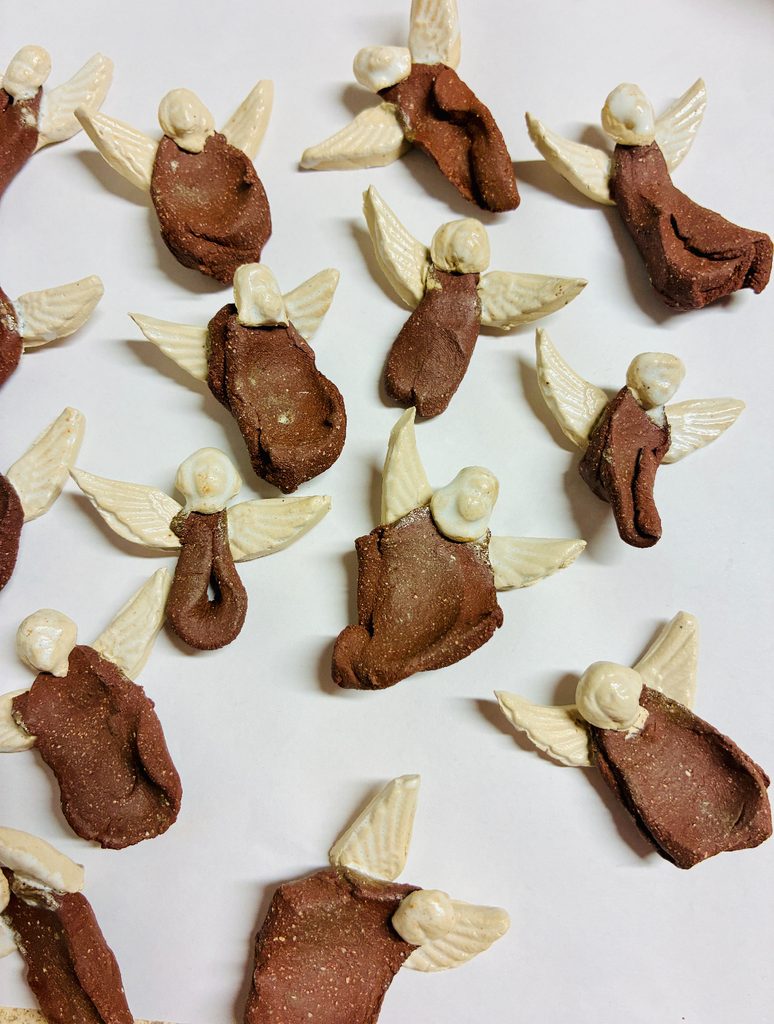
Three exhibitions mark the 60th anniversary of the 1966 Florence flood by exploring how art can preserve memory and transform loss into renewal. Oltre l’argine, presented by artistic collective Intreccio Creativo, brings together five artists to reflect on the disaster through works and a collaborative fanzine, opening at BRAC & CO on November 4. Tender Monuments, at Palazzo Bartolini Salimbeni from November 4 to 8, explores cultural heritage through textiles, reclaimed materials and inherited objects. Meanwhile, The Florence Fragment Collection, on view at the Museo de’ Medici until November 20, sees Irish artist Jean O’Reilly Barlow transform flood-damaged church fragments deemed beyond restoration into contemporary sculptural works, echoing the spirit of the volunteers who helped rescue Florence’s artistic treasures.
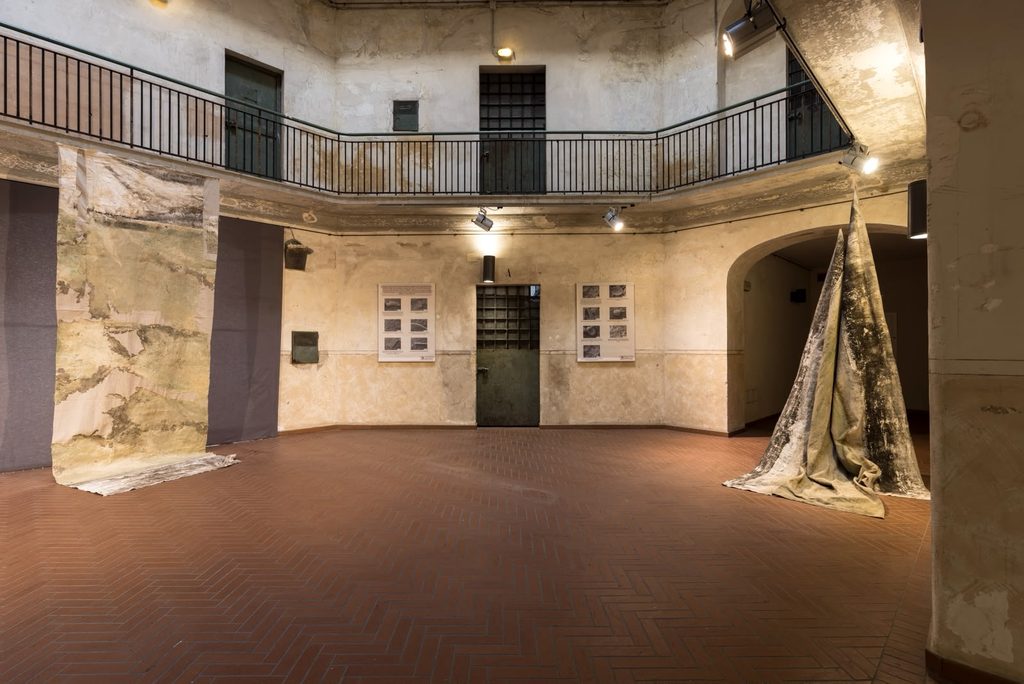
Finally, Roberto Ghezzi’s Arno. Stories of Reconciliation between Florence and its River (from November 4 to January 4, 2027) begins at MAD Murate Art District and continues to the Museo dell’Opera del Duomo, the Cenacolo del Fuligno and the Chiesa di San Salvatore in Ognissanti, all places impacted by the flood. For his Naturografie (“writing nature”), Ghezzi left prepared canvases in the Arno from June to September, allowing water, mud, sediment and plant life to shape them, which is why he describes himself as more a collector than a painter. The mud that once disfigured Florence becomes material for new work and the river becomes what curator Valentina Gensini calls a “living archive”. Viewers are invited to reflect critically on a river central to Florence, just as the community, through its solidarity in 1966, was central to the river, and to consider how the two might move forward together.
From commemoration to prevention
The anniversary also looks to the future, with initiatives exploring how cultural heritage can be protected from flooding and other environmental hazards. On the morning of November 3, the Northern Apennines District Basin Authority will host 60° alluvione Firenze – conoscere il rischio, prevenire i danni, prepararsi al futuro at the Church of Santi Apostoli e Biagio in piazza del Limbo. The event will introduce Rischio-Beni Culturali, a new web application developed in collaboration with the Italian Ministry of Culture. Using data on protected cultural assets, the tool identifies buildings and monuments exposed to flooding and landslide risks, helping institutions assess vulnerabilities and plan preventive measures. The choice of venue is significant. One of Florence’s oldest religious sites, the church contains important artworks and serves as a reminder of the damage inflicted on the city’s cultural heritage in 1966.
Later that day, the National Central Library of Florence will extend its opening hours for Storie e luoghi dell’alluvione. Il 1966 della Biblioteca nazionale centrale di Firenze. From 7.30 to 10.30pm, special guided visits will take visitors through areas of the library particularly affected by the flood, connecting memories of the disaster with the challenges of preservation and preparedness today.