“Every bridge in Florence, boom, gone,” she said, flinging her hands apart. “Hitler gave the order. All of them! Except this one.” She patted the railing like a horse. “The Ponte Vecchio stays.” It was cool, but I wasn’t blown away.
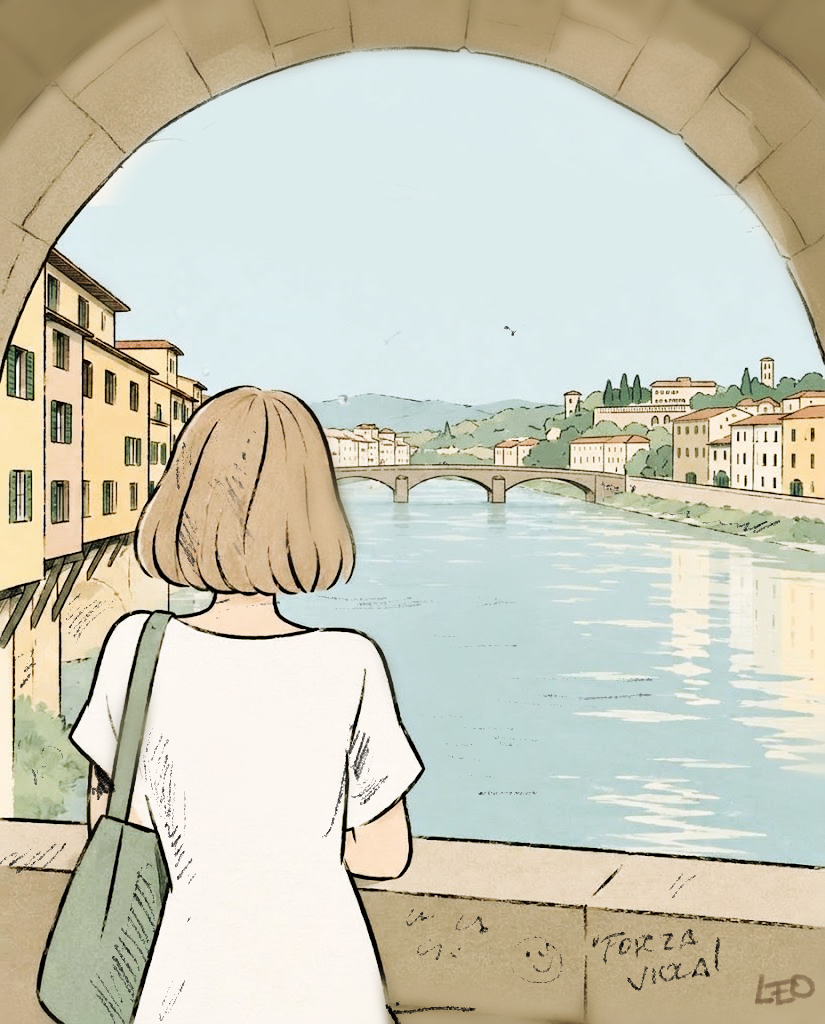
A plaque near the entrance threatens a fine, in lire, for drawing on the bridge or its walls. Naturally, everyone has. Right around the sign, signatures sprawl across the stone in bright red and orange: spouses marking that they were here together, strangers leaving quotes in English. Across from it, a statue has a sign forbidding locks on the rails. Directly beneath it, the locks and chains pile up.
The bridge itself is a little beat up. Pieces of stone are missing, though I suspect that’s on purpose. The wood is chipped, and in places it looks patched with sticks and dried glue-gun glue.
The strange part is that I keep ending up in the same spot. Each morning, I leave my apartment a little early before class, cross the bridge and stop to look at the view before going on. There’s a quote from Dante’s Divine Comedy and a fountain I still can’t figure out. Tourists shuffle up, flash a peace sign for a photo and leave.
“Scusa!” a woman says, sweeping the cobblestones right beside me. I shuffle to a different spot, but my peace hasn’t left.
I look down at the Arno.
Florence runs slower than home in the United States, and more peacefully. But novelty comes with new apartments, people, jobs and classes, and when I’m overwhelmed and life feels chaotic, I somehow end up in the same place.
Back in my literature classes, we talk about Leonardo da Vinci, who was obsessed with water, with the way it moves. From the bridge, I think I get it. The Arno looks calm, glassy and green, the kind of river people photograph. But it has flooded Florence over and over, and it’s the same river that took this bridge in 1333.
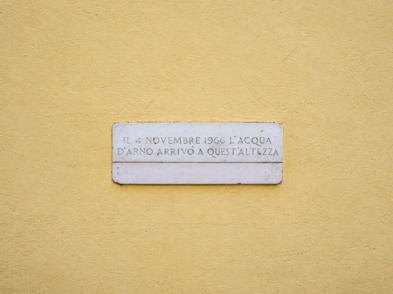
The walls tell the story if you stop to read them. A carved boy stands beside a medieval Latin inscription about that flood. On the other side, another inscription tells how the bridge stayed standing while every other bridge in Florence fell. I had walked past both for weeks. The bridge has been through floods and war, and here I was, rattled by less than 60 days until Long Beach, graduation and everything after.
When I felt far from my family, I went to the Ponte Vecchio. When I was stressed about my Italian test, I went to the Ponte Vecchio. When I was too nervous to order dinner on my own, I went to the Ponte Vecchio. I rest my hands on the railing and I stay longer than I planned. In less than 60 days, I’ll fly home to everything waiting for me. But now I know where to stand. The Ponte Vecchio stays.