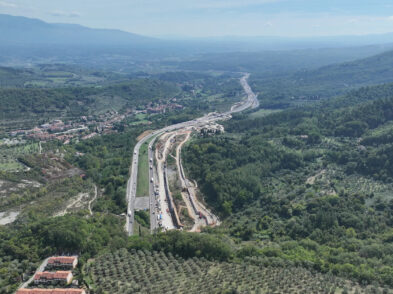
After 30 years of neglect, the fantastical Castello di Sammezzano in Leccio, near Reggello, is finally stirring back to life. On October 15, the new owners, the Moretti family of House of Nine fortune, through their company SMZ Srl, began long-awaited safety and restoration works on the 19th-century Moorish revival masterpiece.

Ginevra Moretti, CEO of SMZ Srl, described Sammezzano as “a fairytale dream, above all one of values. It represents a concrete commitment to preserving one of the few remaining examples of Oriental and eclectic architecture in Europe.”
“It’s in good condition, really, which is already a miracle. I believe the Marquis made a great effort to preserve it in this state,” said Ginevra’s father Giorgio Moretti, speaking on site. “We’ve begun setting up the scaffolding; that’s the first step in what we call the ‘safety phase’. Then come all the design activities.”
Built over an ancient Roman fort and later transformed by Ferdinando Panciatichi Ximenes d’Aragona between 1853 and 1889, Sammezzano is considered Italy’s finest example of Orientalist architecture. Its kaleidoscopic interiors (filigreed domes, Arabic arches, tiled floors and the famed Hall of Peacocks) reflect Ferdinando’s Iberian origins and his belief that the Renaissance had Eastern roots. Working entirely with local artisans, he designed every detail himself, firing tiles in a kiln on the grounds.

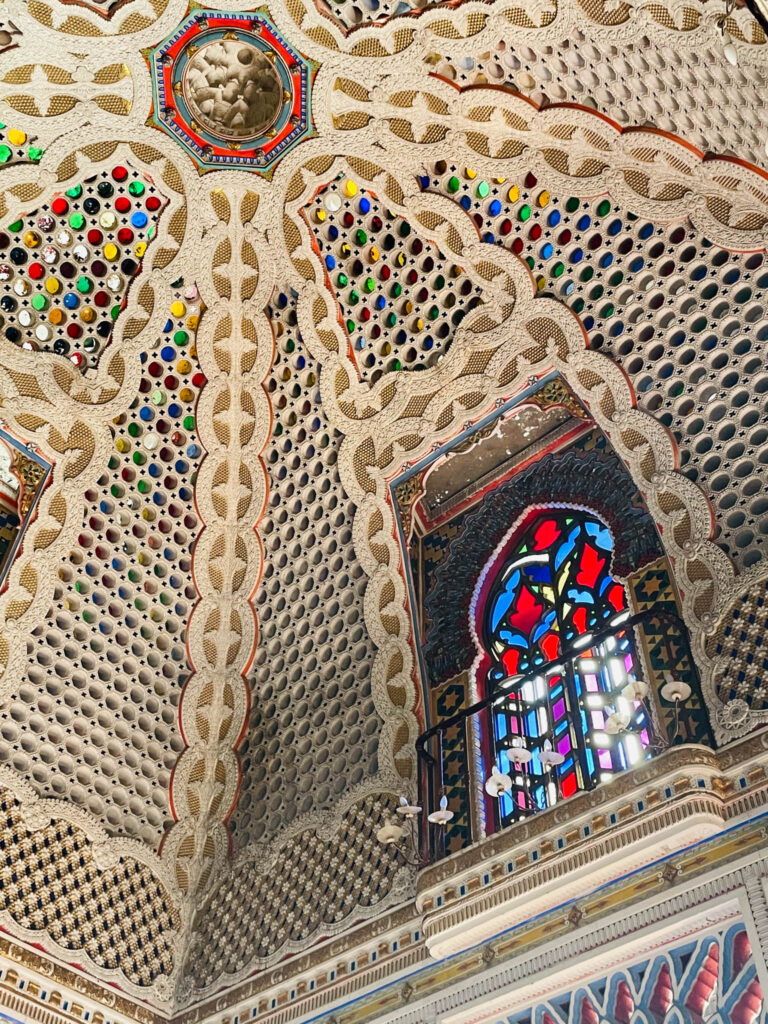
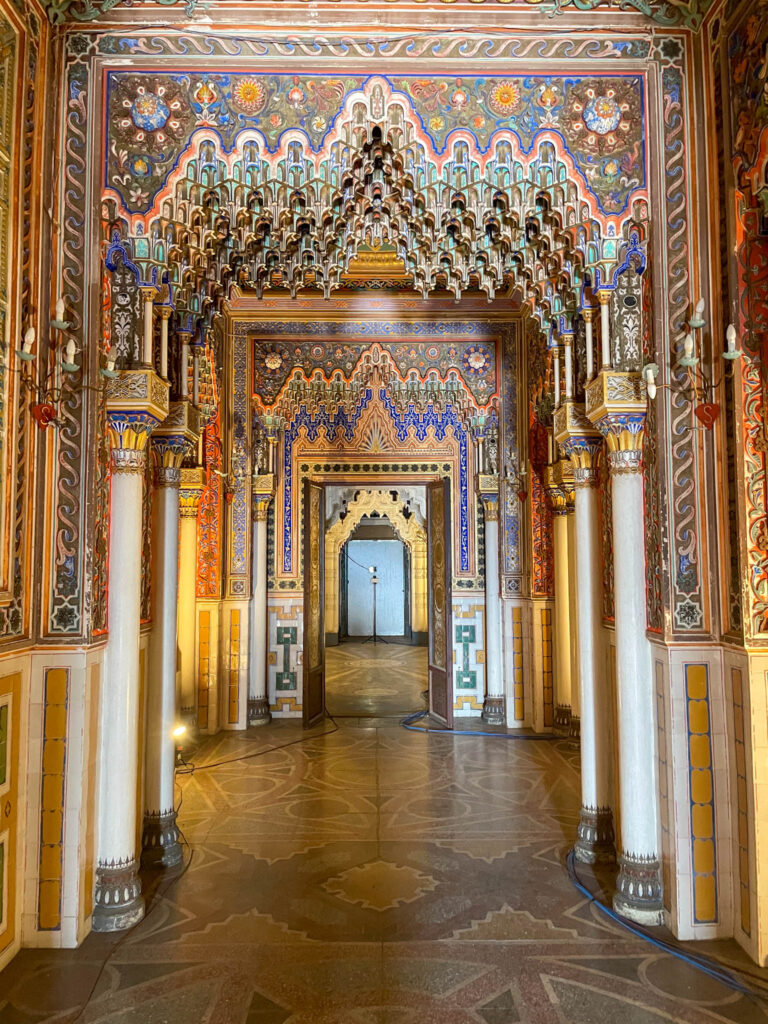


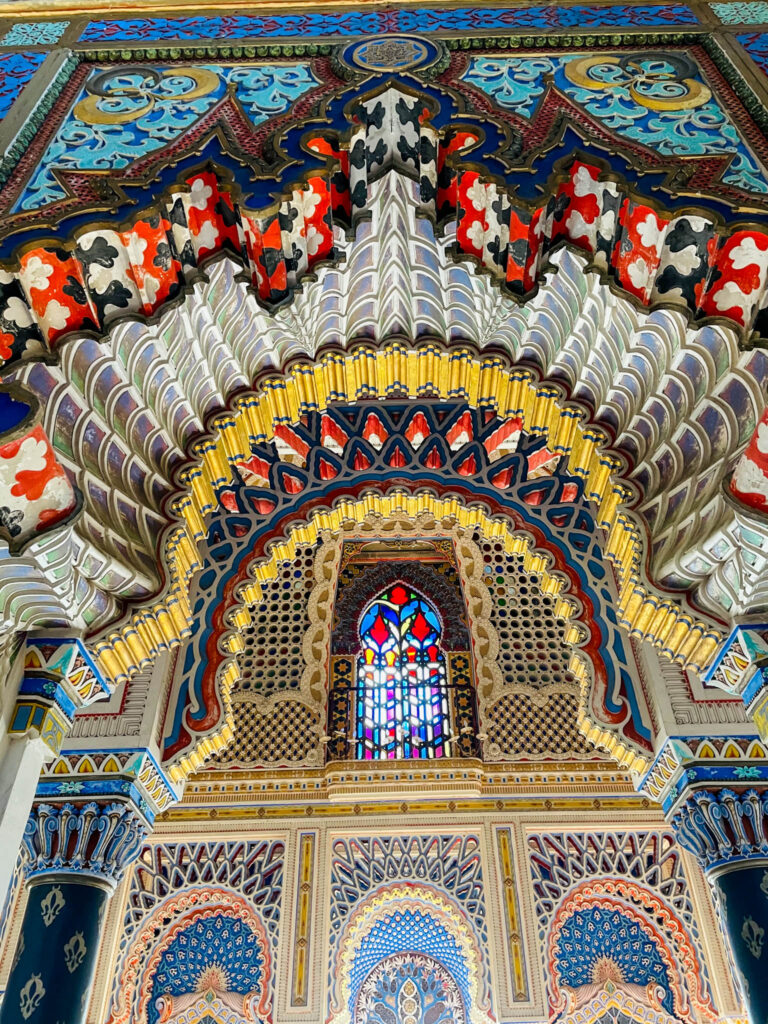


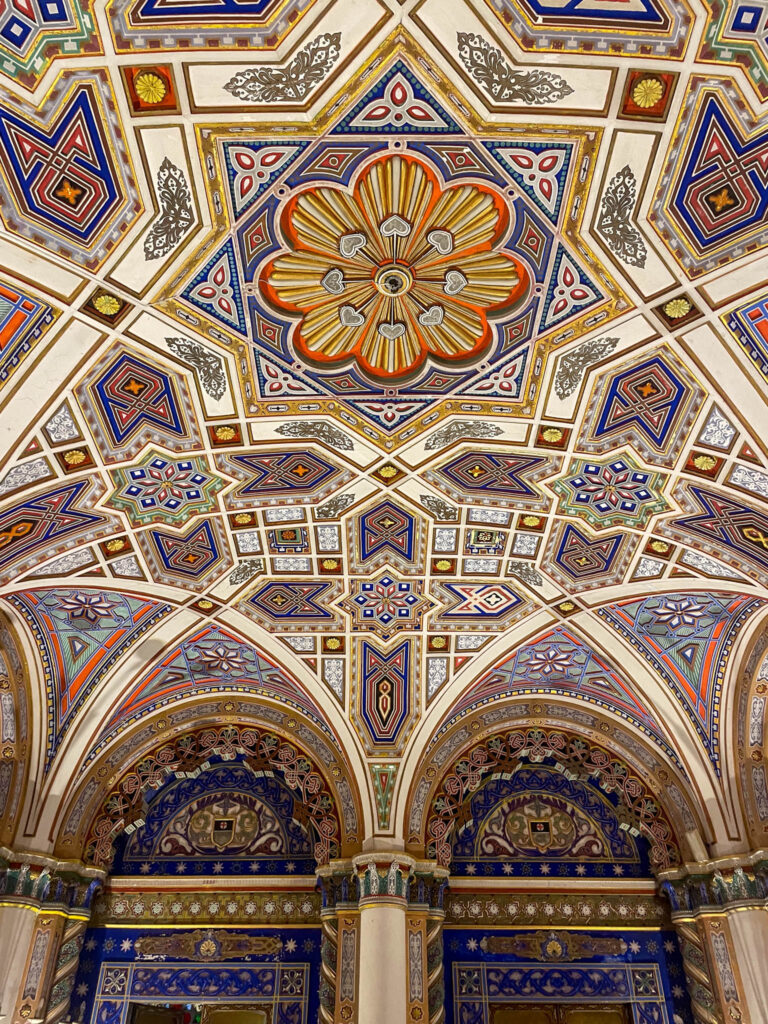
Over the years, the castle has become a mythic destination: admired from afar, closed to the public since the 1990s after a stint as a luxury hotel, and, increasingly, a magnet for urban explorers drawn to its faded splendour. Just days earlier, a group of trespassers scaled the castle and filmed themselves inside, later posting the footage to Instagram. Due to new surveillance installed by the Morettis, the intruders were caught. The episode highlighted Sammezzano’s vulnerability and its enduring allure.
“I understand that breaking limits gives people an emotional rush, but this place deserves respect.
It’s dangerous, and if someone were hurt, beyond the damage to the castle, we’d feel terrible,” said Moretti. “We’re not acting out of vengeance. Our goal is to make people understand that such things cannot be done, above all for their own safety.”
The castle and its 65-hectare park, home to hundreds of monumental sequoias planted by Ferdinando, will be gradually restored and reopened. “We hope that, once all permits are in place, we can complete the project in about two years. Sammezzano will be open almost all year round from 11am to 5pm, with part of it functioning as a museum and the rest as a hotel.”
The derelict concrete annex, a relic of past mismanagement and dubbed “ecomostro” (eco-monster), will be demolished and replaced by a smaller, more harmonious structure.

“We’re trying, as much as possible, to use local craftspeople and expertise for this new phase of Sammezzano’s life,” Moretti added, “just as Ferdinando Panciatichi Ximenes d’Aragona did when he built this wonder.”
Sammezzano’s rebirth is only at its beginning, but after decades of decay there is finally grounds for optimism.