In 1905, Villa Romana on via Senese became the base for visiting German artists. One hundred and 20 years later, it maintains that role. A history interrupted by war and official confiscation has nevertheless seen the artists return. The Villa survives as an alternative venue, independent of convention and encouraging experiment. The current commemorative show Centoventi 1905-2025 Villa Romana at Museo Novecento, on until March 8, 2026, reminds Florence that, rather than having its focus set across the Alps, Villa Romana has long been part of the cultural dynamic of the southern city on its doorstep.

Not so long ago, Florence hosted a thriving avant-garde. In a city that flourishes as an open-air museum dedicated to its unsurpassable Renaissance heritage, that possibility now seems hard to grasp. Yet the need to experiment with ideas and methods thrived in the city alongside its veneration (and ardent promotion) of the past. Especially in the 1960s and 1970s, advances in music, architecture, design, theatre, poetry and the visual arts were taking place in its studios, performance spaces, bookshops and contemporary art galleries. Artists seeking to work with new media, like video and sound, knew Florence offered them burgeoning opportunities.
Much of that innovation now belongs to recent history too easily overlooked. One location, however, has persevered with that spirit against mounting odds. Villa Romana was established as a house for artists in 1905 and continues that way. More than that, it has evolved into a place of exchange between creative people and their supporters, where art is made, talked about and discussed.
Its founders were German artists. Italy exerted an influence on their work, imbuing it with mythological and allegorical themes. Prominent among them was Max Klinger. His symbolist painting, The Kiss of the Mermaid (1895), opens the anniversary show at Museo Novecento. While appearing highly wrought today, it was advanced for its time: its handling and subject foreshadowed the new century’s interest in dreams and the surreal. A figure with broad interests, like ethnography and criminology, Klinger’s imagery also tackled social dissent.

The Villa was set up to encourage eclecticism and independence of mind. The original format, by which a jury presents ten-month bursaries to a handful of artists based in Germany, remains in place as that country’s oldest art award. Since the winners are often at formative stages in their careers, a glance through the list of past residents reveals the presence in Florence of practitioners whose subsequent development is now part of art history.
One of the earliest was Max Beckmann. Widely acknowledged as one of Germany’s leading 20th-century artists for his intense, expressive observation of the fracturing world from the 1920s until his death in New York in 1950, he was resident at Villa Romana for six months in 1906.
A fellow prize-winner who also achieved fame arrived the following year. Unusually for a female artist, Käthe Kollwitz was celebrated internationally during her lifetime. Her etchings and drawings are a stark delineation of everyday injustice against impoverished workers. After Klinger, she is the first artist “fellow” encountered through her work in the exhibition. But these examples were not made in Florence: Kollwitz used her time in Florence to study the Renaissance and not to make. Michelangelo’s forceful figure compositions exerted a lasting impact, proposing new directions for her own practice when she returned to Germany.
The memory of Florence remains a strong inspiration. Katharine Grosse wrote after her 1992 residency that she “returned home dreaming of wall paintings”. Her international career was then built on paintings of explosive colour sprayed directly onto architecture, interiors and landscape.

Why Florence and not Rome? The original choice was strategic. It continues to distinguish Villa Romana from the national academies in Rome, where the French academy opened in 1666 as an official finishing school for talented practitioners. The Americans set up their arts and humanities centre in 1894, and the British arrived in 1901 with government support dependent on studying archaeology and history as well as fine art. The perspective in Florence is different. Villa Romana is free of traditions set by academicians and their institutions. It allows the visiting artists to pursue their own lines of enquiry and make radical changes if they want to or, if preferred, lock themselves away from the outside world.
After all, that world is unpredictable. Both world wars disrupted the activity of the house. In the first, when Germany and Italy were on opposing sides, the Villa was turned over to the Red Cross. After the war, it was closed to German artists until 1928. During the second conflict, cultural battlelines were more ambiguous thanks in part to its director, Hans Purrmann. Only from 1939 did Nazi Berlin interfere in who came to Villa Romana. Until then, the selection of fellows continued to be remarkably unhindered by Hitler’s ghouls. Purrmann, a friend of Matisse and opposed to the regime, somehow maintained his duty to artists. The authorities knew him. Soon after the Nazis took power in 1933, murals by Purrmann in his hometown were covered with swastika flags. As a modernist painter, he was publicly branded a “degenerate” artist in 1937 when Goebbels purged German culture of modernism. Kollwitz and Beckmann were among advanced makers whose works were seized from German museums for destruction or cheap sale.
Run then as now by the Deutscher Künstlerbund, the private German artists’ association, Villa Romana offered Purrmann the livelihood denied him at home. There he managed to shelter the sculptor Emy Roeder, another anti-fascist. A prize-winner in 1936, Roeder stayed on in Italy, often plagued by financial crises. After liberation, she was interned by the Allies and released when artist friends intervened.

Although Germans did not return to the house until 1959, it remained a space for artists. Italians kept it relevant to the city’s intellectual life. Painter Adriana Pincherle, an advocate of the recognition of women in the arts, drew a literary crowd there, including her brother, Alberto Moravia.
In the following decades, German art once again became critically relevant to changes in style. When, around 1980, figuration with an ironic slant on recent history supplanted the idealistic abstraction of minimalism, Georg Baselitz and Markus Lüpertz were in the forefront of change. Both had been Villa Romana fellows, in 1965 and 1970, respectively. Both are represented in this show, as is Anna Oppermann. The reputation of this 1977 prize-winner richly deserves revival since her death in 1993. Her immense collages, called “ensembles”, accumulate words and images that defy conventional order and resolution, instead obsessively concentrating on process and environment, like graphic choreography of human relationships.
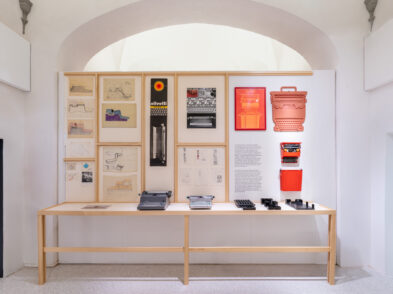
The museum documents the house’s first century with text, posters, archives and artworks. In those years, fellows were almost exclusively German-born. As European communities become globalized, so does their art, reflected in the refreshing cosmopolitan shift in the make-up of Villa Romana residents, valuably promoted by former director Angelika Stepken in recent decades.
The common link remains a base in Germany. Increasingly, however, fellows begin their life journeys in other countries and national identities meld. Such as Sajan Mani, who was born in Kerala, south-western India, Indonesian Elia Nurvista and Chaveli Sifre, who grew up in Puerto Rico. With Frankfurt-born Raul Walch, they comprise the artists who have been resident through 2025.


 Hermann Albert and Christa Dichgans playing pingpong in Villa Romana 1971
 Evening at the Villa with Hella Berent and Joachim Burmeister (Heider Klaus)
 Fried Rosenstock, Autoelevazione al di fuori delle istituzioni 1978
 Evening at the Villa with Hella Berent and Joachim Burmeister (Heider Klaus) 1977
 Anna Oppermann, Klaus Heider, Klaus vom Bruch, Jakob Mattner, Marcel Odenbach 1977

 Max Klinger near Florence while searching for the ideal location for the artists’ house, march 1905
 Georg Kolbe in Villa Romana 1905

Art perceives strength in mutable boundaries; they enrich dialogues and polemics. In their group show, titled Dancing in the Blind Spot and held in November at the Villa and its garden, these artists explored, alongside peers invited from Florence, the long shadow cast by colonial history over contemporary values. Contemporary art is preoccupied with searching themes. Diverse media become channels for visual form to trigger salient reactions. Painting and object-making, print, film, sound installation, mobiles, textile, text, performance and the orchestration of space all resonantly revealed that gap in global perspectives where so many assumptions and opinions take root. This show was fluent and persuasive, and just the most recent evidence of the dynamic that exists within a house for artists. It seeps beyond the walls of the Villa’s hillside vantage point to infuse the historic heart of Florence.
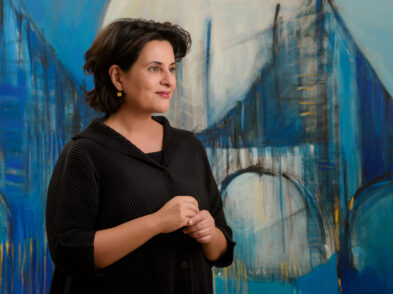
It is no surprise, then, that Elena Agudio adopts an holistic view of the institution she directs. For her, and for those who participate, the Villa is “a house for mending, troubling and repairing”.