The platform, developed by the University Library System, offers online access to more than 200,000 images representing around 4,000 digital objects. These are organized into 15 documentary collections, three archival fonds and ten historical journals. The platform can be accessed at improntedigitali.unifi.it and is open not only to the academic community but to all interested users.
 Lacerba, literary magazine (1914, Biblioteca Umanistica)
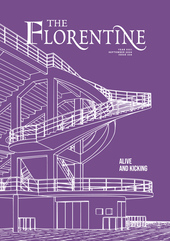
 Hermes, monthly art and contemporary thinking magazine (1905-06, Biblioteca Umanistica)
The digital library currently features an initial selection of various materials, including printed books, illustrated plates, drawings and photographs. Advanced search and visualization tools allow users to interact closely with the digitized objects.
Among the oldest items are 22 incunabula (early printed books produced at the end of the 15th century) including rare Latin editions preserved in very few or even unique copies. Also noteworthy are 18 manuscript volumes of statutes from municipalities and guilds, dating from the 16th to the 19th centuries, originally from the Library of the College of Lawyers of Florence and now held by the Social Sciences Library. The platform also includes more than 100 volumes that once belonged to Vincenzo Viviani, Galileo Galilei’s last disciple, as well as the collection of physician, naturalist and intellectual Antonio Cocchi (1695–1758). Over 20 volumes relate to scientific travel narratives, including accounts of James Cook’s third voyage in the Pacific Ocean.
Impronte Digitali also hosts digitized photographic archives from the Faculty of Agriculture, image collections linked to the work of architects Piero Sanpaolesi and Francesco Rodolico, and a selection of historical journals in the scientific, historical and literary fields. These include Hermes, inspired by the aesthetics of Gabriele D’Annunzio, and Lacerba, one of the most significant magazines of the Italian avant-garde.
To accompany the launch, a travelling exhibition will be held across eight university library locations from January 13 to February 10. Original volumes featured in the digital library will be displayed, allowing visitors to compare the physical books with their digital counterparts and reflect on the relationship between material heritage and its digital “imprint”.