Palazzo Strozzi has unveiled its exhibition program for 2026, outlining a cultural agenda that aims to strengthen its role as a leading international institution while continuing to connect Florence with the global art world.
Rothko in Florence

The centerpiece of the 2026 season will be Rothko in Florence (March 14–August 23), a major exhibition dedicated to the American master Mark Rothko. The show will feature an exceptional selection of works, including monumental paintings never before shown in Italy. The works will be drawn from leading international institutions and collections such as the Museum of Modern Art and the Metropolitan Museum of Art in New York, the Tate in London, the Centre Pompidou in Paris and the National Gallery of Art in Washington. Curated by Christopher Rothko and Elena Geuna, the exhibition traces the evolution of Rothko’s artistic language, from his early figurative works influenced by Expressionism and Surrealism to the celebrated abstract canvases of the 1950s and 1960s. The exhibition also highlights Rothko’s deep connection with Italian artistic traditions. The project will extend beyond Palazzo Strozzi into the wider city through two special satellite sections. At the Museo di San Marco, Rothko’s works will be placed in dialogue with the frescoes of Beato Angelico in a continuation of the exhibition earlier this year at Palazzo Strozzi, while another section will be presented in the vestibule of the Biblioteca Medicea Laurenziana, the architectural masterpiece designed by Michelangelo.
Broken. The Power of the Fragment

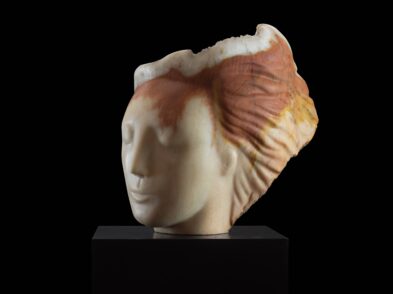
The year will end with Broken. The Power of the Fragment (September 25, 2026 – January 24, 2027), a major international exhibition exploring the theme of fragmentation from antiquity to contemporary art. Organized in collaboration with the National Gallery of Art in Washington, where it will travel in spring 2027, the exhibition will bring together more than 90 works spanning centuries and cultures. Curated by C. D. Dickerson and Andrew Sears, the show examines the formal power of fragments and the historical circumstances that led to their breakage, from iconoclasm and war to natural disasters. The selection ranges from the ancient civilizations of Egypt, Mesoamerica, Etruria and Greece to pre-modern cultures from regions including Peru and Cambodia. Alongside historical masterpieces, the exhibition will feature works by modern and contemporary artists who have explored fragmentation as a creative language, including Auguste Rodin, Alberto Giacometti, Louise Bourgeois, Huma Bhabha, Francesco Vezzoli and Danh Vo. The exhibition also reflects on pivotal moments in history, from ancient shipwrecks and the Protestant Reformation to World War II and the 1966 Flood of Florence, exploring how damage and destruction can transform artworks into powerful political and cultural symbols.
SUPERFLEX + Jean-Marie Appriou

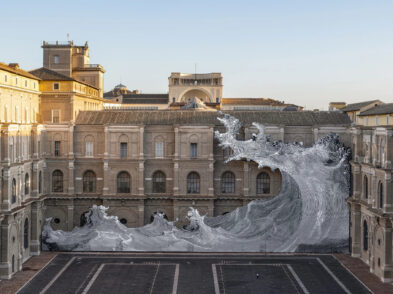
The 2026 program also includes several contemporary art commissions designed to engage directly with the historic spaces of Palazzo Strozzi. Among them is There Are Other Fish In The Sea (April 14–August 2), a large site-specific installation in the courtyard by the internationally acclaimed Danish collective SUPERFLEX. Curated by Arturo Galansino, the installation imagines a future shaped by rising sea levels and proposes an “interspecies architecture” that encourages visitors to rethink the relationship between humans and the environment. Presented in the year marking the 60th anniversary of the devastating 1966 Flood of Florence, the project offers a reflection on ecological change and the limits of human-centered perspectives. The installation is produced in collaboration with Kunsthal Spritten in Aalborg, Denmark, where a renewed version will be presented for the venue’s inauguration in 2027.
Meanwhile, the Project Space at Palazzo Strozzi will host CANTO INFINITO (May 22–August 23), a solo exhibition by French artist Jean-Marie Appriou. Also curated by Arturo Galansino, the exhibition presents a group of newly created works that showcase Appriou’s distinctive sculptural language. Known for his experimental use of materials, including aluminum, bronze, glass, clay and wax, the artist creates tactile forms that inhabit an ambiguous territory between human, animal and plant life. The exhibition’s title, CANTO INFINITO (“Infinite Song”), evokes the idea of a continuous flow without beginning or end, suggesting a world in which time, matter and imagination are constantly evolving. The works subtly reference the cultural and symbolic legacy of the Divine Comedy.