Nestled beside piazza Santissima Annunziata are the offices of UNICEF Innocenti, a notable location fitting for the international team that carries out crucial operations that lead to concrete changes all over the world. Finland-born Bo Viktor Nylund has been at the helm of the Florence outfit since October 2022, having previously worked in places like Bangkok, Damascus, Kenya and Somalia. Formed on January 1, 2026, the UNICEF Office of Strategy and Evidence – Innocenti is the result of the joining forces of the Florence-based Global Office of Research and Foresight with the New York Headquarters-based Division of Data, Analytics, Planning and Monitoring. The Florentine sat down with the director to learn more.
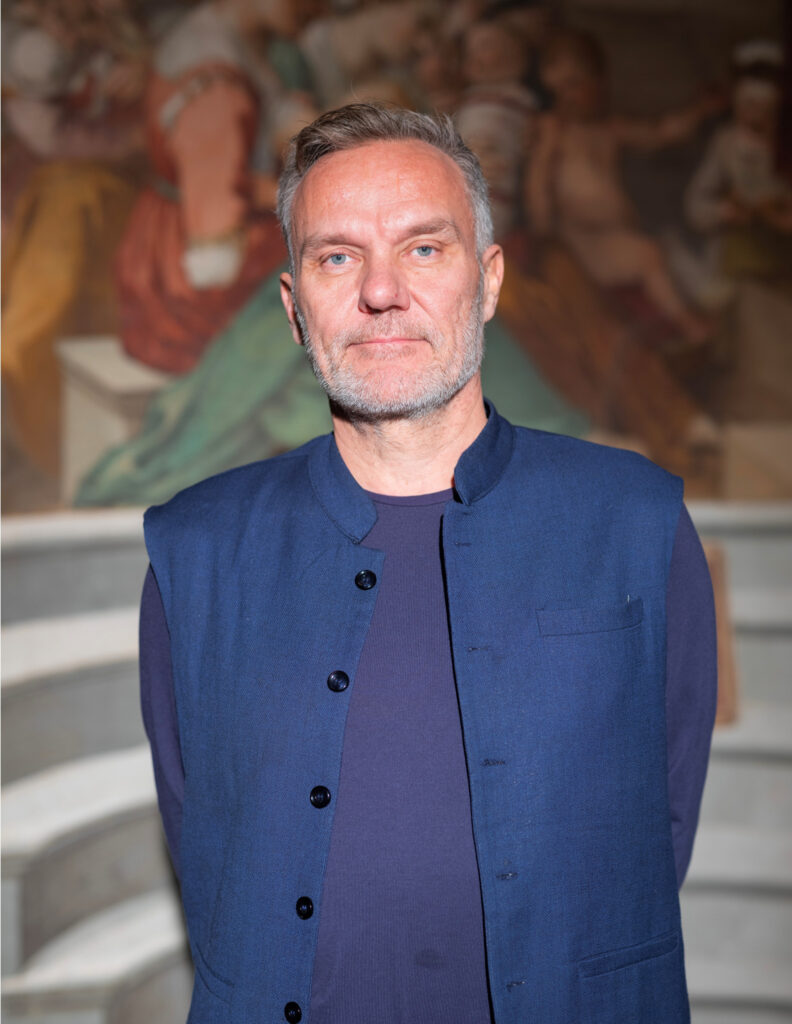
“I have worked with UNICEF (United Nations Children’s Fund) at global, regional and country levels. Mostly, I would call myself an emergency junkie. I have mainly worked in armed conflict situations, having been posted in places like Sri Lanka, Burundi, Sudan and, most recently, Syria, before I was posted here. I have a PhD in international law and a background as a human rights lawyer.”
The priorities of this newly merged office reflect the complex time we’re experiencing globally. “The merger comes at a time of liminality in the world; it’s a very challenging period. We must be increasingly mindful of how we remain relevant. As we started seeing the signs written on the wall, we proactively came forward with this proposal of a merger of two divisions, both from the perspective of cost-effectiveness and also operationally: we’ve always been focused on research and foresight, but data and analysis were being done in another office. Bringing those together brings even greater impact for children.”
From within the centre of the Renaissance city, UNICEF Innocenti facilitates impact globally. Their “signature” report, often around issues of inequality, is used to empower national committees to advocate for issues around well-being in wealthy countries with some truly powerful results. An example of which is the most recent report in which the United Kingdom reported surprisingly high numbers of children living in poverty, prompting governmental action.
“In a way, our job is to set the standards in terms of global thought leadership and empower our offices at different levels to make change for children on the ground.” Efforts are made to engage young people in foresight thinking, bringing young people to the table to discuss the issues that directly concern them. “As adults, we can bring a foresight lens, but if we teach the methodology to children and young people, on how to make use of data, or how you can create different scenarios for the future, then you can inform that debate much more strongly.”

A moment of particular significance occurred just the day before our meeting. “A former colleague from when I worked in Syria contacted me to tell me that the government has officially launched the educational curriculum that we worked on when I was there. Politically, it was very tense, but UNICEF was able to instigate a full reform, having proposed 11,000 changes in order to depoliticize the curriculum, make it child rights-friendly, consider disability, equity and gender, and mainstream it through all the major topics. What I think this shows is that it’s not like you turn on the tap and it’s fixed; it will take time.”
While first thoughts of UNICEF might spring to necessities like education and access to water, there’s also the potential benefits and harms of the digital world and artificial intelligence to navigate. One of the office’s research programmes focuses on children’s experience online and where they are exposed to sexual abuse. The research involves specifically going out to talk to children, covering 25 countries, and also speaking to parents in order to get a much more granular sense of what their experience is like.
Of course, the fact that UNICEF is based in the Innocenti complex, a site that has seen over 600 years of work for children, has a poignancy that’s practically palpable. The link is also showcased during global convening events when UNICEF often brings guests to the Innocenti Museum in order to share the history of the complex and its particularly striking collection of tokens left by mothers as they gave their children to Innocenti care. “It’s very powerful, also given that it resonates with what has happened in other parts of the world. When I first came into this position and I learned about how the orphanage was born out of philanthropy, I felt it deeply because in Sudan, I was working on what we call the abandoned children initiative. Essentially, children born out of wedlock, and therefore considered ‘impure,’ were getting abandoned on the streets, oftentimes dying before they were found. Our objective was to change the attitudes of how people viewed these children and close down the institutions that existed to take care of them because oftentimes they didn’t take care of them. Redesigning the whole system, placing them in foster families, and also changing the attitudes of the social workers who were going to the families was a huge thing that took years but was very successful.”
Ultimately, you leave the UNICEF Innocenti office deeply feeling the gravitas of their work, yet the passion and determination with which they face it prompts admiration and inspiration to advocate and empower in whatever way we can.
To support UNICEF’s activities, see www.unicef.org/innocenti and IG @unicefinnocenti