From Tokyo to Tuscany, Erii Nakajima details the story of the Lailac Japanese cultural organization, founded in Florence in 1999.

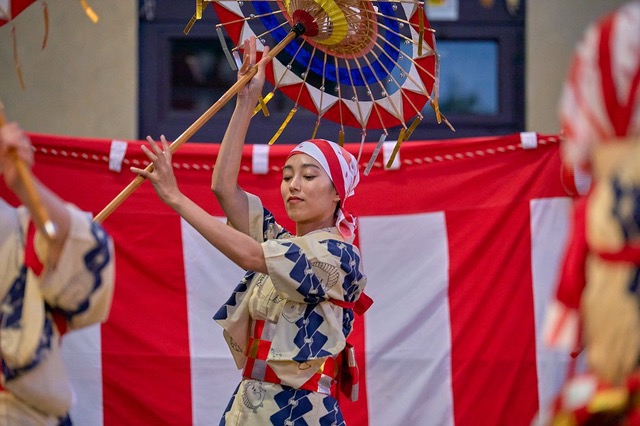
“I was born in Tokyo, and my parents are from the south of Japan. Raised here in Florence because my family moved here when I was one, I spent all my childhood summers in Japan with my grandparents. Lailac came about when my mother and her friends and I and mine, both Japanese and Italian, wanted to create ways to bring Japanese culture closer to Italians. One day a week, we ran activities at via Gherardo Starnina 68 on the things we knew about and saw so much interest. From there, we increased the classes and brought in expert teachers, and now we’ve been running for 27 years! We have eight language classes, three dance classes, and cooking classes; then there are ones for tea, music, calligraphy, and more. We didn’t expect it. For the festivals, people even come from outside of Tuscany.”
The name, Lailac, also has an interesting origin. “It comes from the English word ‘lilac.’ The name was actually given to us by a spiritual teacher, who was always close to us and who had encouraged us to create this association. When we decided to open it, we asked her for suggestions, and she sent this because the Japanese word for lilac has the same phonetic pronunciation as English. Our problem was how to write it. If we wrote it in English or by the pronunciation, you would lose the meaning, but in Japan we care a lot about the sound, and so we decided that even if you lose the meaning of the word, we wanted to put the Japanese sound.”
The importance of deepening one’s knowledge of other cultures, of intercommunity and interculturality, is not to be underestimated, Erii stresses. “If we don’t know other cultures, often we only criticize them or see the negative elements that mass media wants to show us. As a Japanese person, I want to share the best of Japan, and if every person manages to share the positive aspects of their own culture, globalization would be something even more positive. There’s the need to commit to knowing, having the patience to say, Okay, what’s good about this culture? and that is what we took on as a task as an association: to share everything that Japanese culture can give and the sense of harmony and serenity that is intrinsic. We don’t hold academic-style events because we prefer that people who come can breathe the culture, not study it with your head but experience it with the five senses.”
Our conversation turns to the topic of overtourism, where Erii provides an interesting observation. “In Japan, we don’t like to raise our voices in conflict. So, if we see tourists sitting on the ground eating and blocking paths, we see it as rude but don’t say anything. Also, in Italy, it’s right to respect Italian ways. I never want to impose my ways on anyone. It takes balance, which I think is possible when there’s mutual respect. There’s a way to live in harmony, but we have to commit.”
The next dates for your diaries are June 27-28, when the Tanabata Festival takes place in Villa Vogel. “The idea is to write your wishes, which will then be tied to a tree. It will be a tranquil, open-air event with music teachers coming especially from Japan as well as dance, decorations, food, and a market. The most important thing is to create friendships. And keep an eye out for the large-scale Japanese Festival this autumn.”