Tucked within the arts-centred streets of Florence’s Oltrarno district, the Museo del Restauro offers something rare, a spotlight not on artists, but on the quiet, exacting craft that preserves their legacy.

Located at via Maggio 13 inside the stately Palazzo Ridolfi, the museum transforms a lesser-known discipline into an engaging and essential narrative about cultural survival, showcasing the expertise required to safeguard heritage for centuries. Turning their hands to the toll of time upon works of art, restorers carry out extensive steps to conserve and restore, with the museum highlighting this side of art history.
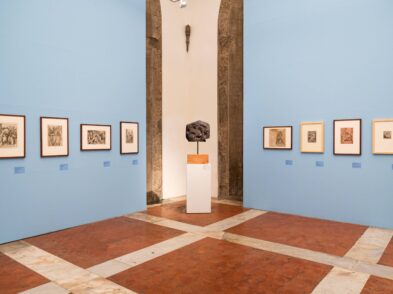
The museum space itself is intimate, yet copious in content. Among its highlights is part of the historic Marsili Collection, a remarkable archive of plaster casts produced by the Fratelli Marsili workshop founded around 1850, making it one of Italy’s oldest mould-making studios. These casts replicate iconic sculptures housed in institutions such as the Vatican Museums, the Capitoline Museums, the National Archaeological Museum of Naples and Florence’s own Uffizi Gallery. Particularly striking reproductions include the Ludovisi Throne and the Capitoline Wolf, symbols of classical antiquity and Roman identity. Equally compelling is the Bellomo Collection, a group of pre-Roman ceramics from southern Italy, particularly Apulia, dating from the fifth to the second centuries BCE. These vessels—kraters, oinochoai, amphorae and kylikes—reflect a rich dialogue between local Italic traditions and the influence of Greek colonies in Magna Graecia.


The museum underlines the importance of restoration as a tool for education. Ceramic conservation, for instance, is a specialization taught at the Palazzo Spinelli Institute for Art and Restoration, of which the Museo del Restauro forms part. Workshops, guided tours and public events designed to bring restoration techniques to a wider audience are regularly held, including hands-on activities, encouraging visitors to engage directly with the discipline.
The building itself carries centuries of history. Originally constructed in the 15th century for the Corbinelli family, it passed to Giovanni Battista Zanchini in 1583, who oversaw a major renovation of the palace in the late Renaissance style, likely designed by the architect Santi di Tito. In 1843, it was acquired by Marquis Cosimo Ridolfi, whose name the palace still bears.
A visit culminates in one of the site’s most unexpected treasures. Passing through a quiet courtyard and ascending a set of centuries-old steps, visitors arrive at the private chapel of the palace, a Renaissance gem commissioned by Giovanni Battista Zanchini. Decorated with frescoes attributed to the Santi di Tito school, the chapel narrates Biblical scenes alongside a dynastic portrait of the Zanchini family. Stories from Genesis, the life of Saint John the Baptist and scenes such as the Annunciation and the Visitation unfold across its walls in vivid colour.

This space is also emblematic of the museum’s mission. Between 2001 and 2005, the chapel underwent an extensive restoration carried out by students and professors from the institute. At one point, the frescoes were at risk due to water damage, saved only by an intervention that prevented irreversible loss, serving as a reminder of how fragile cultural heritage can be and how crucial timely restoration is.
What makes the Museo del Restauro particularly distinctive is its accessibility. There’s free admission with voluntary donation, reflecting its non-profit mission to make restoration knowledge available to all. Our attention is drawn to the importance of preservation, with practical workshops, talks and a wide array of events inviting both the passionate and the curious to appreciate the work involved.