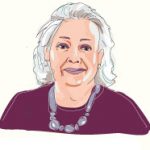
In the 97 years before her death in Milan on July 19, 2020, Giulia Maria Crespi was a small, delicate yet determined woman who always lived up to the phrase she was often heard to repeat: “Whoever has been given a lot must give a lot”. This was demonstrated by the many public and private awards she received in her lifetime, such as her nomination as Knight of the Grand Cross of the Order of Merit of the Italian Republic in 2003 for what Italian president Carlo Azeglio Ciampi called her “remarkable civic, social and cultural commitment on behalf of the collectivity”.

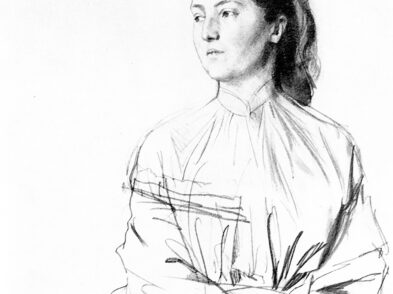
Born in Merate, in the province of Lecco, on June 6, 1923, into wealth and privilege as the only child and heir to the Crespi family of Milan, beginning with the Crespi d’Adda cotton industry and workers’ village that one of her ancestors, Cristoforo Benigno Crespi, had built in Capriate San Gervasio, southwest of Bergamo, in 1877. Their financial empire also included taking control of the Corriere della Sera newspaper in 1922. She was brought up in the family’s magnificent apartment in Milan’s corso Venezia, where paintings by the likes of Canaletto and Morandi hung on the walls and the cream of Italy’s political, social, economic and cultural elite were frequently entertained. Giulia Maria was educated by governesses and spoke three languages fluently from childhood. She credited her love of art and nature to one particular teacher, Fernanda Wittgens, who later became the first woman director of the Pinacoteca di Brera.
After the end of World War II, Giulia Maria began volunteering at the Fondazione Crespi Morbio, which helped large households. Then, until 1960, she loaned a hand at the Ape Laboriosa association, assisting children living in difficult circumstances in the outskirts of Milan. She also worked at Italia Nostra for a time. However, in the 1960s, following the death of her two uncles and because of her father’s serious illness, she was left to take over the Corriere della Sera, where journalist Indro Montanelli dubbed her “the Tsarina”. At the same time, Giovanni Spadolini, the paper’s editor, called her “Baby Face”. She soon replaced both men and changed the editorial direction. By 1973, since the company was in financial difficulty, she was forced to sell some of her shares to Gianni Agnelli and Angelo Moratti. The final blow came in 1974 when she had no option but to sell the family’s majority shareholdings to Andrea Rizzoli.
One of her greatest accomplishments, however, came in 1975, when she set up a non-profit association, the Fondo Ambiente Italiano (FAI), modelled on the British National Trust, with architect Renato Bazzoni, lawyer Alberto Predieri and the superintendent of the Brera Art Gallery, Franco Russoli. She was appointed as the first president, remaining in the position until 2009 before becoming its honorary president. The mission was (and still is) to acquire assets that form part of Italian heritage that, without the association’s intervention, risk abandonment. FAI restores them, enhances their history and the contents that come with them, making them available to everyone. Giulia Maria began this process by donating the 500 million lire needed to buy the FAI’s first property, the Torba Monastery, near Varese. It was opened to the public, after significant restoration, in 1986.
FAI now owns 72 properties throughout Italy, including villas, castles, abbeys, towers, shrines, gardens, archaeological sites, even villages, artisan studios, historic hospitals, barracks, stadiums, industrial archaeological sites, barber shops, as well as stretches of coastlines, forests and landscapes. Of these, 56 are open to the public and 16 are under restoration. Tuscany has two such properties: the Little Theatre of Vetriano, 20 kilometres from Lucca, which is listed in the Guinness Book of Records as the smallest theatre in the world, and the Campatelli Tower and House, in San Gimignano, near the Duomo. Every year, since 1993, the association has organized its FAI Days in the spring and autumn, providing exceptional visits often led by FAI members or other volunteer guides to sites that are otherwise inaccessible or difficult to visit.
During her long life, Giulia Maria married twice and had two children. She was widowed just four years after her wedding to the aristocrat Marco Paravicini in 1956, who died in a car crash. He was the father of her twin sons, Aldo and Luca. In 1965, she married her second husband, the esteemed architect and nobleman, Guglielmo Mozzoni, who worked with her on a number of FAI projects until his death at 99 years old in 2014.
After surviving cancer in the early 1970s, Giulia Maria became interested in nutrition and sustainable agriculture based on Rudolf Steiner’s theory of agricultural biodynamics. She applied these ideas at Cascina Orsine farm in Zelata di Bereguardo, in the Ticino national park, which she managed with her son, Aldo Paravicini Crespi, from 1976 onwards until his death, aged 65, in a farm accident in 2023. Her grandson, Marco Paravicini Crespi, has now taken his place. Although she owned properties in Tuscany, Sardinia and Lombardy, she chose to be buried in the cemetery in her beloved Zelata, where her son Aldo now lies beside her.
Among her many achievements, Giulia Maria Crespi found time to publish her autobiography, Il mio filo rosso (My Red Thread) in 2015, and an environmentally-friendly children’s book titled Le storie di Anna, la bambina che non diceva mai le bugie (Anna’s Stories, The Girl Who Never Told Lies) in 2018.
To learn more about the Fondo Ambiente Italiano (FAI), see fondoambiente.it.