The scaffolding is now in place around Giotto’s bell tower, marking the beginning of the most comprehensive restoration in the monument’s history.
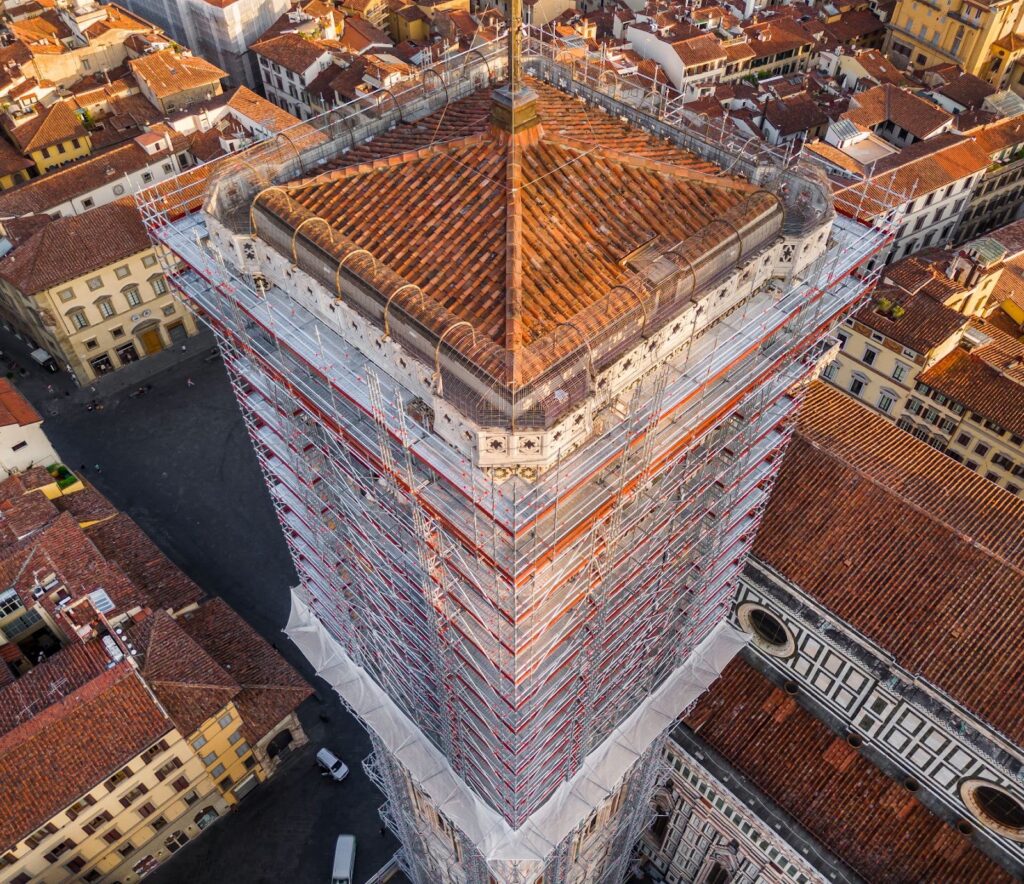
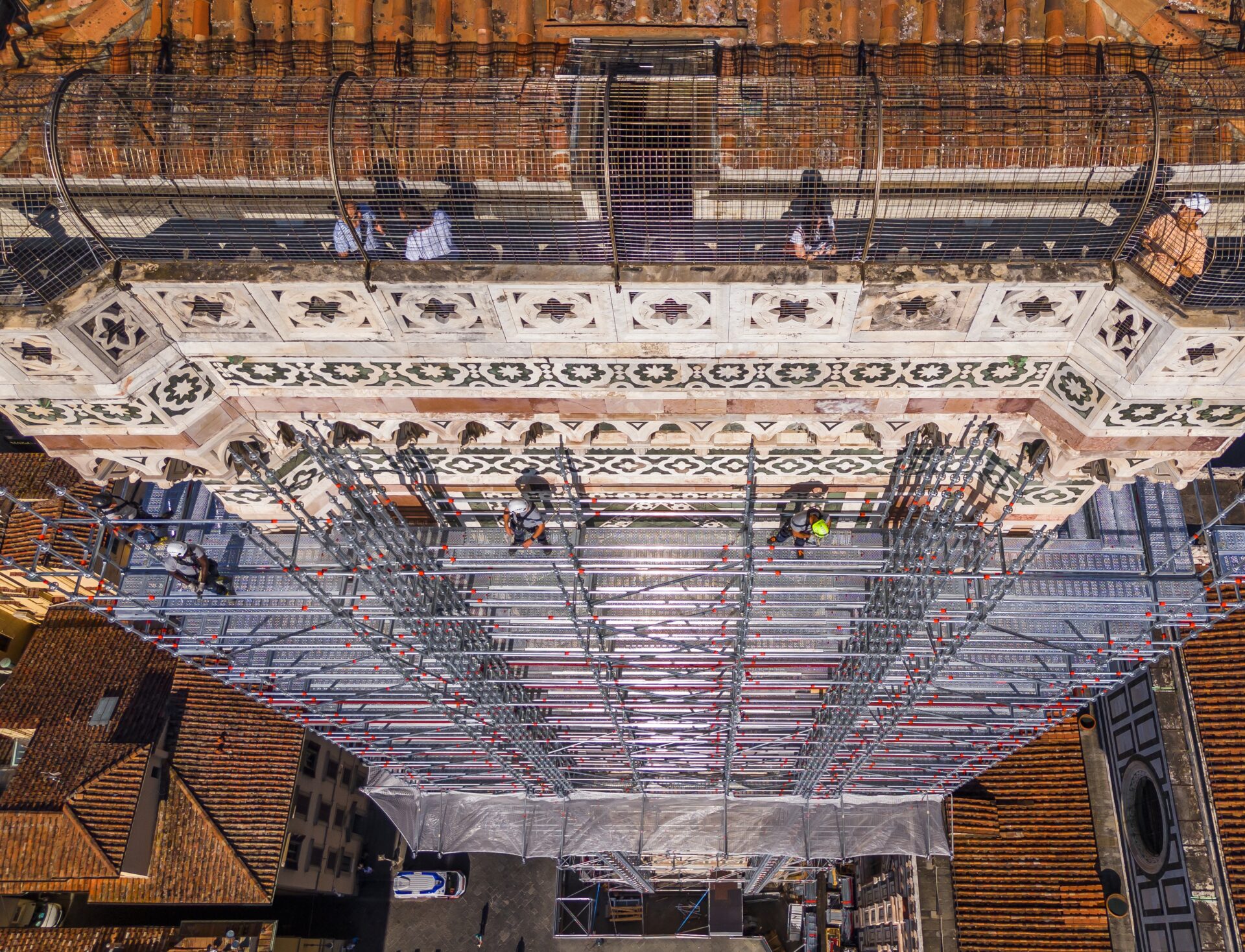
Standing 86 metres high, the highly engineered scaffolding has been designed to minimize its visual impact while allowing visitors to continue enjoying the monument. Restoration will proceed from the top downwards, with sections of the tower gradually unveiled as work reaches ground level.
Designed by the Opera di Santa Maria del Fiore in collaboration with Tecno System Appalti and Layher S.p.A., the scaffolding took just over four months to install. The Campanile itself rises 89.20 metres above Florence, reaching 109 metres at the cross.
The restoration is expected to take five years and cost more than seven million euro, entirely funded by the Opera di Santa Maria del Fiore. The project is being carried out under the supervision of the Soprintendenza Archeologia, Belle Arti e Paesaggio for the Metropolitan City of Florence and the provinces of Prato and Pistoia.
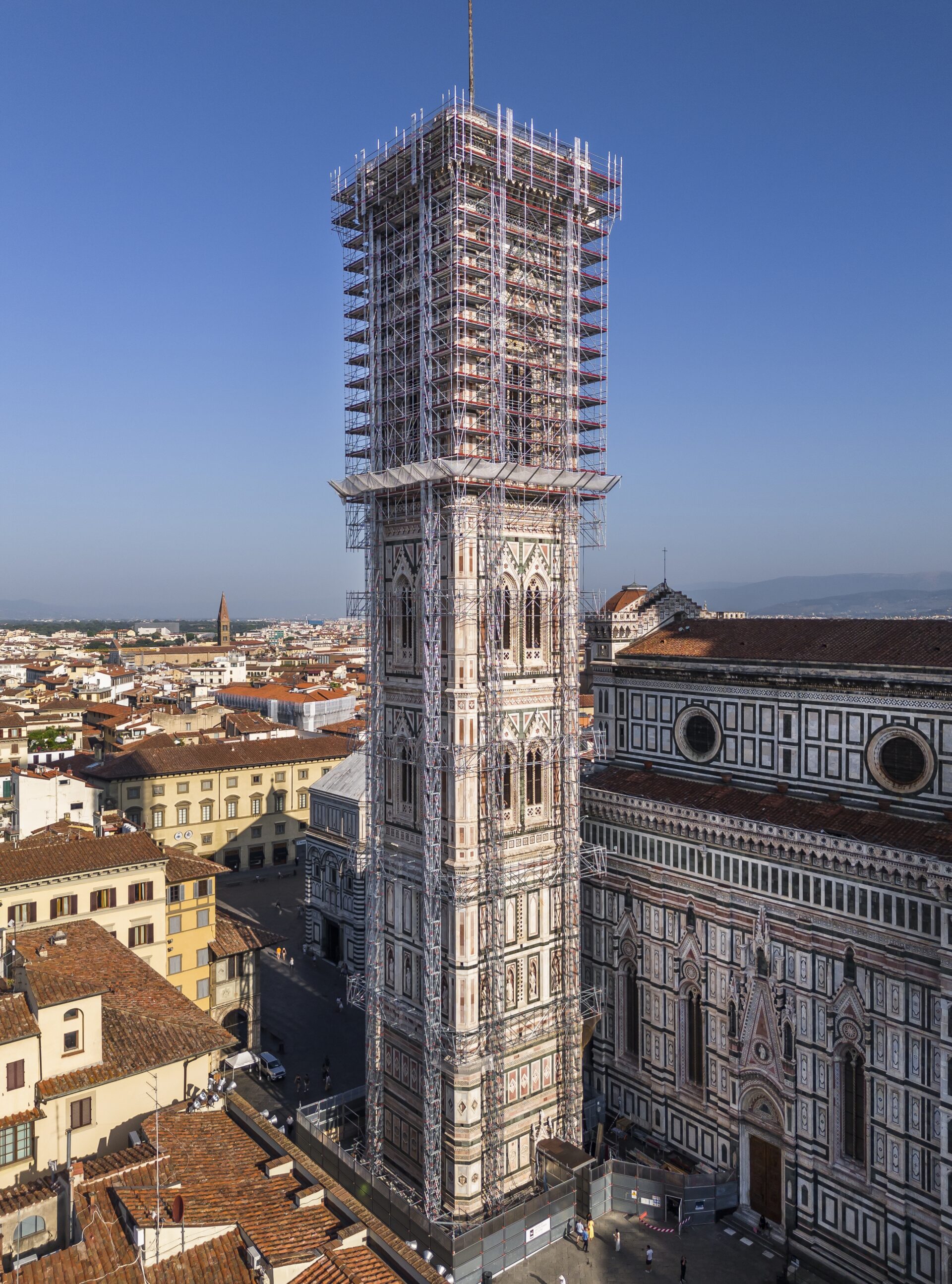 The scaffolding for the restoration of Giotto’s bell tower in Florence. Ph. Fabio Muzzi. Courtesy of Opera di Santa Maria del Fiore
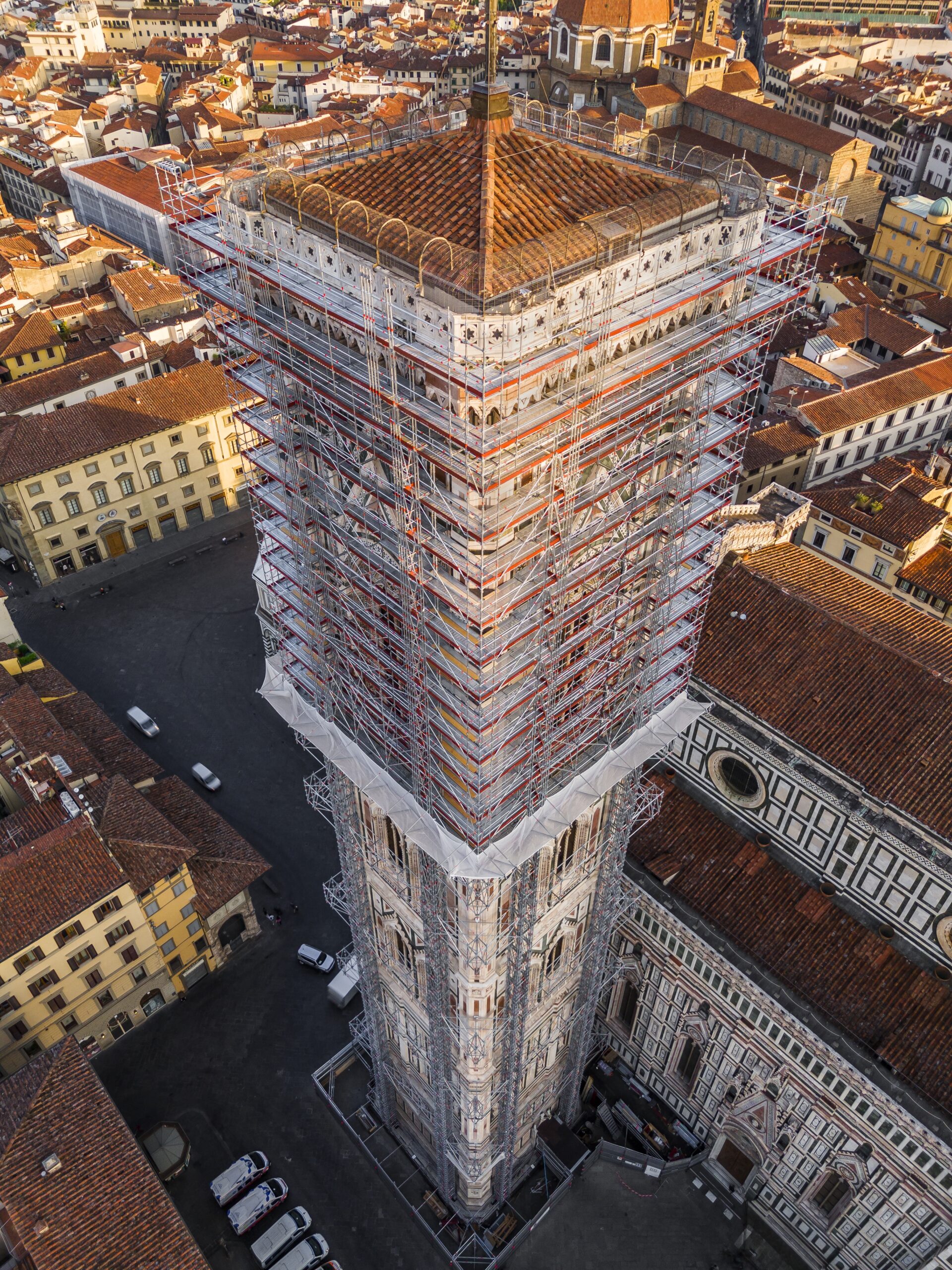 Photo © 2026 – Fabio Muzzi.
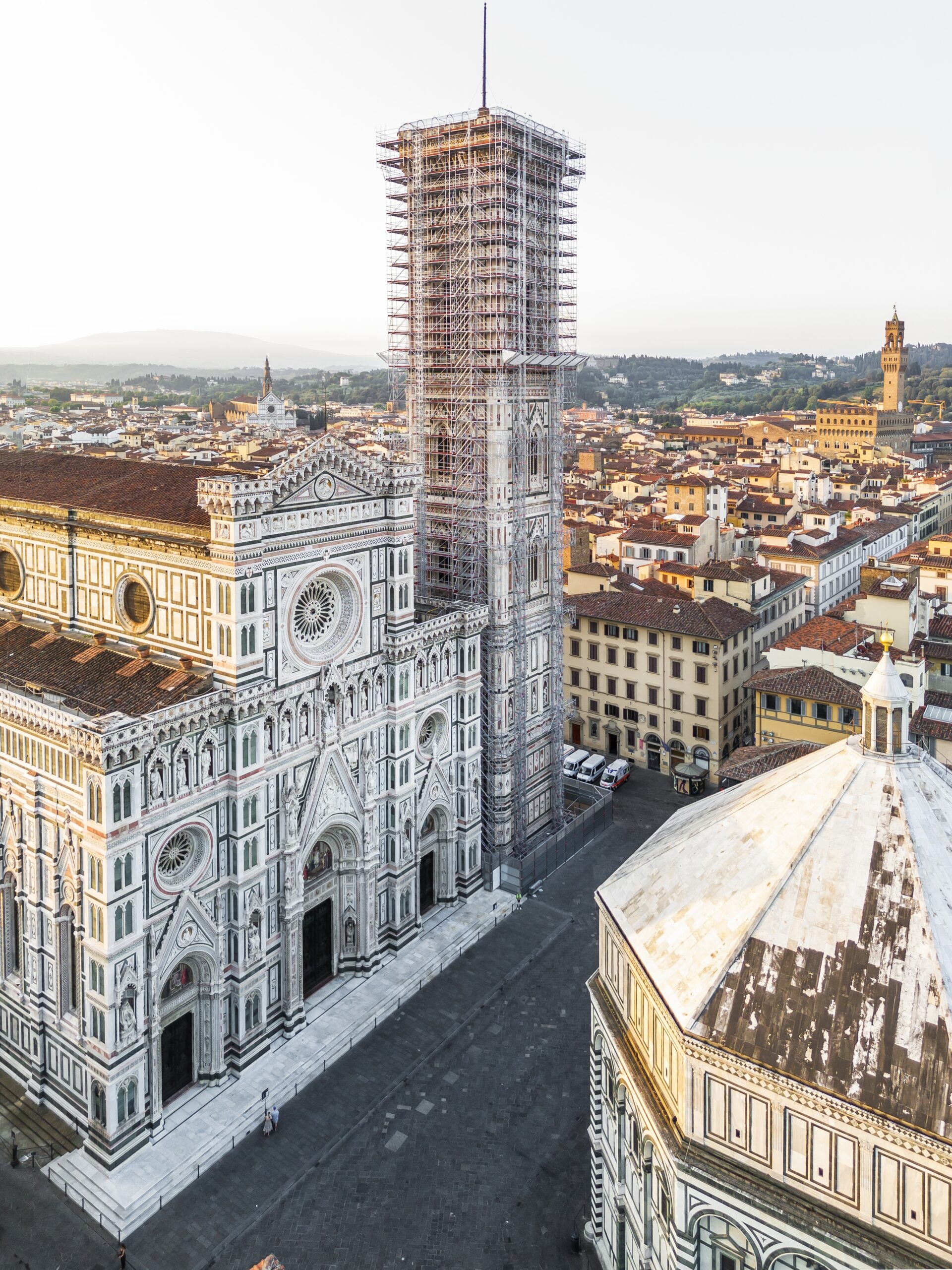 Photo © 2026 – Fabio Muzzi.
 default
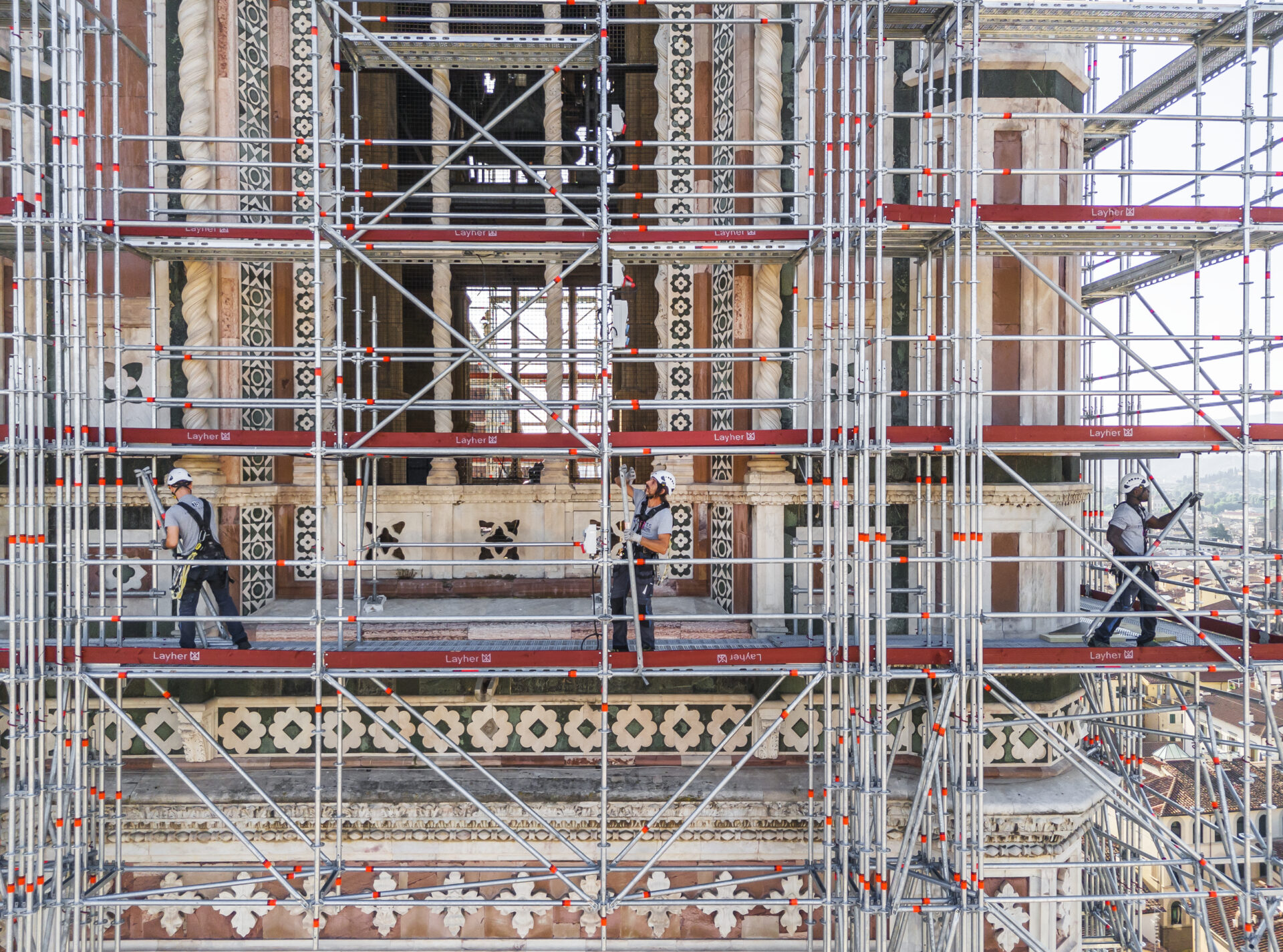 Photo © 2026 – Fabio Muzzi.
It is the first time the Campanile has undergone a complete restoration, both inside and out. Numerous interventions have taken place since 1939, but these have been limited to individual sections of the monument. The latest project has become necessary due to significant deterioration of the exterior marble cladding, with particularly evident damage to the projecting elements of the upper terrace and its decorative features.
The project has also had to accommodate some special residents: a pair of peregrine falcons that has nested on the Duomo monuments since the mid-2000s. Working with Lipu and ornithological experts, the Opera modified the scaffolding schedule after identifying a female incubating eggs in one of the Campanile’s 149 putlog holes, allowing three chicks to hatch and take flight.
The restoration will begin with an extensive programme of surveying, investigation and diagnostics. “The intervention is aimed at conserving and safeguarding the integrity of the monument,” says Beatrice Agostini, head of the Opera’s restoration office. Specialists will assess colour changes, surface deposits, encrustations and black crusts, while also examining existing cracks and potential structural issues. Restoration methods will then be tailored to the different materials and their individual conservation needs.