Women of the Flood: A New Future for Florence is the latest issue of The Curators’ Quaderno, created by Calliope Arts and Restoration Conversations, with The Florentine Press.
Out on a ledge
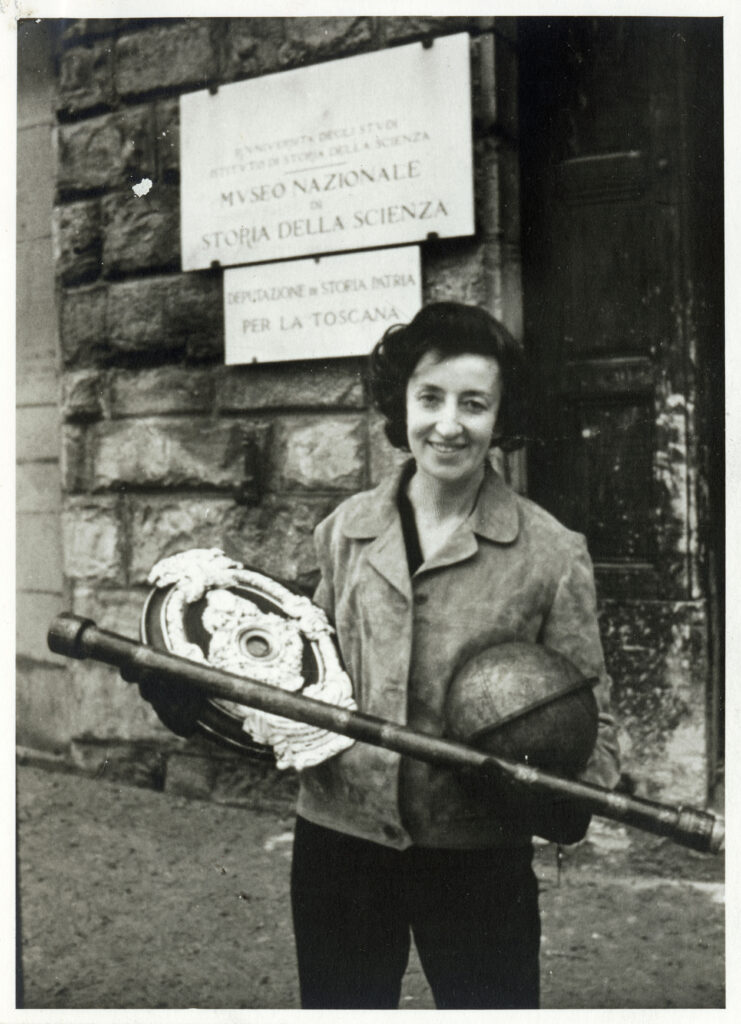
At Museo Galileo, the Museum of History of Science at the time, director Maria Luisa Righini Bonelli singlehandedly moved the most precious elements of her collection to the upper floors. Then, fearing the building’s collapse, she climbed out the window, inched her way along the wall and jumped into the Uffizi’s window to save whatever she could balance and carry. Thanks to many dangerous back-and-forth trips, she carried age-old “technology” to safety, including compasses, astrolabes and, most notably, Galileo’s telescope.
An unequal struggle and equality
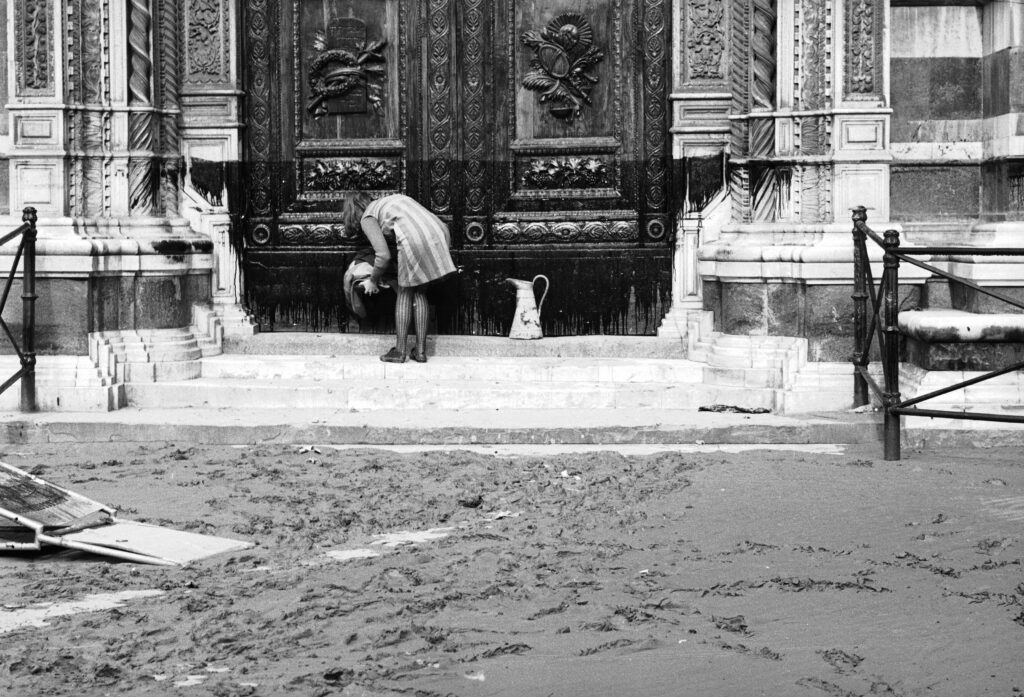
One woman, pitcher in hand, works to wipe the sludge from the door of the Duomo’s rectory. Part of the Alinari Archives, this photograph captures the dilemma facing Florentines in the flood’s aftermath. 600,000 tons of mud and rubble invaded the city when the Arno burst its banks. The people of Florence grappled with an unequal struggle as Rome was slow to send aid and heavy equipment. Although the picture’s protagonist wears a dress, the flood changed fashion for women in Florence, and, that November 1966, Florentine women started wearing trousers in public for the first time.
Open hearts, muddy hands
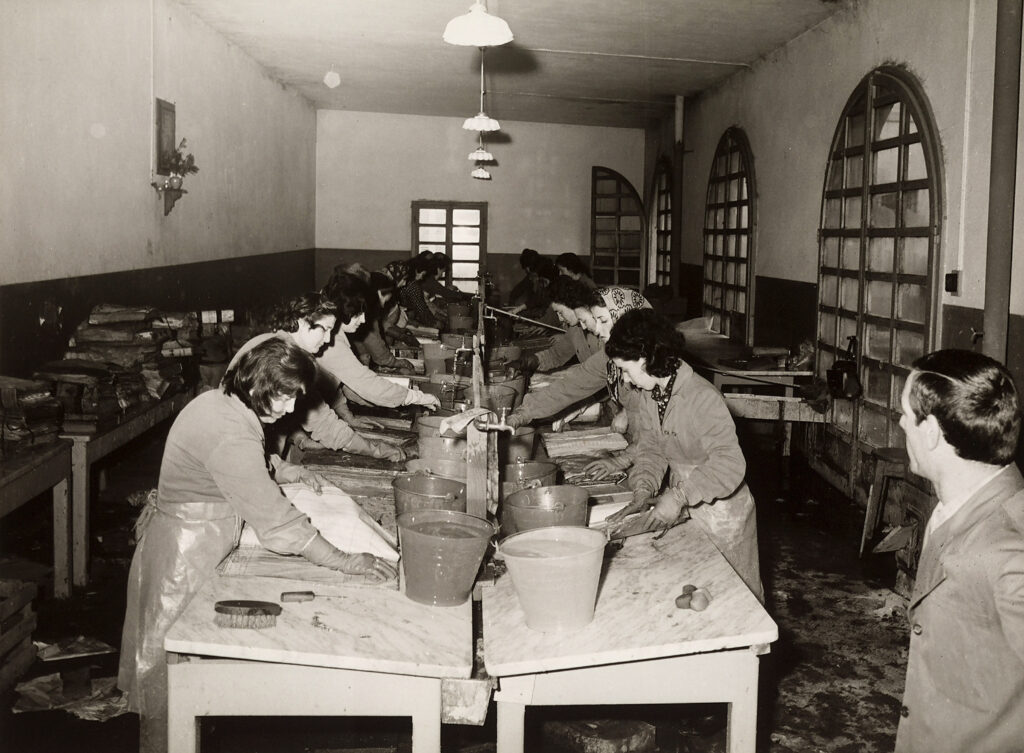
The National Central Library led a major segment of the restoration effort. The washing of its many “pages” began at the railway station, one of the only places in the city with running water. Over 1.3 million books and periodicals were lost in the sludge at the NCL alone. In the aftermath, the now-iconic venue morphed into a major centre for the Mud Angels’ efforts. It was a time of giving spirits and many hands. Young men and women came to Florence from all over the world to salvage what they could of the city’s treasures.
The clean-up act
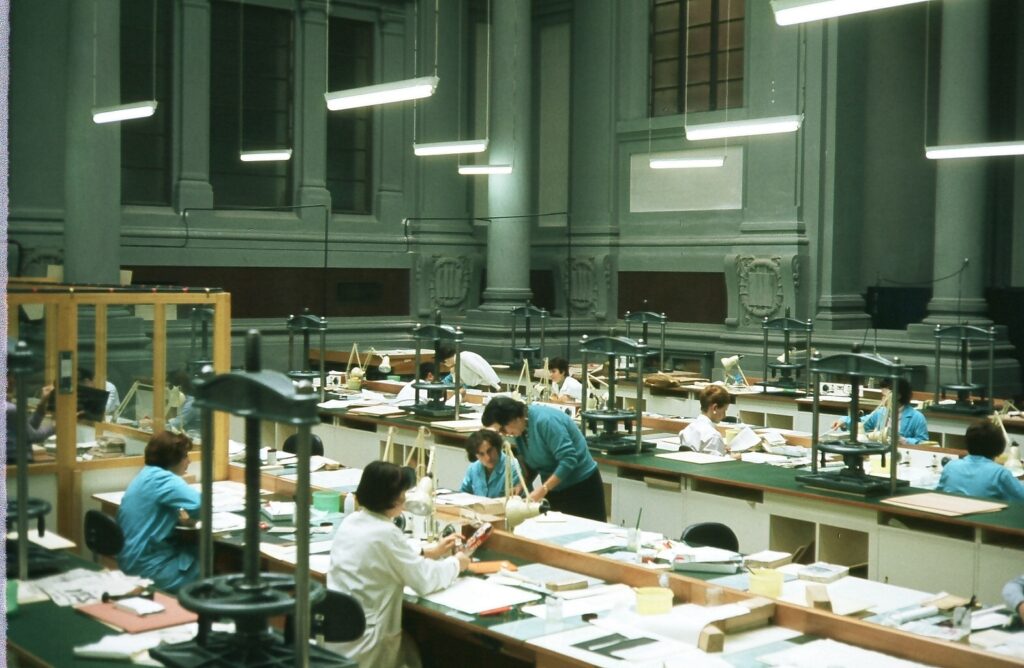
The Arno’s flooding revolutionized conservation history. Among the women at the forefront at the National Central Library were bookbinder Dorothy Cumpstey and chemist Margaret Hey. By the spring of 1967, the library set up a permanent restoration laboratory to address the various phases of repair, which included analysis, washing, drying, mending and re-binding. Today, the library continues to support a programme to recover and restore its endless holdings damaged by the flood.