Caravaggio is one of the world’s most recognized European painters. An artist with a technique as spontaneous as his temper, the realism of his compositions was as intense as their spatially continuous chiaroscuro settings. His work shocked many contemporaries: “In this painting there are but vulgarity, sacrilege, impiousness and disgust…” wrote one cardinal’s secretary.
Today, a mania surrounds Caravaggio, considered by many to be the first modern artist. Shelves of books attest to ongoing scholarly interest, while Instagram posts, novels and Derek Jarman’s dark and sensuous film guarantee long queues in museums. The blockbuster exhibition devoted to his career at Rome’s Palazzo Barberini is a sell-out: tickets are as rare as hen’s teeth with none available online before the show closes in July.
So, it is surprising that this fascination is a recent phenomenon, unknown a hundred years ago. The change can largely be attributed to Roberto Longhi. This writer and critic had an impact on Italian art history that cannot be overestimated and is the focus of Villa Bardini’s absorbing survey. With his wife and intellectual equal, the writer Anna Banti, Longhi settled in Florence after years of teaching in Bologna. Villa Il Tasso, their palatial home in Gavinana from 1939 until Longhi’s death in 1970, now houses their libraries and art collection in a foundation that promotes their work.
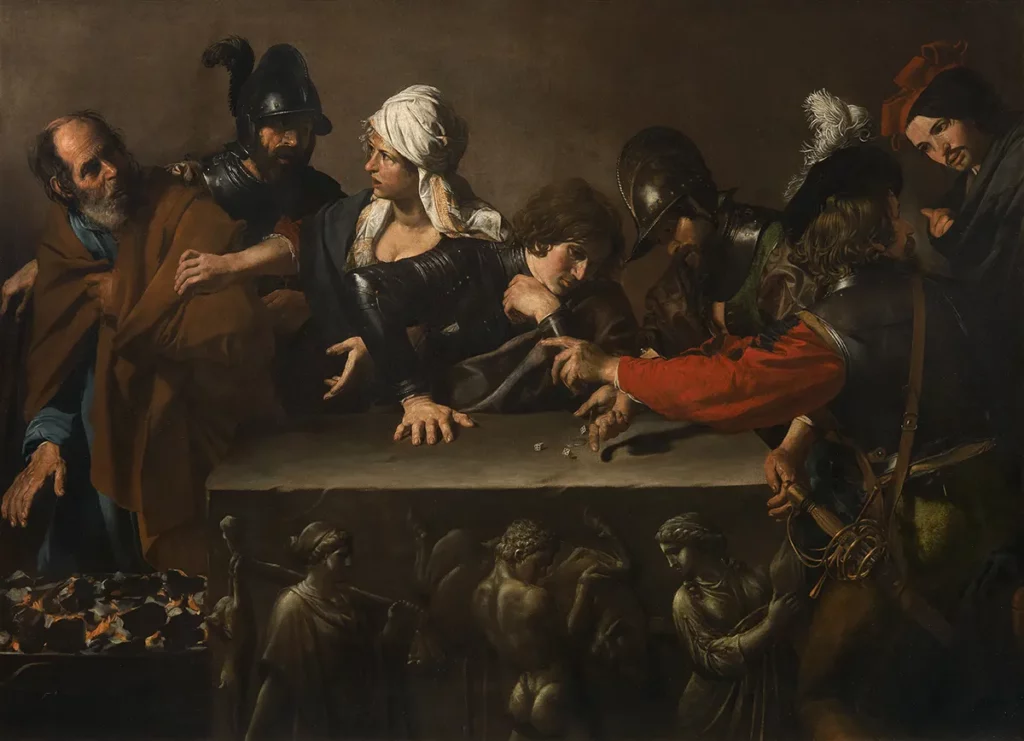
Emerging from the exhibition is the image of suave, sophisticated and social intellectuals. Gathered in its rooms are major examples of the historical paintings Longhi acquired. The first room sparkles with outstanding canvases by Baroque artists he championed. These include Jusepe de Ribera and Valentin de Boulogne, painters who learned from their contemporary, Caravaggio, and took on his style. The master himself is represented by A Boy Bitten by a Lizard (c. 1595), an early work of concentrated theatricality, in which an effeminate youth recoils in pain and surprise from the grasp of the reptile still clinging to his finger.
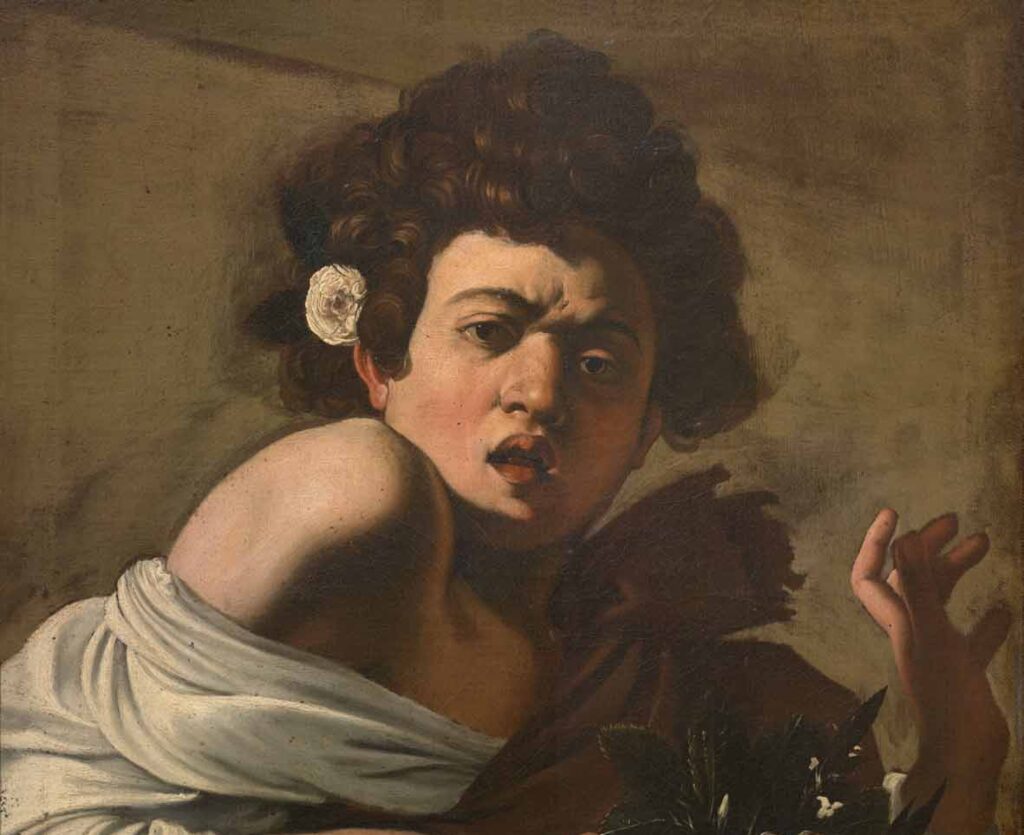
Working from a model rather than relying on imagination as in his later output, Caravaggio made two versions of this particular subject—and there may be a third and more. The best known is in the National Gallery, London; along with Longhi’s version, it is accepted as being by the great painter. Yet, here is a puzzle: Longhi maintained that Caravaggio never repeated an invention. These two canvases, however, suggest that the painter was just as repetitive as other artists, even prone to copy artists he admired, especially at the start of his career. Students, like now, were always in need of money.
Caravaggio experimented constantly and copied his own work to satisfy the growing market in his lifetime. He varied the amount of detail in each and was incapable of being slapdash. No one else was able to reproduce his nuances of design or include the things he noticed. Teasingly, though, one question remains: if several versions exist of a painting, which is the first rendition, the original?
Scholars of Longhi’s fame and stature can both open doors to new areas of study and present obstacles. That happens when they devise methodologies that help and hinder at the same time. Longhi was a precocious connoisseur. By the age of 30, he had published groundbreaking essays that brought Italy’s early schools of painting, the “primitives”, back into general awareness. Applying formalist techniques that stressed properties like linearity, flatness and compositional clarity in pictorial style, he was able to identify the authorship of many overlooked artworks, enriching knowledge of the period. Sometimes that adherence was limiting, creating an airless aesthetic bubble that allowed little space for considering the social and political circumstances in which these artists worked. Longhi also happily maintained a decades-long feud with Bernard Berenson, who devised alternative methods upon which they could not agree.
Nonetheless, Longhi’s achievements remain considerable. Not only did he revive the reputation of Caravaggio, in 1927 he transformed appreciation of Piero della Francesca with a book that is still significant for its observations and is a pleasure to read for its narrative quality. By that time, of course, Italy had entered the semi-isolation of the Fascist regime. The dictatorship maintained its authority by implicating its ablest minds in its essentially provincial outlook. Longhi was inevitably affected, an aspect of his career that this show maybe skates over. Yet the critic’s interest in early Renaissance “primitivism” came to embody values that coincidentally reflected the regime’s nation-obsessed activity.

Moreover, Longhi’s interests extended to the contemporary art scene. He was an early supporter of the Futurist painter Umberto Boccioni. Writing in 1913, he used his method to describe Futurism’s formal innovation as a modern Baroque style and the source of a specifically Italian aesthetic. His work went on to deal with aspects of national identity that touched on the broader realm of national politics.
This exhibition selects examples of the paintings he added to his collection by his contemporaries. He had no admiration for Picasso, choosing Matisse, and was disdainful of abstraction, the defining development of the last century. Instead he preferred figurative representations by Italians such as Carlo Carrà and Mario Mafai, who were experimental but conservative. Longhi was also drawn to Expressionism, including one of its key post-WW2 figures Renato Guttuso in his collection. Guttuso was a member of the Italian Communist party and a senator; his painting was characterized by social and political commentary. Longhi reserved his strongest support for Giorgio Morandi, whom he knew from Bologna. One room is devoted to this relationship and it is possible to sense the writer and painter sharing quiet penetrative analysis of the formal possibilities Morandi never tired of exploring in paint.
Longhi’s influence on Italian cultural life was considerable and evident in the contributions of those he inspired. Pier Paolo Pasolini’s relationship with the visual arts, and notably painting, grew from being an art critic in his twenties and an ardent student of the great art historian. When RAI embarked on the task of educating audiences with art documentaries, both Longhi and Banti were involved in programming.
“Art history,” Longhi believed, “…all Italians should learn like a living language as children.” He did not succeed in that aim; no one ever has in any country. With his elegant prose style, he combined the sensibility of an artist with the penetrating judgment of an art critic. The American poet John Ashbery, himself a distinguished art writer, declared, “It is difficult to think of [another modern] critic whose work is so close to the art it embraces that it becomes itself a kind of art.”
Caravaggio e il Novecento: Roberto Longhi, Anna Banti continues at Villa Bardini until July 20.