Perched on a hillside just outside Capalbio, the Tarot Garden (Il Giardino dei Tarocchi) feels like a portal into an arcane dimension, where gleaming mosaics, enormous figures, mythic beasts and esoteric symbols rise from the Mediterranean scrub. It represents the life work of Franco-American artist Niki de Saint Phalle (1930–2002), who devoted more than two decades to building what she called her “destiny”. Today, her granddaughter Bloum Cardenas oversees preservation of the site. “It’s about making sure people can still come and enjoy it in 300 years,” she tells us. “That means constantly experimenting with materials, colours, mirrors.”
 Photos by the author

De Saint Phalle originally planned to build the garden near Santa Barbara, California, but in the 1970s, her husband, the Swiss artist Jean Tinguely, took her to St. Moritz, where she reconnected with her old friend Marella Caracciolo di Castagneto, now going by the last name Agnelli after her marriage to Gianni Agnelli, also known as L’avvocato, the influential Fiat chairman who defined postwar Italian industry. It was Marella who suggested Niki visit Capalbio, a rugged part of southern Tuscany with a similar flora to California, where she found an amphitheatre-shaped former quarry, just the canvas she had been seeking.
Work began in 1979. She was nearly 50, suffering from arthritis and had no external funding. Yet the artist gathered a team of artisans, friends and locals, transforming the barren hillside into a fantastical village of sculptures, in the style of monumental Italian gardens like Bomarzo and Villa d’Este. The park would finally open to the public almost two decades later, in 1998. “She always created families through her work,” recalls Bloum. “She might have thought of herself as a bad mother, but she was a great grandmother. And here in the garden, she built another family. One of the guys has been working here for 40 years, from the start.”
Each of the monumental sculptures corresponds to a Major Arcana tarot card: the Empress, the Hanged Man, the World, the Devil. But de Saint Phalle’s interpretations were characteristically personal: “She didn’t want to do Death or the Devil at first,” says Bloum. “Because when she built something, her life became submerged in it. But in tarots, death isn’t about dying, it’s about rebirth.”


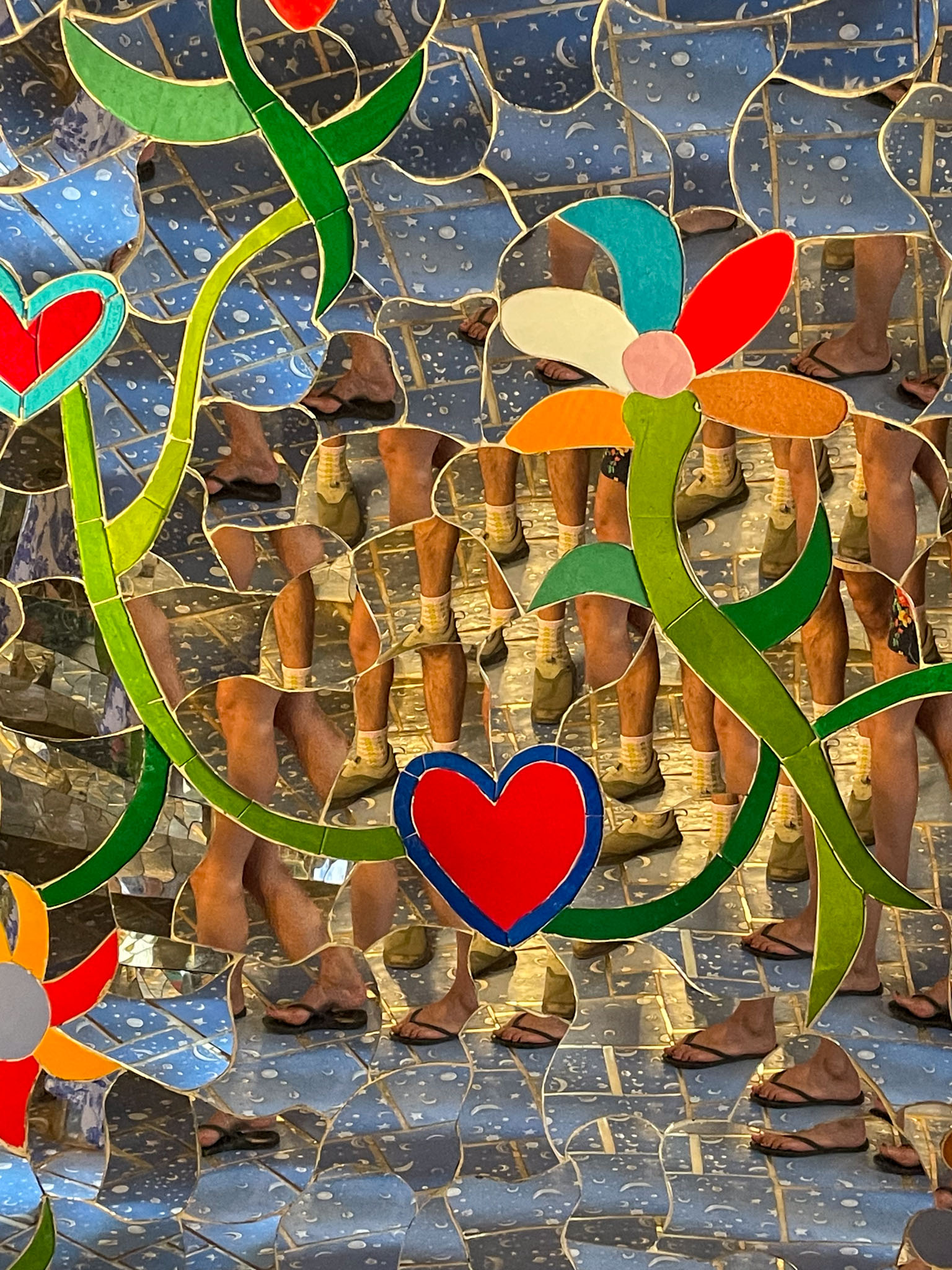
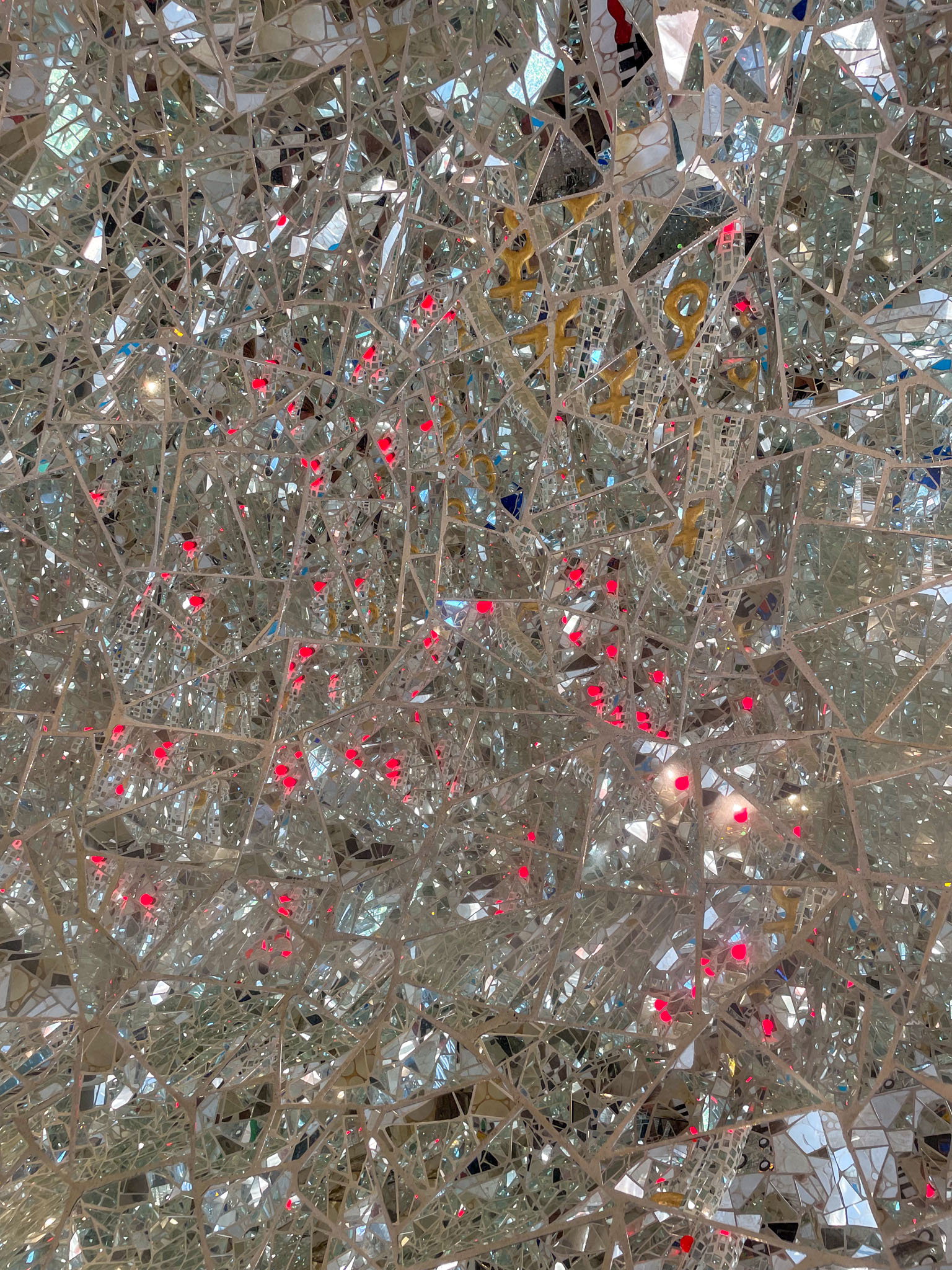
During the construction of the garden Niki lived inside the Sphinx-shaped Empress, which she reinterpreted as female, going against the canon of Egyptian mythology. Here, mirrors multiply every reflection into a Cubist dream and visitors are swallowed in a kaleidoscope of shifting perspectives. “Sleeping here with all the mirrors was interesting,” says Bloum. “Talk about deconstruction. Many couldn’t deal with it. Mirror, mirror on the wall, who’s the first of them all?”
Mirrors are everywhere in the Tarot Garden, especially on the vast façade of the Tower of Babel that once reflected sky and land before falling prey to the elements. “Originally it was supposed to float,” says Bloum. “People look now and say it looks like stone, but that’s not the idea. It should shimmer.” Restoration has become a battle against time, materials and climate change. The older Venetian mirrors Niki had used contained lead, producing a depth of light modern glass can’t replicate. But lead is now banned, forcing the foundation to experiment with new methods. Collaborations with the Getty Conservation Institute have brought scientific rigour to the process, but Tuscan summers are getting hotter, winters harsher, and salt-laden sea air accelerates decay. “By the time we finish restoring one section, another has already turned grey,” Bloum admits.
De Saint Phalle’s work cannot be separated from her personal history, which carried her from a bourgeois upbringing to the radical act of shooting her canvases with rifles.


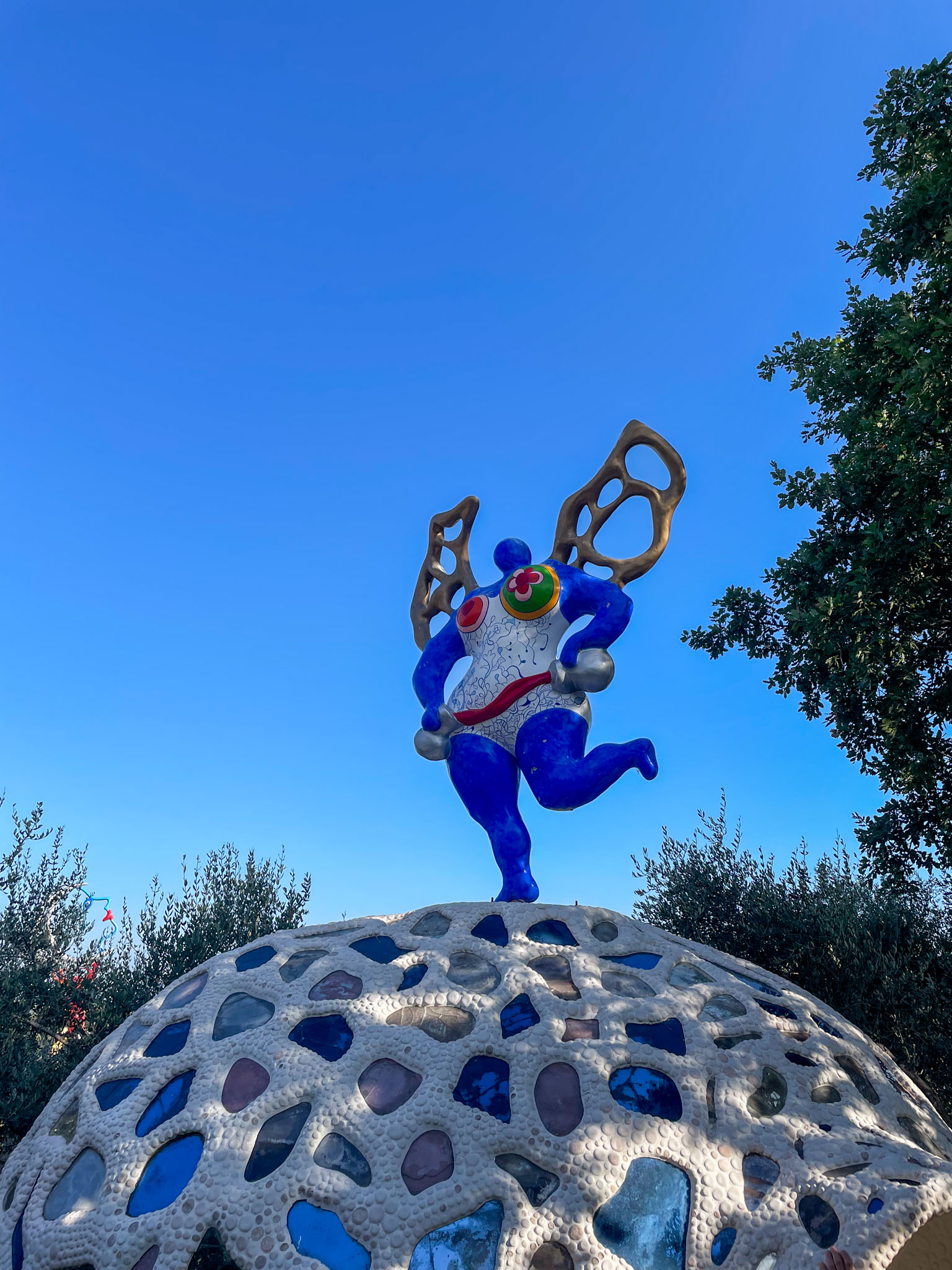
“She grew up with this mythology of knights and Templars in the family, but once she developed breasts, the family tried to put her on the market. That made her furious. So she created her Nanas, the enormous, brightly coloured female figures. She thought ‘Ok, I’m going to make them big so you feel small.’” The neon yellow, red and cobalt blue of the Nanas stood out in 1960s Paris, where everything was somber and monochrome. “People think they’re whimsical. They’re not. They’re aggressive, unapologetic. She used colour as seduction, but also as a weapon.”
Playful on the surface, the Tarot Garden contains deeper commentaries. The Tree of Life contrasts a colourful side, unfolding a love story, with a monochrome half addressing AIDS, racism, cruelty and hate. Inside, the Hanged Man hangs in suspension, a symbol of perspective.
When de Saint Phalle learned of a proposed power plant nearby, she designed a giant hand to “stop” it, which seems to have worked. “That was the first use of mirrors in the garden,” Bloum explains. “She thought the fingers looked too chubby. So she covered them in mirrors, and then they invaded everything like a virus.”
Touch is central to the experience: visitors are encouraged to feel surfaces, pass through doorways and climb into sculptures. But hands leave grease on gilded figures, and some works have been damaged. “We try not to put up ‘Do Not Touch’ signs. Instead, we plant spiky bushes around fragile areas.”

De Saint Phalle funded the Tarot Garden herself, often through commercial ventures like perfumes, furniture and design objects, moves that scandalized the French art establishment. “She was seen as too commercial,” says Bloum. “But it gave her freedom. She wanted to stay independent, and we continue that today. We’ll accept donations, but never interference.”
In her will, de Saint Phalle insisted the garden remain as it was at her death in 2002, even though it’s incomplete. “She wanted it free from cultural tourism, which is also why we don’t offer guided tours. She’d be horrified by how people consume art today.”
For Bloum, de Saint Phalle was both grandmother and a magician. “She could talk about something, and then it would exist,” she remembers. “She was generous, inspiring, larger than life. I was lucky to have her. And when you’ve been that lucky, you have to give back. That’s what preserving this place means.”
Walking the Tarot Garden is to step into Niki de Saint Phalle’s imagination, her struggles, her humour, her feminism, her magic. In one of her reflections spread around the garden, de Saint Phalle wrote: “If life is a game of cards, we’re born without knowing the rules, yet we must play our hand.” In her own hand, she held a deck of tarots, and thanks to her granddaughter’s dedication, the game continues.
Now is a great time to beat the crowds and visit the Tarot Garden, which will be open for the season until October 15. The garden reopens in April 1 and welcomes visitors daily with timed entry slots.
For updated opening hours, tickets and directions, see ilgiardinodeitarocchi.it.