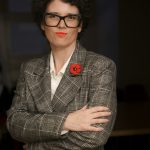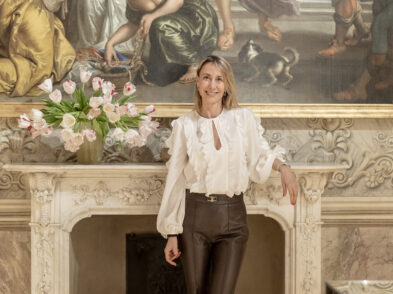
Francesco Sanapo, award-winning barista and founder of Ditta Artigianale, the Florence-based speciality coffee roaster established in 2013, spoke about his journey and vision for the future of coffee during a live and streamed conversation at The British Institute of Florence.

Do you remember your first cup of coffee?
Coffee is in the veins of all Italians. I still remember my mum preparing coffee every morning. I’d come home from school and she would be there with her friends, watching a soap opera on TV and making coffee for all the ladies there. I’d be upset because I didn’t understand the value of it and I just wanted to watch MTV, which wasn’t allowed because my mum was considered the “Coffee Lady”. My mum taught me the ritual of coffee, while my dad taught me how to do hospitality because he worked in restaurants. I’m from Puglia, from a beautiful village in Salento called Specchia, not far from the sea. I moved to Florence on March 8, 2000. Festa della Donna. My brother was working in Florence at the time and the only thing I knew how to do was working in the hospitality sector because my dad used to take me to work with him during the summer. I handed out my CV in many cafes and was offered a job washing cups. I was in the back cleaning, admiring the baristas and their espresso machine, but they wouldn’t let me touch it. It was a nightmare for me. But one day all the baristas were sick. The owner tried calling everyone, but nobody could come. In the end, he looked at me and said, “You, it’s your turn”. I was super excited. I’d been watching, so I knew the customers and what they wanted. The day after, the owner of the cafe told me that I had the job. I’m from the south of Italy, where we have no jobs, so when they gave me the opportunity, I grabbed it.
How did you make the leap from barista to winning awards?
I studied a lot to become a better barista. To prove myself, I decided to compete in the Italian Barista Championship, which is really important in the coffee industry. I won three times in a row, but I came last the first time I competed in 2008. It was a wake-up call for me. It was annoying, but it didn’t stop me. I came second in 2009, half a point less than first place. It destroyed me, but gave me the fire to keep trying. In the end, I came first in 2010. That’s when I called the barista who had let me touch the machine to say, “Hey, I’m the best Italian barista”. I won again in 2011 before stopping in 2012. I took a year out to study because I was winning in Italy, but not performing in the World Championship. In 2013, after spending a year studying different coffee cultures around the world, I came back to Italy and won the Italian Barista Championship again and made the final at the World Barista Championship, which was in Melbourne that year. At the time, I was working as a coffee consultant for many companies, but on the flight back to Italy, I wrote a resignation letter to everyone, and at that moment Ditta Artigianale was born.
Is Italian coffee really so much better than other coffee around the world?
We consider Italy the best place to drink coffee, but I’m not sure. Or let’s say that there are many different coffee cultures that are so precious, so beautiful that we need to respect them and probably get the best of every culture.
What’s the difference between what you get at a normal Italian bar and specialty coffee?
First of all, speciality coffee has no defects. It’s pure quality. And then we know exactly where the coffee comes from: the botanical species, variety, process and producer who grew the coffee. We know everything. Compare this to wine. In Italy, when we go to a restaurant, we don’t simply ask for wine. We want to know the varieties—Cabernet Franc, Merlot, Sangiovese—and how it was made. But when we go to a café, we just ask for a coffee. Speciality coffee is about knowledge, learning about the bean and the people who grew the raw material. Speciality coffee can be single origin, but it can be also a blend. It’s also about the experience: the interior design, the light, comfortable seating and a clean table.
You recently opened your seventh café in Florence, in via Solferino, and also have a coffee shop in Milan. What’s your business model?
First of all, I opened the roastery. I wasn’t thinking about opening a cafe because I know how difficult it is, especially in terms of your personal life. But it was equally hard having the roastery and trying to sell coffee to cafes because in 2013 nobody understood why my speciality coffee cost more than any other commercial brand on the market. Plus, I wasn’t providing an espresso machine to the cafe because that’s usually how roasteries work. You open the coffee bar and they give you the espresso machine and grinder. In the end, I opened a coffee shop out of desperation because I don’t know where to sell the coffee. I was roasting on Mondays and Tuesdays before spending all day long in the coffee shop in via dei Neri. Now we have seven coffee shops in Florence and one in Milan, which is super successful. We focus on the retail stores because they are where we can create value, but we still have the same mission…I wasn’t born in Florence, but I consider Florence my city because it gave me an opportunity. Opening in Milan this year and spending time there made me understand the difference between the two cities. Doing something new in Florence required a lot of time to welcome the innovation. Here we also have the high and low of the tourist season, which makes it hard to manage our staff. In February there’s no work, but you need to keep your employees because you need a lot of people from the end of March onwards. Milan is peak every day. They know speciality coffee. People ask what coffee you have in the hopper today. We sell a lot of beans, which is not common in Florence.
There’s also the educational side of your coffee school in Florence.
Our Scuola del Caffè at Sant’Ambrogio is an important project that was established when we realized the future of Ditta Artigianale lie in knowledge transfer. Every employee studies at our coffee school before touching the espresso machine. Plus, we organize courses for professionals from other cafes as well as consumers. So now we have a bunch of internationals and locals who come to learn about coffee, which is very exciting.
How much is climate change affecting the way in which coffee is grown around the world?
Producing coffee now costs three times more than it did five years ago and probably five times more than ten years ago. Someone needs to absorb the cost, and not the producer because they already have a very low margin. So, if we buy good coffee right now, we need to pay much more, which will be reflected in the price of the coffee. Climate change is a big challenge for the producers because the plant will get fungus due to the change in temperature. Instead they are trying to plant at a higher altitude, but there’s the limitation because if they go higher, it will probably involve deforestation. That’s why it’s important to visit the producers, to see how they treat the environment. Climate change has reduced coffee production by around 20 percent in the last 20 years. There’s big demand because coffee is very well known in Asia, which they used to drink tea, but now they drink coffee.
What does the future hold?
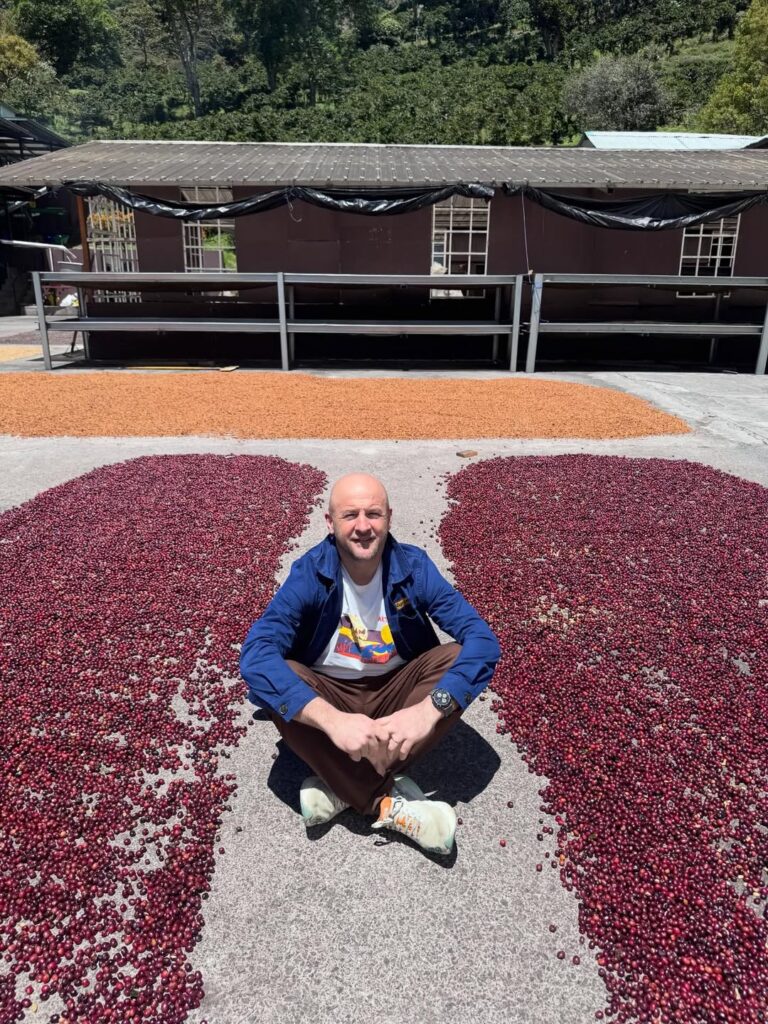
Next month, I’ll be travelling to Honduras, Panama and Guatemala to visit our producers. I want to check where my coffee comes from and I want to spend time with the people involved in my business. For example, I decided to buy my coffee from this one producer in Guatemala because they had plans to open a school for the nomad coffee bean pickers, who travel about, following the crop from November to the end of March. It makes me proud to serve their coffee. Drinking coffee and feeling enriched is the message I want to share with my clients every day.