You never forget your first time at the Artemio Franchi Stadium: the raw energy of the Curva Fiesole, packed to the rafters with diehard Fiorentina fans; the sea of purple stretching as far as the eye can see; the smoke bombs that, despite being illegal, fumigate the air; and the oohs, aahs and inevitable soccer gossip. There is also a wonderfully folksy pre-match oddity that often takes newcomers by surprise: the jolliest of opening songs, sounding for all the world like something played by a marching band. Titled Canzone Viola (literally “Purple Song”), the anthem was adopted by fans in the stadium after fliers bearing its lyrics were handed out ahead of the Fiorentina-Roma match on November 22, 1931.

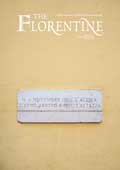
Issue 336 – Alive and Kicking
PDF Digital edition ONLY – The Florentine September 2026
In 2026, Fiorentina celebrates its centenary—and we mark the occasion with our first-ever full purple cover. Plus, news, events and inspiration for September in Florence!
In 2026, the club celebrates its centenary—and we mark the occasion with our first-ever full purple cover. La Viola, however, was never supposed to be viola at all. The original team, established in August 1926 through the merger of two sports clubs spearheaded by the Marquis Luigi Ridolfi Vay da Verrazzano, played in a red-and-white kit at a stadium along via Bellini. The purple was introduced just a month later at the behest of the Hungarian coach at the time, Károly Csapkay, who drew inspiration from the colours of his nation’s powerhouse Újpest.
Despite the inevitable ups and downs of professional football, Fiorentina has enjoyed undeniable success over its first 100 years. The club has been crowned Italian champions twice, in 1955–56 and 1968–69, and has won six Coppa Italia trophies and one Italian Super Cup. Fiorentina was also the first Italian team to win a UEFA competition, claiming the European Cup Winners’ Cup in the 1960–61 season. It is one of just 15 European clubs—and one of only two Italian clubs, alongside Juventus—to have reached at least one final in each of the three historic UEFA competitions. Fiorentina reached the European Cup final in 1957, becoming the first Italian team to play in the final of Europe’s premier club competition; the European Cup Winners’ Cup final in 1961 and 1962, making it the first Italian team to reach two consecutive European finals; and the UEFA Cup final in 1990.

Fast-forward 100 years and Fiorentina boasts one of Europe’s most state-of-the-art training centres, Viola Park, the legacy of former owner Rocco B. Commisso, who died in January. Meanwhile, the stadium continues to undergo a major renovation, scheduled for completion in 2029. Read about Fiorentina’s centenary celebrations.
September feels like a new year: the resolutions we made over the summer are either put into practice or gradually fade into oblivion, heading in the same direction—one hopes!—as the monstrous heat and humidity we have endured in recent months. This issue of The Florentine aims to be a guide, whether you’ve just moved to Florence or are simply looking for new ways to experience the city. Get informed with our news section, plan your schedule with our pick of the best events and find inspiration in local success stories.
If this is your first time reading The Florentine, welcome. If you’re a returning reader, bentornati. Either way, we’d love to meet you at our readers’ event on September 10, when we’ll launch the Il Bisonte x The Florentine Bag, a limited-edition shopper bound to become the accessory of the season. Made from sturdy cotton-and-linen canvas and finished with vegetable-tanned leather handles, it is the perfect size for carrying your copy of the magazine, along with all your other essentials.
Buon rientro!