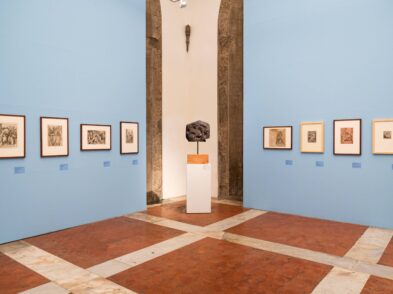
Active for over two decades, Fondazione MUS.E is the engine behind much of Florence’s public cultural life. It shapes how the city’s civic collections are experienced, curates educational programmes and animates historic spaces like Palazzo Vecchio with tours and events. We speak to the director of cultural mediation Valentina Zucchi to understand the human connection at the centre of their work.

What inspires the way MUS.E presents culture and art?
At the heart of MUS.E’s work lies the deep conviction that culture and art are beneficial for everyone. This is not an abstract belief; it’s something we witness constantly through the people we engage with. Our commitment is to make museums, art and culture accessible in the broadest possible sense.
The diversity of our programmes reflects this mission. By offering a wide range of languages, formats and itineraries, we aim to meet different needs, curiosities and personal backgrounds so that everyone can find a meaningful point of entry into culture.

What’s the importance and urgency of cultural mediation today and what are your current priorities?
There are two ideas I often return to. The first is that every day we share with visitors the very meaning of the existence of museums. We believe that everyone should leave a museum richer than when they entered. When asked why one should visit a museum, I like to answer simply: to know and to recognize, both the world and ourselves. This is particularly relevant today. Through history’s challenges and complexities, we gain the tools to interpret the present. The past matters because it serves as a reservoir from which we draw meaning for contemporary life. Museums are not just collections of artworks; they are deeply human spaces. While they may not be “essential” in a strictly functional sense, they awaken something higher within us. They nourish us emotionally, empathetically and socially. In a time of rapid change, this role feels more urgent than ever.
How do you see the public’s relationship with Florence’s museums, both locally and internationally?
Visiting a museum is always a choice and an investment of time, energy and money. Our responsibility is to honour that choice by offering experiences that are both meaningful and enjoyable. Without a sense of pleasure, engagement cannot truly happen. We address two main audiences. On one hand, there are occasional
visitors—Italians and international travellers— who may only visit once.

For them, the goal is to create a memorable experience, something they can “take with them” when they leave. On the other hand, there’s the local community: Florentines and residents who can return regularly. For them, museums are not just places to visit but places to inhabit. We design programmes that encourage repeated engagement, fostering a sense of belonging and familiarity. For example, around the Firenze Déco exhibition at Palazzo Medici Riccardi, we have organized tours of Giunti Odeon, the former Savoy Cinema, to grant locals (and not only) the chance to learn more about a place they might be familiar with, but are interested in delving deeper into. The same with the Ottone Rosai exhibition at Museo Novecento. We have arranged walks around Florence of places the painter frequented. The Card del Fiorentino is interesting in
this regard because it offers those who live here the chance to return repeatedly. Seeing people queue outside places like Palazzo Vecchio often prompts me to ask them, What are you seeking? Our work is to respond to that expectation with experiences that are both enriching and genuinely enjoyable. In an increasingly technological world, this human dimension is more important than ever. While digital tools can enhance the experience, cultural mediation ultimately relies on direct human connection, on empathy, presence and exchange. These are the elements that create lasting impact.
Among your initiatives aimed at inclusion and accessibility, are there any projects that have been particularly successful?
For us, the museum experience must be open to everyone. We strive to offer a wide range of formats that respond to diverse needs, whether physical, cognitive or emotional. That said, we are aware that we cannot yet reach everyone, and we see ourselves as being on an ongoing journey. Accessibility is not a finished achievement, but a continuous process. Each step builds on the previous one. Initiatives such as visits designed for blind and visually impaired participants, often shared with sighted visitors, are particularly meaningful. They challenge us to rethink the museum experience beyond its primarily visual nature, placing greater emphasis on sensory engagement and human interaction. Ultimately, what matters most is the relationship created with the person in front of us. This attention generates a form of richness that goes beyond the visit itself.
Is there a project that has given you particular satisfaction?
It’s difficult to choose as there have been many meaningful initiatives. However, I would mention our work with younger audiences, such as summer camps, MUS.English and Firenze dei Bambini (May 22-24). Children who participate often grow up with a sense of familiarity with museums. Years later, they tell us what it meant to spend time in places like Palazzo Medici Riccardi. They return not just as visitors, but with a sense of connection and belonging. That feeling of recognition, affection and continuity is one of the most rewarding outcomes of our work.