Two hundred years after the birth of Carlo Lorenzini, the Florentine writer better known as Carlo Collodi, Tuscany is celebrating the author whose mischievous wooden puppet became one of the world’s most enduring literary characters.
Florence
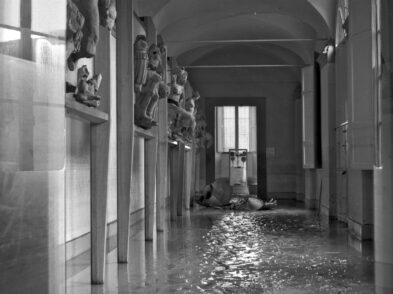
The exhibition C’era una volta… Un Re! Carlo Lorenzini detto “Collodi” tra satira, giornalismo e letteratura per l’infanzia (Once upon a time… there was a king! Carlo Lorenzini, known as Collodi, between satire, journalism and children’s literature) runs through June 15, 2027 at the Archivio Contemporaneo “Alessandro Bonsanti” (via Maggio 42). Original documents, rare books and artworks trace Collodi’s literary career and his place in 19th-century Florentine life. Among the highlights is his handwritten signature in the Vieusseux membership register, dated June 30, 1865, when Florence had recently become the capital of the Kingdom of Italy. Lorenzini was then an established journalist contributing to satirical publications including Il Lampione, Scaramuccia and Fanfulla. The exhibition features the first edition of The Adventures of Pinocchio, published by Paggi in Florence in 1883 and loaned by the library of the Cavalcanti middle school in Sesto Fiorentino. It is displayed alongside an 1881 issue of the Giornale per i bambini, where Pinocchio first appeared on July 7 that year. Published in installments until January 1883, the story was subsequently collected into a volume that became a landmark of Italian literature. The show also recalls the devastating flood of 1966, which severely damaged the Vieusseux collections. Among the surviving treasures is an 1892 English edition of Pinocchio, evidence of the story’s early international success, and Collodi’s translation of Charles Perrault’s I racconti delle fate (Fairy Tales), which still bears traces of the floodwaters despite painstaking restoration. Guided tours take place on Thursdays at 3pm. Booking is compulsory via prenotazioni@vieusseux.it.
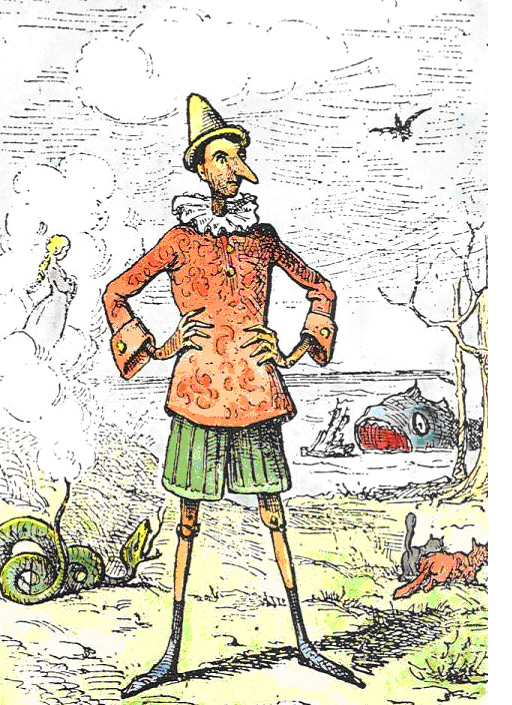
At the Biblioteca Marucelliana (via Cavour 43–45), C’era una volta… un re? Collodi scrittore per l’infanzia runs until November 6 and explores Collodi’s writing for children, from his translation of Fairy Tales to the schoolroom adventures of Giannettino and Minuzzolo. Original drawings, engravings and printing proofs by Enrico Mazzanti, the first major illustrator of the Pinocchio stories, reveal how the character’s visual identity developed.
Livorno
From November 1, 2026 to January 10, 2027, the Museo della Città, Polo Culturale Bottini dell’Olio, hosts Pinocchio. Le avventure visive di un burattino (Pinocchio: the visual adventures of a puppet). The exhibition explores both Collodi’s connection with Livorno and the character’s evolution through illustration, painting and sculpture. The historical strand draws on Collodi’s 1856 work Un romanzo in vapore. Da Firenze a Livorno, inspired by the journey along the Leopolda railway. The artistic journey begins with the 1883 edition illustrated by Mazzanti and continues through works by artists including Jacovitti and Roberto Innocenti. The exhibition is open Tuesday to Sunday, 10am–7pm.
Sesto Fiorentino
At the Biblioteca Ernesto Ragionieri in Sesto Fiorentino, Pinocchio tra le porcellane: Collodi e la Manifattura Ginori explores the relationship between Collodi, porcelain and the character’s artistic legacy. On November 15, a ceramics workshop for children aged 8–10, Pinocchio in tavola!, offers a hands-on introduction; booking is required.
For a character who has travelled far beyond the pages of his original story, the bicentenary is an invitation to rediscover both Pinocchio and his creator, a Florentine writer whose humour, imagination and curiosity produced a literary legacy that continues to inspire generations.