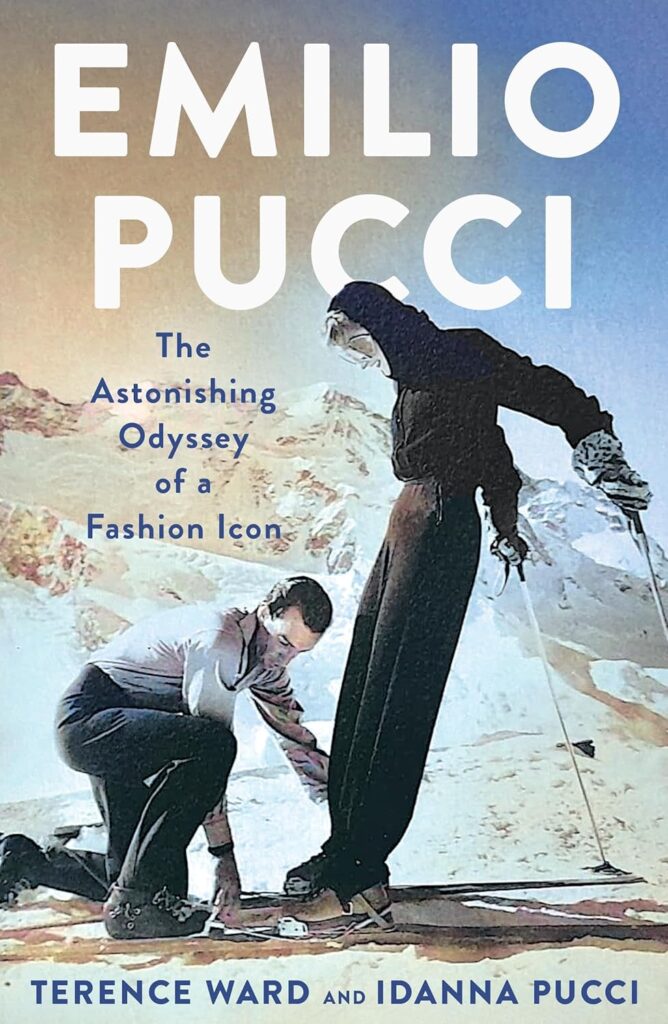
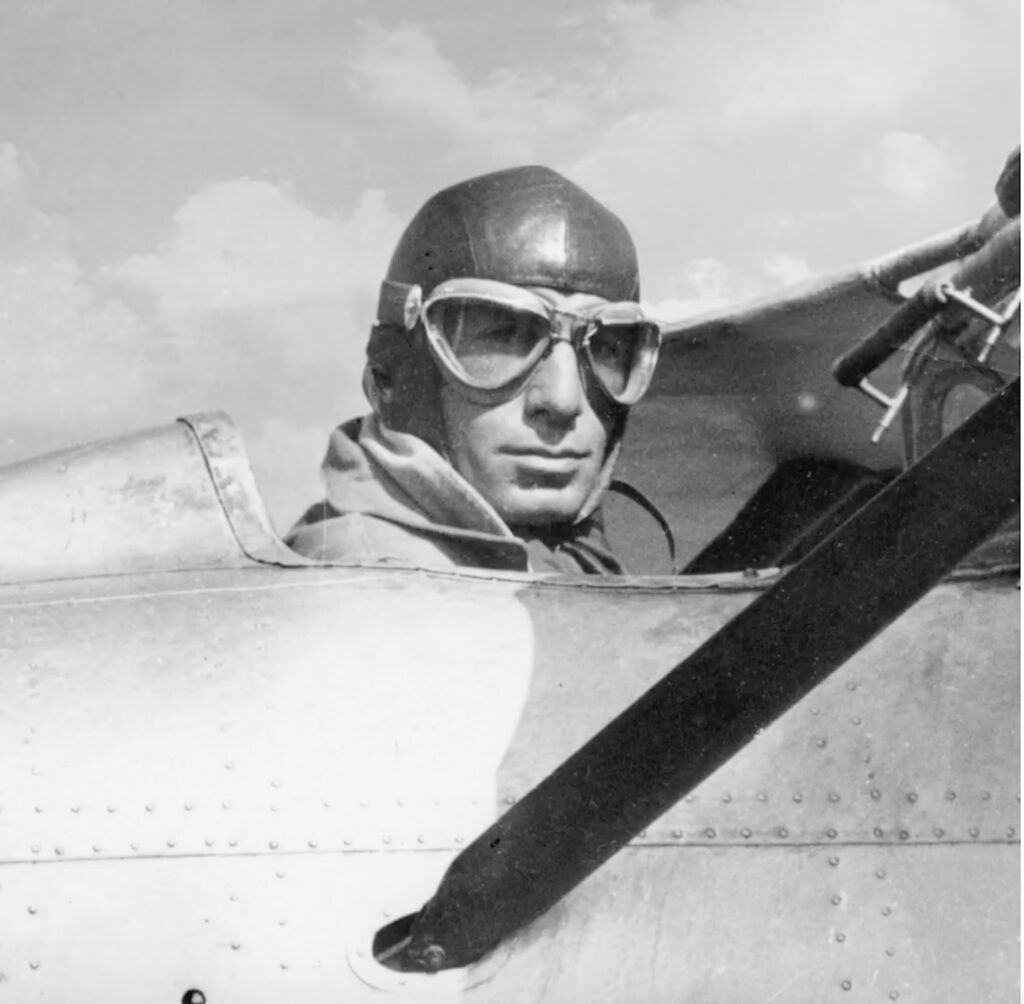
Florence lovers interested in the city’s wartime history and the extraordinary life of Emilio Pucci should look no further than Emilio Pucci: The Astonishing Odyssey of a Fashion Icon (St. Martin’s Press), the captivating new book by the stylist’s niece Idanna Pucci and her husband Terence Ward. In this richly researched portrait, the authors trace Pucci’s journey from carefree summers in Forte dei Marmi to a decorated fighter pilot, Nazi imprisonment and exile in Switzerland before his return to war-ravaged Florence, whereby the city becomes a central character in its own right, and, later, the launch of his iconic fashion career in Capri. Along the way, Pucci risked his life to deliver to the Allies what the New York Times called “one of the most important documents of the Second World War”. The authors spoke with The Florentine ahead of their June 8 presentation at The British Institute and their June 17 event at Pitti Uomo with noted journalist Suzy Menkes.
What inspired you to tell this story now?
Idanna: It all began a few years ago, when someone approached my aunt about making a documentary on her husband, Emilio. She was interested, but cautious, especially about the war years. I told her, “Don’t worry, Terry and I will handle that part.” The documentary was never made, but we were already deep into research that began at the New York Public Library. What really changed everything was a self-published book explaining how the Chicago Tribune uncovered the story of the Ciano Diaries. In its bibliography was a tantalizing reference: Report of Marchese Emilio Pucci on his role in the Ciano Diaries, National Archives. We tried to find it without success, even with the help of professional researcher friends. It became an obsession. Then, one sweltering day, I suddenly wondered: “Were the OSS war archives perhaps stored separately from the CIA archives?” Terry checked and discovered they were. There were 538 boxes, all very loosely catalogued. And there we were with two laptops, scrolling slowly through headings like Soviet banks in Manchuria and Werewolf Nazi spies in Syria. Finally, after two days, in Box 111, we found the report. Terry immediately called the US National Archives in College Park, Maryland and was told it would take three months to scan it. He hung up and called his nephew Dylan in Philadelphia.
Terence: When Dylan arrived, the room was full of World War II vets who had been waiting for hours. He started pleading at the desk. Finally, someone agreed to go and look. It was already in a tray, ready to be sent to be scanned with a three-month wait. Miraculously, it was meant to be sent to us. And that night, Idanna began reading her uncle’s words that you see in the book.
Can you give some elements of the research that didn’t make it into the book, which remain unforgettable to both of you?
Terence: There are a couple of things we didn’t want to dwell on. Emilio died in 1992 and the report he had written was declassified a year later. It had remained hidden for over 40 years within those files. And so, you’re reading these words that he wrote in 1945 for the first time. He was betrayed by Mussolini. Hitler and the Gestapo were trying to kill him and, in the end, the Americans also betrayed him in the most unbelievable way. The spymaster Allen Dulles even made a small fortune from two sensational articles he wrote using the pseudonym “Andrea Niccolini”, yet Dulles never gave Emilio the letter he had promised him so he could return safely to Italy as someone who had greatly helped the Allied war effort. Like so many after the war, Emilio never spoke about that period of his life.
Another aspect that we mentioned perhaps too briefly is that the Ciano Diaries were used as the anchor at Nuremberg for convicting all of the Nazi hierarchy because “premeditated war” was the utmost “war crime”. This became the foundation for international law. The diaries reveal a conversation in which the German foreign minister Ribbentrop shouts, “We want war!” to his Italian counterpart Ciano six months prior to its outbreak. The British prosecutor pressed this point during his trial and, in that moment, Ribbentrop froze because his words were being read back to him. Few know that Emilio risked his life to hand to the Allies these diaries that became the central evidence in the Nuremberg Trials.
As a reader, you become deeply affected by everything Emilio Pucci and your family went through. How did you separate your emotions from the writing process?
Idanna: On reading his words, I realized how much he had suffered, whereas I had always seen him as a glamorous, even flamboyant gentleman, always ready to joke and smile. At that point we knew we had to write the book. Before that moment, we had all this information, but we were not sure how to put it together. However, now we had his words and we could step back and simply act as a go-between.
Terence: We could flesh out the history because, for most people, Italy begins with the Roman Empire, ends with Dolce Vita, and there’s nothing in between. That silence about the war is so much part of the Italian narrative. One of Italy’s charms is that no one plays the victim, except perhaps for Florentines, who love to complain. But at that time, everyone was looking ahead.
Idanna: My grandmother never mentioned anything about what she had gone through. Nobody spoke about the war. It was all about the dynamic energy needed to move forward.
The book is written so beautifully. All the characters resonate on some level, good or bad. How hard was it to balance the historical research and the storytelling without embossing anything too much?
Terence: History is full of strange little nuggets, and when you discover them, you open curiosity. It’s as if one is looking at something for the first time.
Idanna: You’re a born historian. If Terry were to teach in a high school, the children would be totally engrossed. What was important was finding facts that could relate to Emilio, such as how Florence’s origins were rooted in the guilds and the textile trade. What serendipity that 1,000 years later, Emilio would take up that artisan tradition.
Terence: We also read our narrative out loud. Repeatedly.
Idanna: I was always the devil’s advocate, always questioning the accuracy of the information.
Terence: “Was it May or could it have been November?”
Idanna: Terry wrote the backbone of each chapter, and then I would read it and perhaps have some extra information to insert. I learned how to rewrite sentences in his style.
Terence: We would sit on a sofa and I would hear it read nice and slowly. That’s the way one can shape the cadence and capture the voice. Sentences become shorter. You sense the rhythm and realize that certain words aren’t necessary.

The book ends with a touching collection of memories about your uncle, which provide a light, joyful and reflective counterpoint to what is, at times, a heavy tale. Were they emotional to write?
Idanna: I have vivid memories. I went through a lot in my childhood, but I always said to myself, childhood doesn’t last long. But each season, Emilio’s fantasy swept into my world when his models would traipse across the terracotta roof tiles for photo shoots, all with Brunelleschi’s Cupola in the background.
Terence: Ending with Idanna’s memories concretizes what the reader wants, putting the book in another dimension because you’re left grappling with somebody who led an extraordinary life. In a way, he became an example in this city.
Idanna: When he went into politics, he became a member of the Italian Parliament, but he would have loved to be mayor of Florence more than anything else. There’s a sentence in the obituary that was written about him that sums the Florentine mentality. When I read it, I said, “Ah, that’s so true.”
Florence appreciated him when he rode on horseback at the head of the soccer parade. But when there was talk of him as mayor of the city, many pretended not to hear. He thus remained
inFlorence’s ambassador to the world which was always over the centuries the fate of the best on the banks of the Arno, too feared to be given the reins of the city and too great to be wasted within the walls of Florence!Maurizio Naldini, Giornale della Misericordia, December 1, 1992
What do you hope readers take away from reading your book?
Idanna: I once asked an older gentleman, who had been the president of Columbia Pictures, what was the secret of life. He told me that you always have to try to place yourself where luck can strike. To young people, I want to convey this. Curiosity cultivates imagination. Always. It’s like water for the plant of imagination. And then you have to accept the turmoil of life and call upon the power of resilience. If you have those things, then you are one step ahead.