In the 1970s, a couple in their twilight years would often arrive in piazza dell’Antella aboard a green Fiat 124 Sport. The locals knew who the elegant American woman driving the sports car was, but they wondered about the distinguished gentleman wearing the hat and scarf seated beside her. Born into a wealthy Chicago family in 1903, Edith Brooks Farnsworth arrived in Italy in 1967 after retiring from a career as a nephrologist enriched by publications and awards, as well as an unrealized career as a violinist, which had caused her to spend time studying in Rome.
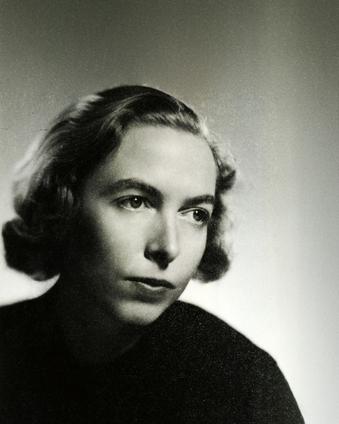
Her name is, above all, associated with architecture. After the war, she decided to build herself a house on the banks of the Fox River near Plano, Illinois, entrusting its design to Ludwig Mies van der Rohe, a pioneer of the International Style, inspired by principles of functionality and geometric simplicity. Listed on the U.S. National Register of Historic Places and managed by The National Trust for Historic Preservation, the building—a classic example of modernist architecture—is now a museum accompanied by a visitor centre and a gallery for temporary exhibitions. Built entirely of steel and glass, the 140-square-metre open-plan structure was ahead of its time in terms of energy efficiency, as demonstrated by the radiant heating system with pipes running beneath the floor.
The versatile American woman, much loved in Antella, lived at Villa Covoni in the Rimezzano valley, where a large circular well still supplies water to the surrounding farms today. She personally covered all the shared maintenance expenses for the system. She also devoted herself to poetry, writing and translating into English the works of Salvatore Quasimodo, Albino Pierro and Eugenio Montale.

It seems that the relationship between Farnsworth and Montale was not idyllic at first. The author of Ossi di Seppia, who had been awarded the Nobel Prize for Literature during those years, was initially critical of Edith’s musical abilities before becoming captivated by her many talents, to the point of dedicating verses to her: “musa rubella che domina e fa strage sull’Antella” (“a rebellious muse who reigns and wreaks havoc over Antella”), elevating her to the role of inspirer. The addition of the unusual adjective, borrowed from the nearby locality of Ruballa, evokes beauty and may suggest that she had stolen his heart. (Rubare means “to steal”.) Indeed, there is no evidence that she had red hair, despite the term deriving from the Latin rubeus.
She was the last muse of the Genoese poet, though not his only American one, having been preceded by Irma Brandeis, poet and Dante scholar. The liaison lasted until 1977, the year of Edith’s death. For Montale, it marked the end of his time in Florence, after the years between the two World Wars, during which he had met his wife, Drusilla Tanzi, who died in 1963. The two rest side by side in the cemetery of San Felice a Ema, just a few kilometres from Antella. Edith’s body, meanwhile, was returned to her native Chicago, and the villa was sold to the international school that is still based there today.
Every Wednesday at 9.30pm throughout the summer, head to CdP Osteria Nuova (via Roma 448, Bagno a Ripoli Firenze) for alfresco cinema series On the Road, from the Aurelia to Route 66 in the 1960s. The nights begin on June 3 with Dino Risi’s Il Sorpasso (The Easy Life in the U.S.), followed by Richard C. Sarafian’s Punto Zero on June 10, Steven Spielberg’s Duel on June 17, Dennis Hopper’s Easy Rider on July 1 and Bruce Paltrow’s Duets on July 8. Free entry. Movies in Italian.