One of the earliest masterpieces by Fra Angelico has returned to its original home in the Church of San Domenico in Fiesole following an extensive restoration supported by Friends of Florence.
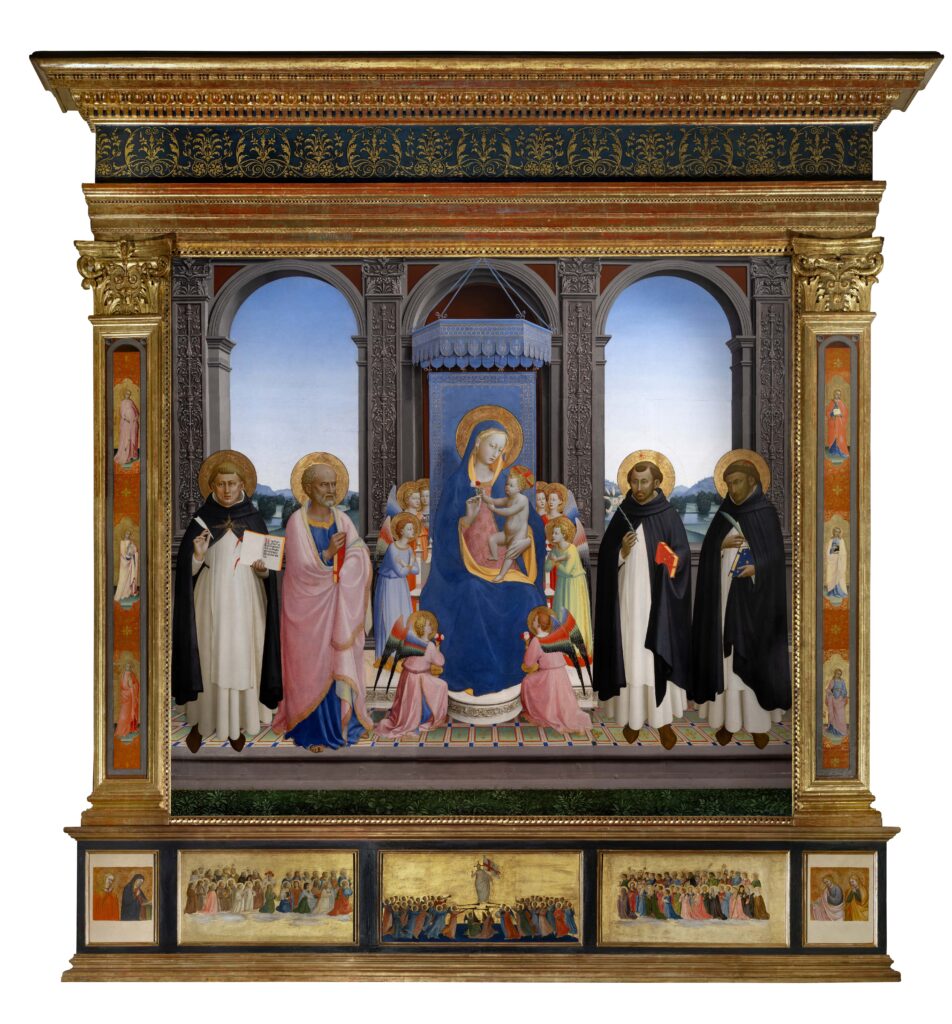
The Fiesole Altarpiece, which recently featured in the acclaimed Fra Angelico exhibition jointly organised by Fondazione Palazzo Strozzi and the Museo di San Marco (September 25, 2025–January 25, 2026), has now been reinstalled in the Dominican church for which it was painted more than six centuries ago.
The conservation project was carried out under the supervision of the Soprintendenza Archeologia, Belle Arti e Paesaggio for the Metropolitan City of Florence and the Province of Prato. Restorer Daniele Rossi treated the painted surface, while Roberto Buda restored the wooden support. The project was made possible through funding from Friends of Florence and its donors, including Janet and Jim Dicke II, The Jay Pritzker Fund, Ben Quinones, Tom and Ann Fries, Kent and Celia McClelland, and Jeff and Nancy Moreland.
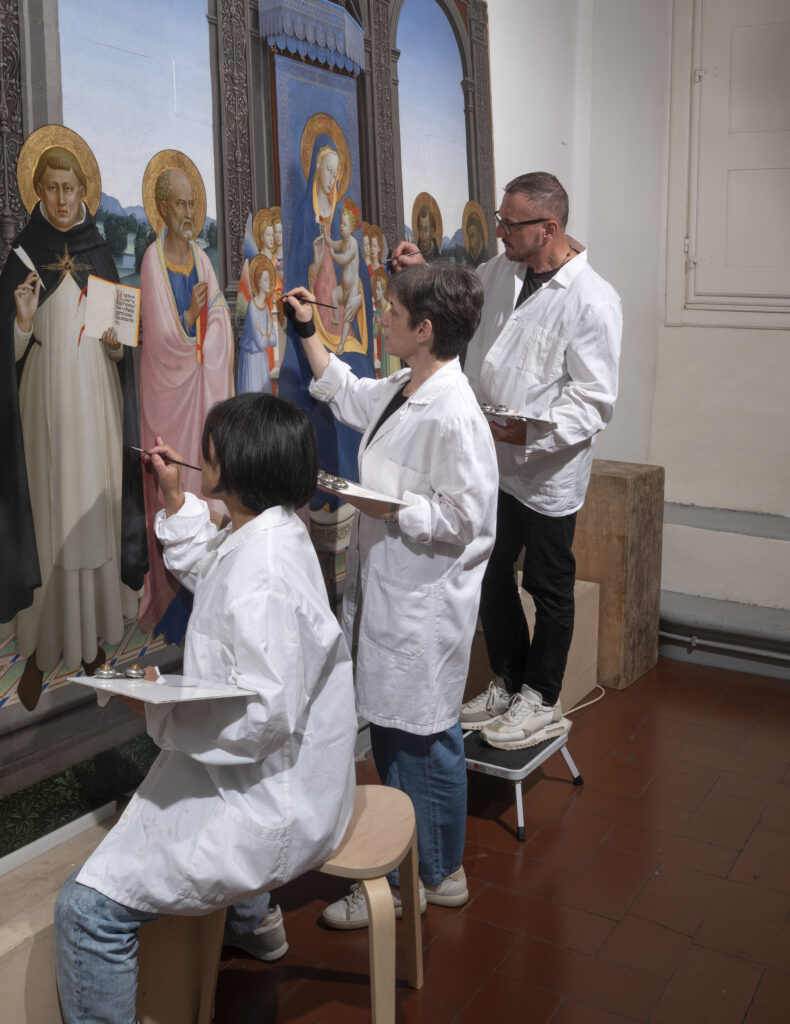
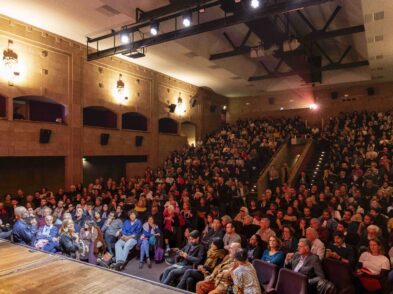
“The work of Fra Angelico has always held a special place in the hearts of our donors,” said Simonetta Brandolini d’Adda, president of Friends of Florence, at the July 6 presentation of the restored painting. “This project has not only advanced research into one of the Renaissance’s greatest artists, but has also allowed the altarpiece to return to the church for which it was created over 600 years ago.”
Painted between 1420 and 1423, before Fra Angelico moved from the Dominican convent in Fiesole to San Marco in Florence, the altarpiece marks a pivotal moment in Florentine art. It depicts the Virgin and Child enthroned, surrounded by eight angels and four saints, including St. Dominic and St. Thomas Aquinas. Commissioned by the wealthy merchant Barnaba degli Agli, whose patronage is recalled through the inclusion of St. Barnabas, the work was originally conceived as a Gothic triptych. In 1501, however, the painter Lorenzo di Credi was commissioned to update it according to Renaissance taste. Rather than repainting Fra Angelico’s figures, he transformed the setting, replacing the original gold background with an architectural space opening onto a landscape and unifying the triptych into a single altarpiece. The painting underwent further alterations in the 19th century, when the predella and side panels were removed and dispersed. The predella is now housed in London’s National Gallery.
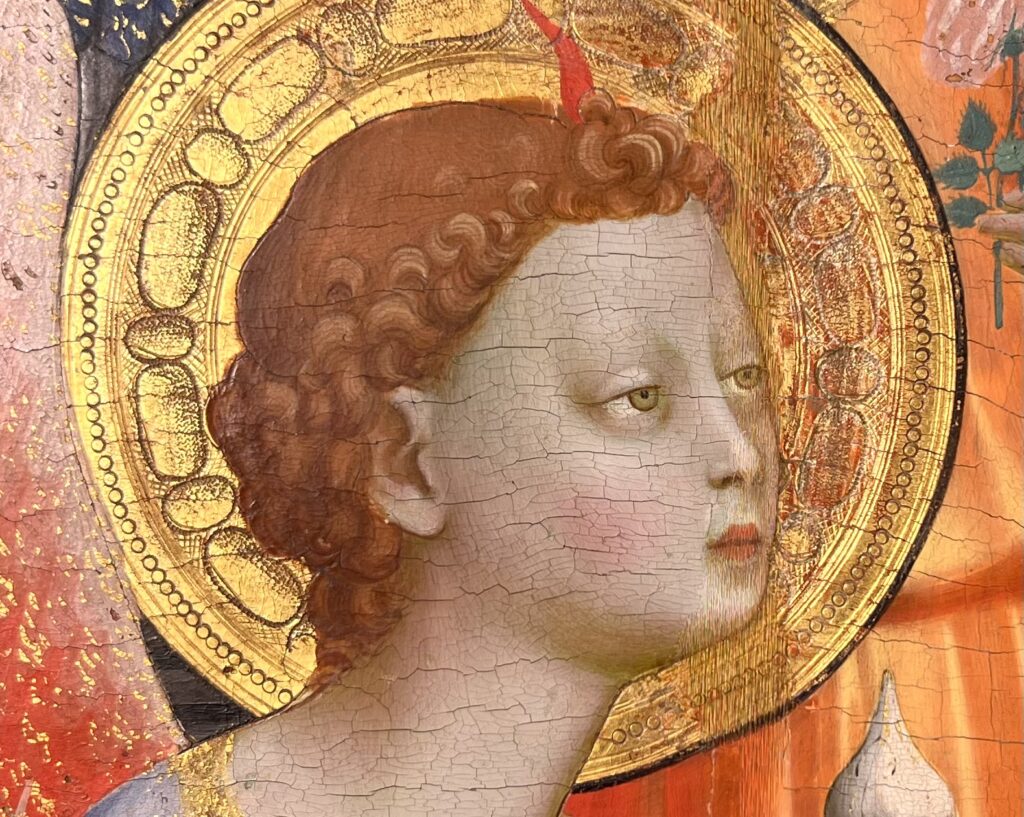

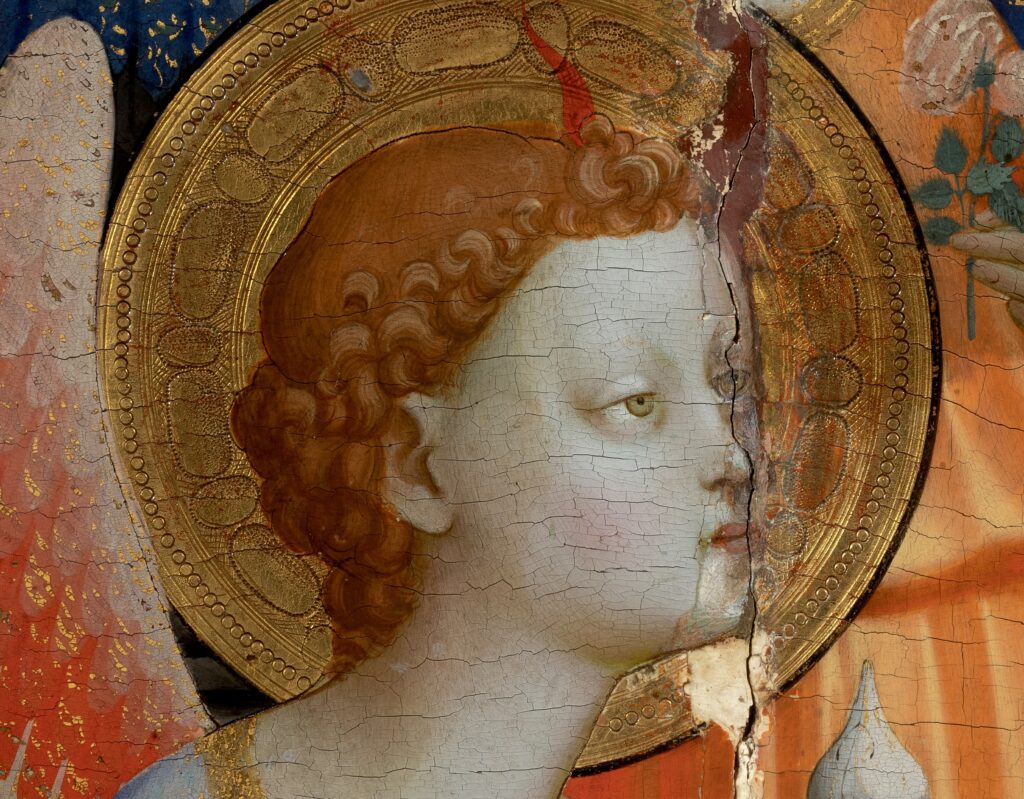
Beyond stabilizing the work, the restoration has shed new light on Fra Angelico’s original design. Technical investigations uncovered details concealed during Lorenzo di Credi’s 16th-century intervention, including the structure of the original painted throne, offering scholars valuable new insight into the artist’s working methods. The conservation addressed the painting and its wooden support. Earlier structural additions that had become unsuitable were removed, damaged wooden panels repaired and a new flexible support system installed to accommodate the natural movement of the wood over time. On the painted surface, conservators carefully removed aged varnishes, discoloured overpainting and later additions, revealing once again the brilliance of Fra Angelico’s palette, the delicacy of his gilding and the subtlety of his brushwork. Retouching was kept to a minimum, preserving the work’s historical integrity while restoring its visual coherence.
Following its restoration and exhibition, the return of the Fiesole Altarpiece to San Domenico restores the work to its original artistic, spiritual and liturgical setting, offering visitors the chance to experience one of the Florentine Renaissance’s defining masterpieces in the context for which it was conceived.