I first came to Florence nearly 30 years ago to do a semester abroad. I was a third-year political science student with my sights set on law school. I had no idea that enrolling in an art history class would change my life, but it did.

Walking into the Brancacci Chapel for the first time with my legendary professor (and former British Institute lecturer) Linda Reynolds has become a core memory. I remember gazing up in awe and thinking how incredibly fortunate I was to be standing in that frescoed paradise with a Renaissance art expert. I knew right then that something had shifted and that I simply could not live my life unless it was spent learning about Florence.
Many years later, after graduate work focusing on Dante’s poetry and crafting a multi-hyphenate career in Florence as a lecturer, guide and editor, I found myself on the scaffolding inside the Brancacci Chapel as one of the restorers invited me behind the barriers to take a very close look at Masaccio’s masterpieces. The minute details of individual faces and seeing the delineations of the giornate thrilled me beyond measure. That sense of wonder is the guiding force of my life and work, and true to my 20-year-old self, I have never stopped learning about Florence.
The Art History program at the British Institute fosters that same wonder thanks to the deep knowledge and meaningful connections that the lecturers bring to every single session. One of the things I most admire about the program is the range of subjects: sessions on marginalized artists like Suor Plautilla Nelli sit comfortably beside ones on Donatello’s revolutionary sculpture and Giorgio Vasari’s seminal art history text, Lives of the Artists.
There is no doubt that if I had to choose a favorite figure from the Renaissance it would be Lucrezia Tornabuoni de’ Medici. The mother of Lorenzo the Magnificent, Lucrezia was also an accomplished poet, entrepreneur and all-around icon with flawless taste that everyone in 1460s Florence wanted to emulate. The patronage of Lorenzo also fascinates me, particularly his collection of ancient vases and vessels made of semi-precious stones whose properties were employed to rid him of certain ailments or counteract any poisons they may have held. Florence is full of little-known treasures like this and I am working on a book about some of the less “obvious” masterpieces of Florence and how they can inspire us.
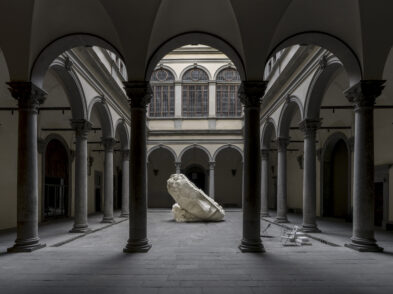
This summer, I am looking forward to plentiful time in the library doing research during the day and watching films at night. Several of Florence’s piazzas and former monastic spaces become makeshift cinemas and it is such a great vibe. Autumn is going to be all about fifteenth-century friar-painter Fra Angelico and the blockbuster exhibition at Palazzo Strozzi and the Museum of San Marco. We have never needed light and spirit more than in this moment and he brings both in spades!