Few materials are as closely associated with Florence as leather. Wander through the historic centre and you’ll find bags, belts and wallets displayed in market stalls, artisan workshops and elegant boutiques alike. Yet for visitors hoping to take home a piece of genuine Tuscan craftsmanship, the sheer variety can be overwhelming. How can you tell the difference between a quality leather product and one made primarily for the tourist trade? The answer lies not only in the finished object, but in a centuries-old tradition that remains deeply rooted in Tuscany today.
A living material

The first thing to understand is that not all leather is created equal. High-quality leather, particularly vegetable-tanned leather, is a natural material that continues to evolve throughout its lifetime. Unlike synthetic alternatives or heavily processed leathers designed to remain unchanged, vegetable-tanned leather develops character through use, gradually acquiring a rich patina that reflects the experiences of its owner.
This ability to age gracefully is one of the reasons why vegetable tanning remains one of Tuscany’s most prized artisanal traditions. The process relies on natural tannins extracted from plants such as chestnut, mimosa and quebracho. These botanical extracts give the leather its strength, flexibility and warmth, while creating colours with depth and variation.
How to spot quality leather

Recognizing good leather becomes easier once you know what to look for.
The grain is often the first clue. Genuine leather frequently displays small irregularities, subtle variations and tiny marks that reveal its natural origins. These are not defects, but signs of authenticity. Surfaces that appear perfectly uniform can sometimes indicate extensive corrective treatments or artificial coatings.
Colour offers another indication of quality. Vegetable-tanned leather absorbs dyes naturally, creating tones that appear rich and nuanced rather than flat. Shades such as natural tan, cognac, brown and black develop greater depth over time, particularly as exposure to light and everyday use gradually enriches the material.
Touch is equally important. Quality leather should feel supple yet substantial, soft without being flimsy. It should not feel overly rigid, plastic-coated or heavily treated. Instead, it should convey a sense of warmth and natural texture.
Then there is the scent. Anyone who has stepped into a traditional leather workshop will recognize it immediately, a deep, earthy aroma that is impossible to replicate with synthetic materials. Genuine vegetable-tanned leather should smell natural, never strongly chemical.
The heart of Tuscany’s leather tradition
Much of Tuscany’s leather-making expertise is concentrated in the district of Santa Croce sull’Arno, between Florence and Pisa. Internationally renowned for its tanneries, the area has become a centre of excellence where traditional techniques coexist with innovation and sustainable production practices.

Vegetable tanning remains a time-intensive process. Hides are washed, rehydrated and treated in large wooden drums before being nourished with natural oils and left to dry slowly. The entire process takes at least three weeks, reflecting a philosophy that prioritizes quality over speed.
This commitment to craftsmanship continues to shape many of Tuscany’s best-known leather makers. Among them is Il Bisonte, a Florentine brand founded more than 50 years ago that works closely with artisans and tanneries throughout the Tuscan leather district. Its production chain remains concentrated within a short distance of Florence, preserving both local expertise and direct oversight of materials and workmanship.

In an era dominated by fast fashion, the brand has built its identity around durability.
Many of its designs have remained in production since the 1970s, created not for a single season but for years of daily use. The marks, folds and colour changes that emerge over time are considered part of the object’s story.
Where to experience authentic Tuscan leather in Florence

For visitors interested in understanding this tradition firsthand, Il Bisonte’s historic flagship store offers an opportunity to explore the world of Tuscan leather beyond the typical shopping experience.
Located within the Palazzo Corsini complex on via del Parione, the store has occupied its Florentine home since 1973. Inside, terracotta floors and vaulted ceilings provide a fitting backdrop for collections that combine the brand’s heritage designs with contemporary pieces. Visitors can also personalize selected items with engraved initials or symbols, creating a more personal connection with the object they choose.
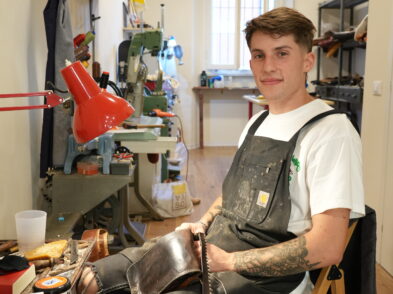
More importantly, the space invites visitors to engage with the material itself. Here, leather can be examined closely, touched, smelled and compared. Staff members explain the origins of the materials, the production processes and the care techniques that allow vegetable-tanned leather to develop beautifully over time.
For anyone seeking an authentic souvenir of Florence, this deeper understanding is perhaps the most valuable purchase of all.