Wine lovers around the world might recognize the black rooster on a bottle as a hallmark of Chianti Classico. But while we know our Sangiovese from our Shiraz, we rarely stop to consider the landscape beneath the vines and how the geology of a region can shape what ends up in our glass.
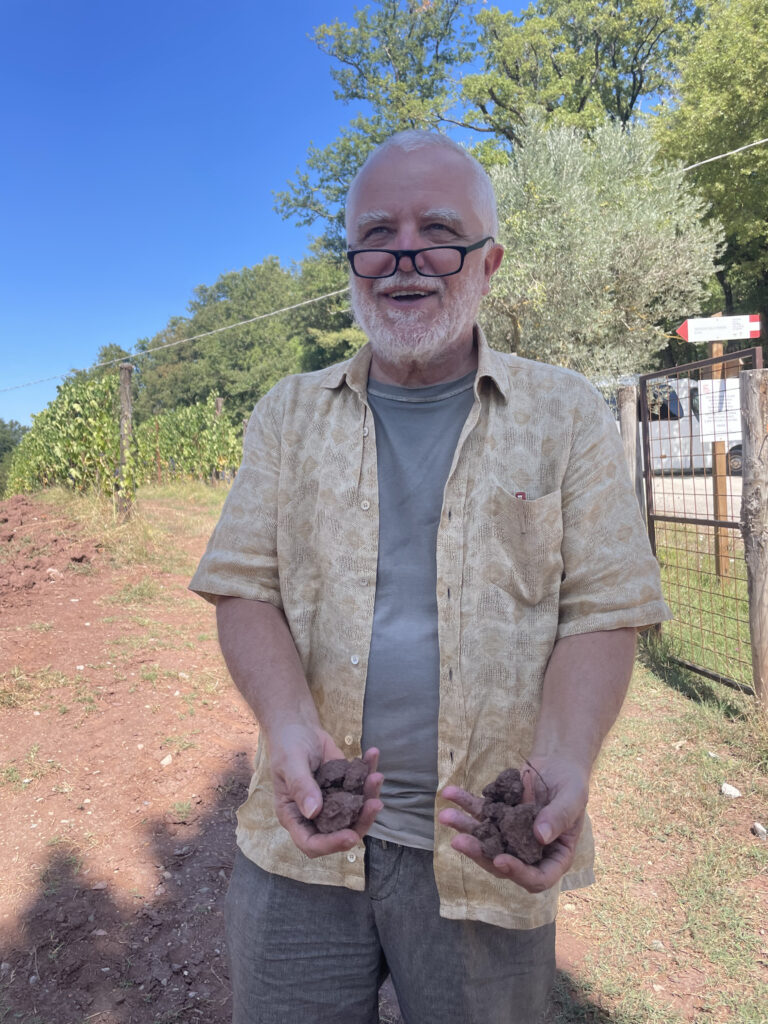
On one of the hottest days of late summer, Alessandro Masnaghetti stands over his geo-viticultural relief map of Chianti Classico. Decades of research have gone into charting the vast and complex appellation, which stretches from the alluvial deposits of San Casciano in Val di Pesa in the north to the marine sands of Castelnuovo Berardenga in the south.
Yet Masnaghetti, affectionately known as the “map man”, is quick to qualify the importance of what lies beneath our feet. “Geology is important; it’s not the key to everything,” he says. Every vineyard contains its own variations in soil, altitude and exposure, while the human element of viticulture and winemaking adds another layer of complexity. Ultimately, he argues, it is up to individual producers to explain what makes their wines distinctive.
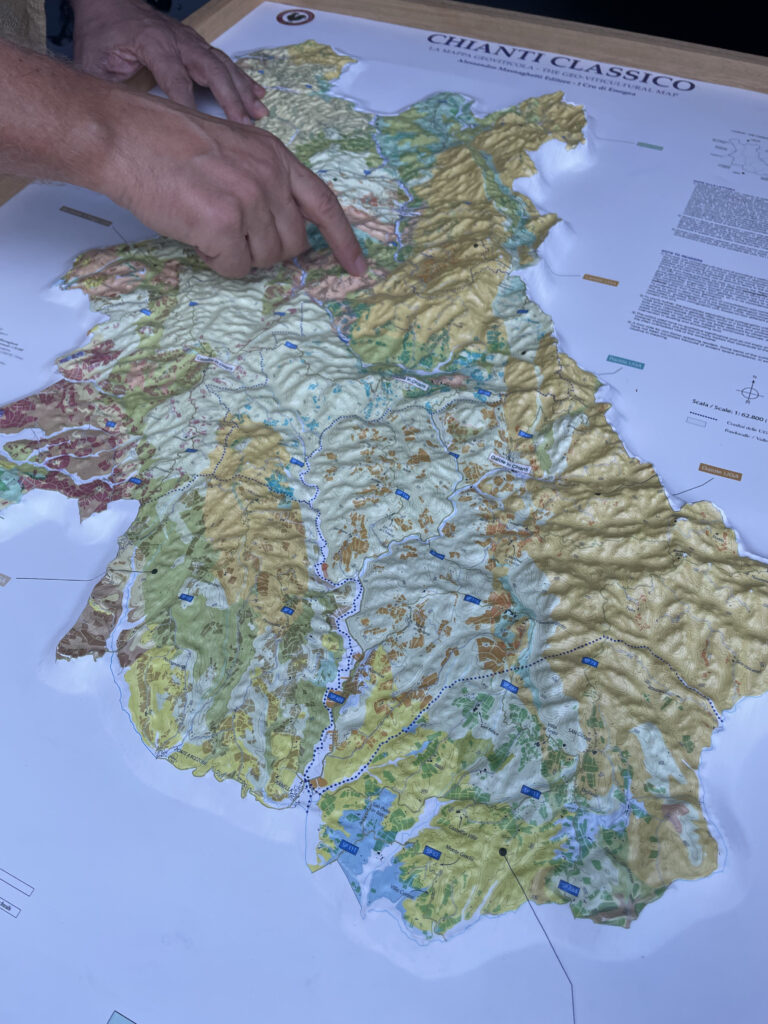
The map is based on the Region of Tuscany’s Geological Database and identifies 11 cartographic units, or Unità Geografiche Aggiuntive (UGAs), grouping areas with broadly similar geological formations: San Casciano, Montefioralle, Panzano, San Donato in Poggio, Greve, Lamole, Radda, Castellina, Vagliagli, Castelnuovo Berardenga and Gaiole. Introduced by the Chianti Classico Consortium in 2021, the UGAs replaced the previous system based on the eight municipalities of the appellation to highlight specific village-level terroir and give consumers a clearer sense of exact geographic origin.
Today, we’re accompanying Masnaghetti on a geological road trip through the Greve UGA, in the northeastern part of the appellation and the first Chianti Classico territory encountered when travelling along the Via Chiantigiana from Florence. Our starting point is a ridge whose eastern side looks out towards views from Radda to San Donato in Poggio, while its western slope looks towards Florence, with Monte Morello visible in the distance. Below, the Greve river separates the alberese-rich left bank from the macigno-dominated right bank. As we try to get our bearings, the quiet gravel track is broken only by hikers taking advantage of the morning shade along the ridge.
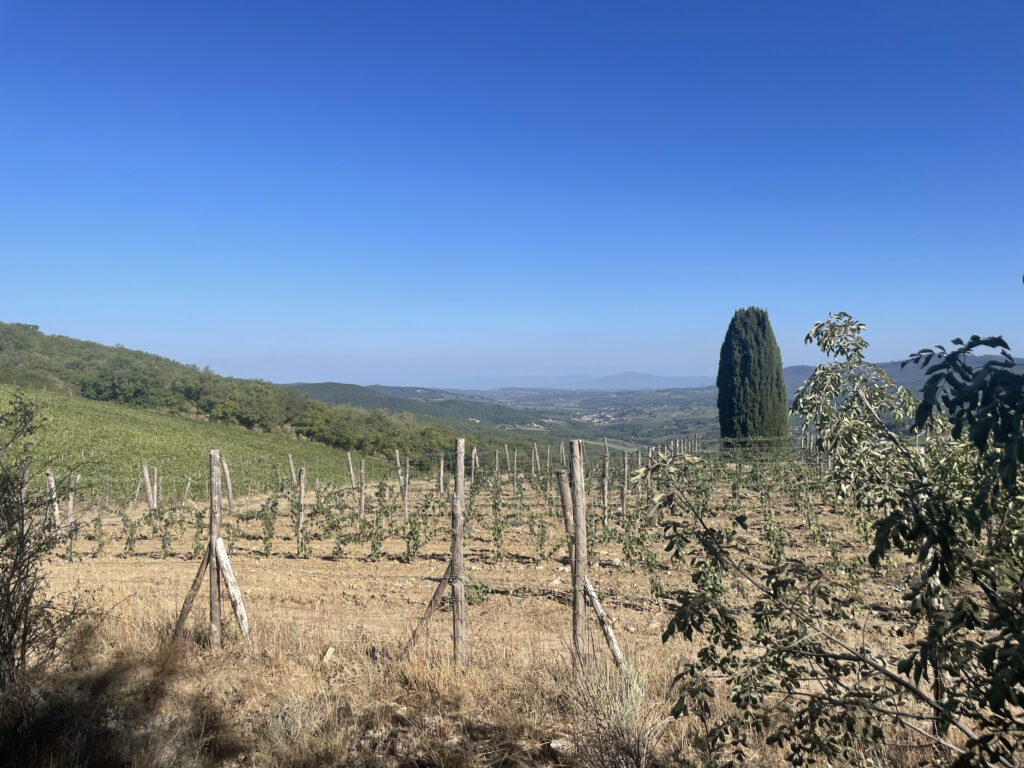
The road trip continues with Alessandro indicating the positioning of Monte San Michele, the highest point at 893 metres above sea level in the Monti del Chianti, a long mountain ridge that runs along the eastern border of the appellation and acts as a watershed with the Valdarno. “I’ve never been quite sure where it is exactly looking from here, but it’s likely one of where the antennae are,” a disarmingly modest comment from someone who has spent decades studying this landscape.
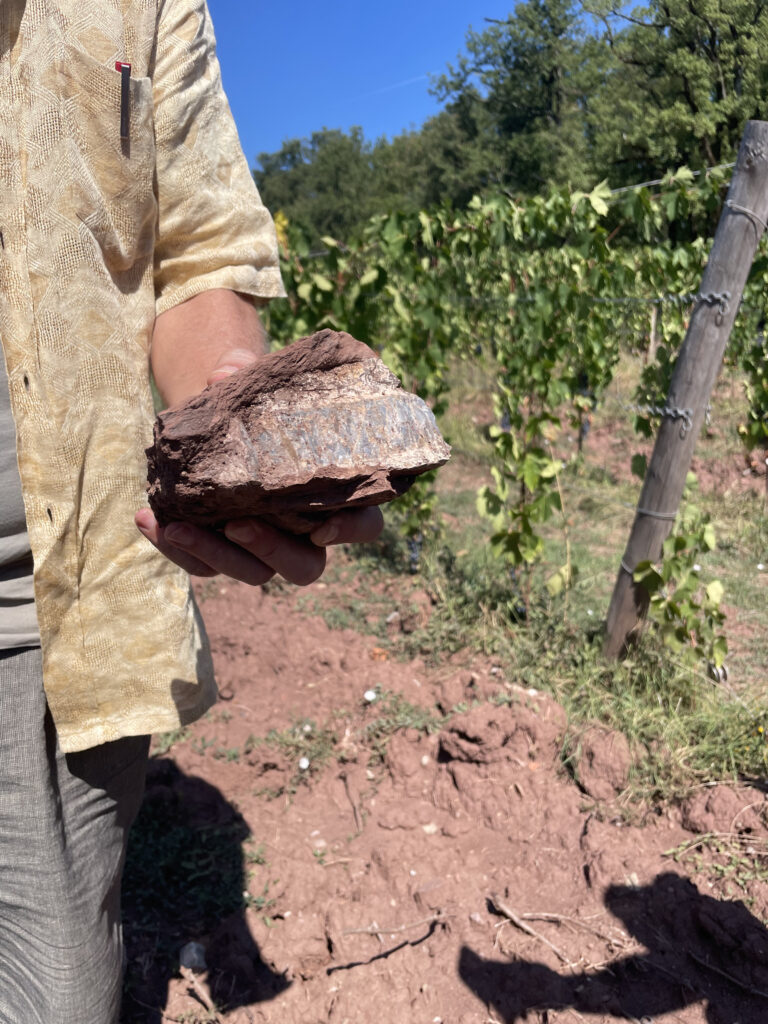
As we climb into the dappled light of dense woodland, we briefly enter the Panzano UGA. The minibus stops and Masnaghetti picks up a fragment of crumbling, red-brown layered earth. This is galestro focolaio, a rare form of galestro found in terraces around Casenuove, although similar formations have also been identified around Greve, Montevertine and Brolio.
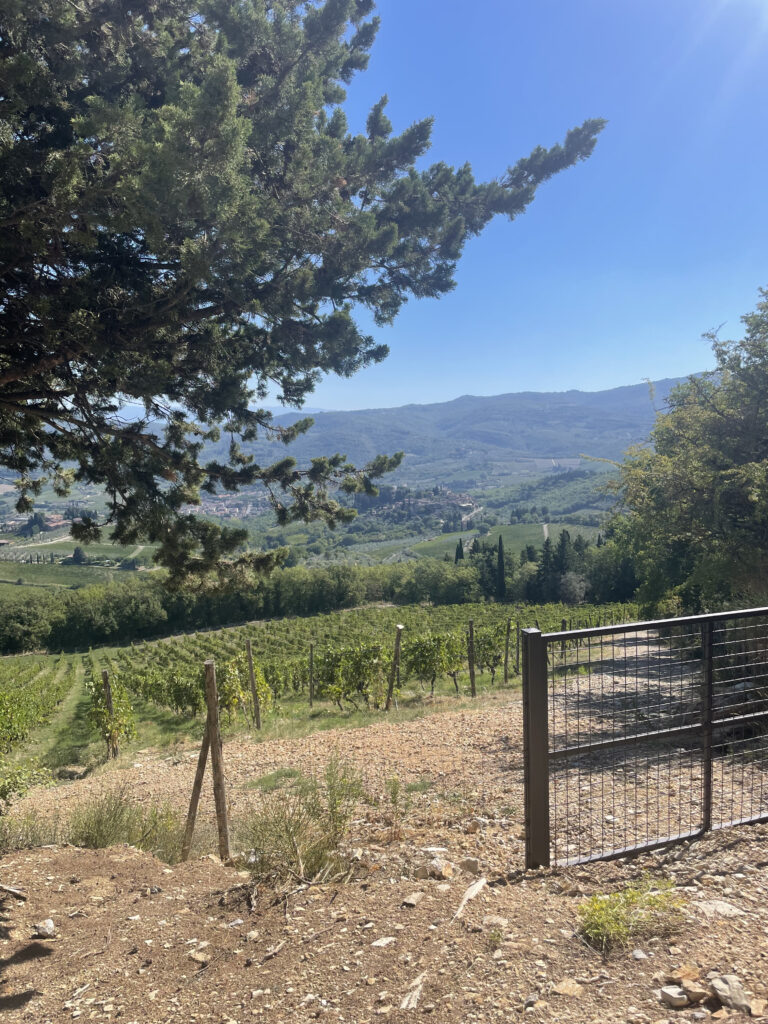
The road opens towards Badia a Passignano on the left and Montefioralle on the right. At our next stop, Masnaghetti introduces us to alberese at close quarters. From behind a gate, gentle rolling hills stretch towards Montefioralle, with the imposing Monti del Chianti forming the backdrop. He holds up a fragment of the pale, hard limestone and calcareous clay-marl, its surface threaded with crystals, a rock that characterizes much of central and southern Chianti Classico. “It’s a valley where you see the history of wine on show,” he says. The maximum altitude permitted for Chianti Classico vineyards is 700 metres above sea level, although no winery is known to plant that high and most vigne range between from 300 and 500 metres.
We drive back through Greve in Chianti before turning uphill through the bunch-heavy vineyards of Vicchiomaggio. Our destination is the thousand-year-old castle, its battlements and lookout commanding a panorama of woodland stretching towards the horizon. “Vicchiomaggio and Verrazzano are geologically alike, with their alberese, although they have different microclimates,” Masnaghetti explains. “We can call them cousins.”
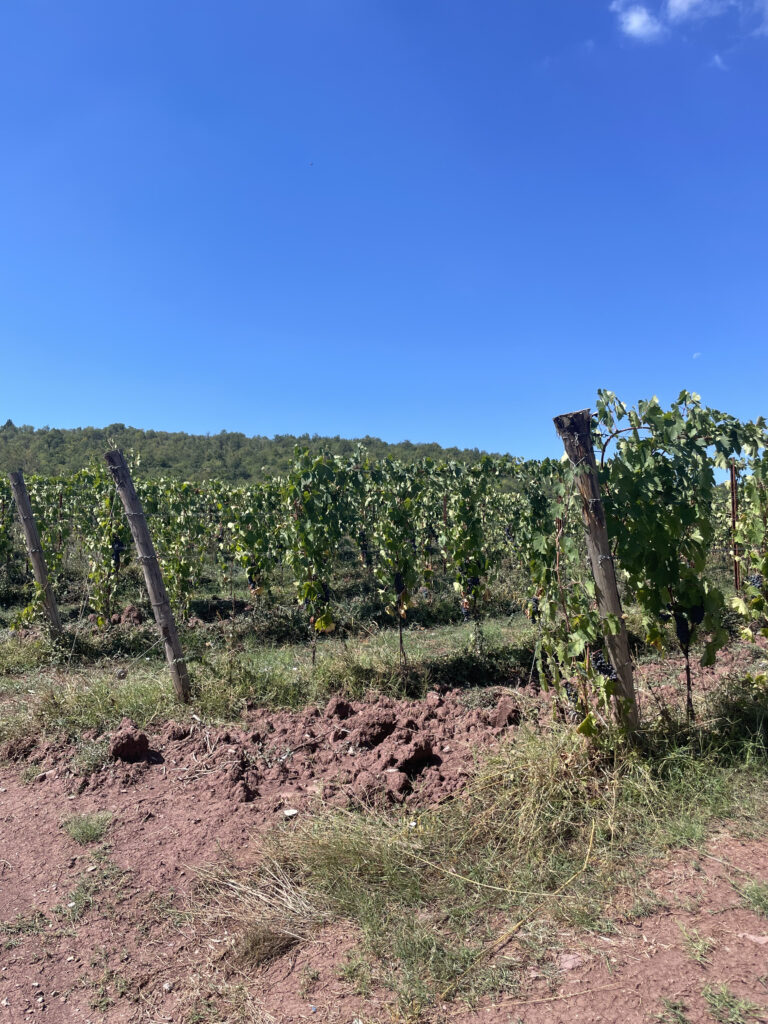
From Vicchiomaggio towards Chiocchio and eventually back to Florence, the terroir changes. This is another face of Chianti Classico, both visually and geologically. A long, winding right turn off the Via Chiantigiana, much of it passing through dense woodland with barely a vineyard in sight, eventually brings us to the Dudda area and the fascinating argillite of Castello di Querceto. At first glance, the vineyard soil is a signature red, almost clay-like. Picked up, the rock feels hard and solid, with a vein of crystal running through it. Yet apply a little pressure and it flakes apart into thin, chalky layers.
The way these geological differences can translate into distinct expressions of Chianti Classico becomes clearer back at the recently renovated, design-led Fattoria di Vignamaggio, reached after descending along the Sùgame Pass. Where altitude, exposure and winemaking techniques are broadly comparable, soils mix it up. Sandy earth tends to produce elegant, aromatic wines that are lighter in hue. Clay soils, by contrast, are generally associated with a bolder body and deeper colour. Calcareous subsoils can contribute depth and lively fruit, ranging from rounded to crisp. Temperature adds another dimension. Cooler areas around the Monti del Chianti, such as Lamole, tend to produce wines with greater freshness and a more vibrant profile. Hotter areas on the edges of the appellation, including San Casciano in Val di Pesa, generally yield darker-coloured wines. The wines of the Greve UGA, meanwhile, can combine substance and energy, with greater freshness emerging at higher elevations around Ruffoli and in the Dudda and Lucolena valleys.
For all the complexity of his map and explanations, however, Masnaghetti’s message is refreshingly simple: geology provides the foundations, but it is only one part of the story. Climate, altitude, exposure, vineyard management and the choices made in the cellar all leave their mark. Perhaps that’s what makes Chianti Classico so fascinating. The black rooster may be the symbol on the bottle, but beneath it lies a landscape of unparalleled geological diversity, one that can be read, quite literally, in the glass.