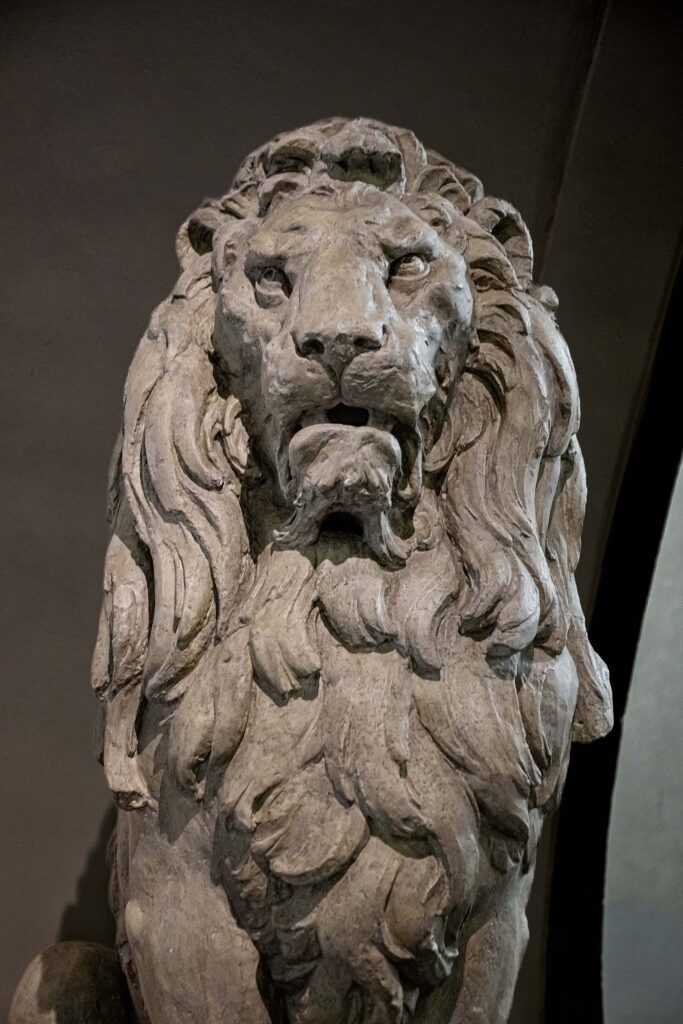
The Lions’ Fountains and Customs Courtyard (Cortile della Dogana) at the Palazzo Vecchio have been restored following a 50,000 euro project supported by Florence’s historic leathercraft school, Scuola del Cuoio. Completed over 60 days through the city’s FLIC – Florence I Care programme, the works have revived the original colours of the decorative features, while revealing new details about the courtyard’s history.
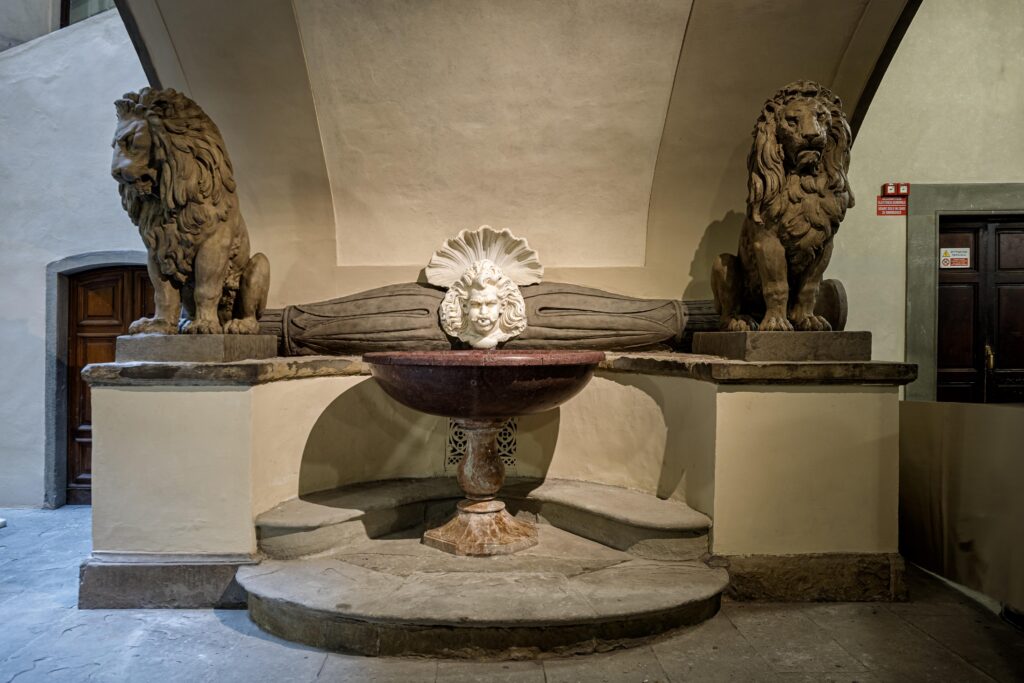
The intervention covered the fountains and basins, four sculpted lions, decorative masks and architectural surfaces as well as the marble statue of Anna Maria Luisa de’ Medici, the Electress Palatine. It was supported by the Gori family, who lead Scuola del Cuoio, in memory of Tommaso Melani, Laura Gori’s son and a member of the family business, who died unexpectedly in New York in May 2026.
The decision to support the restoration was inspired by a conversation Barbara Gori, CEO of Scuola del Cuoio, had with Melani shortly before his death. He had spoken about the role citizens can play in preserving cultural heritage in the United States, prompting the family to turn his belief in civic participation into a lasting contribution to Florence. “His idea stayed with me: that taking part in caring for the historic places of your own city is a concrete way to look after them and feel part of a community,” Gori said. “We wanted to give substance to one of his wishes, contributing to the protection of a heritage that belongs to everyone.”
A courtyard steeped in history
One of three courtyards at the Palazzo Vecchio, the Cortile della Dogana dates to 1494 and is associated with architect and sculptor Simone del Pollaiolo, known as Il Cronaca. Its structure supports the Salone dei Cinquecento above, while its name recalls the customs offices once housed there during the grand-ducal period.
The two Lions’ Fountains stand beneath the stairways leading to the palace’s monumental quarters. Their installation is believed to date to the second half of the 19th century, when Florence was Italy’s capital between 1865 and 1871. Archival research is continuing to establish their history more precisely. The lion motif recalls the Marzocco, the emblematic Florentine lion holding a shield bearing the city’s lily, a longstanding symbol of civic identity.
The courtyard is also home to a marble statue of Anna Maria Luisa de’ Medici by Raffaello Arcangelo Salimbeni, installed in 2023. The Electress Palatine is celebrated for the Family Pact of 1737, which helped ensure that the Medici art collections remained in Florence.