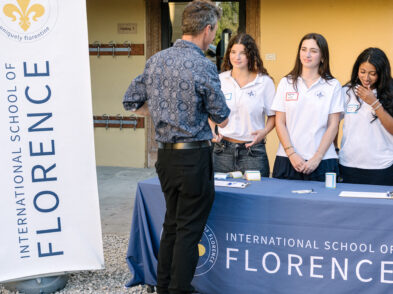
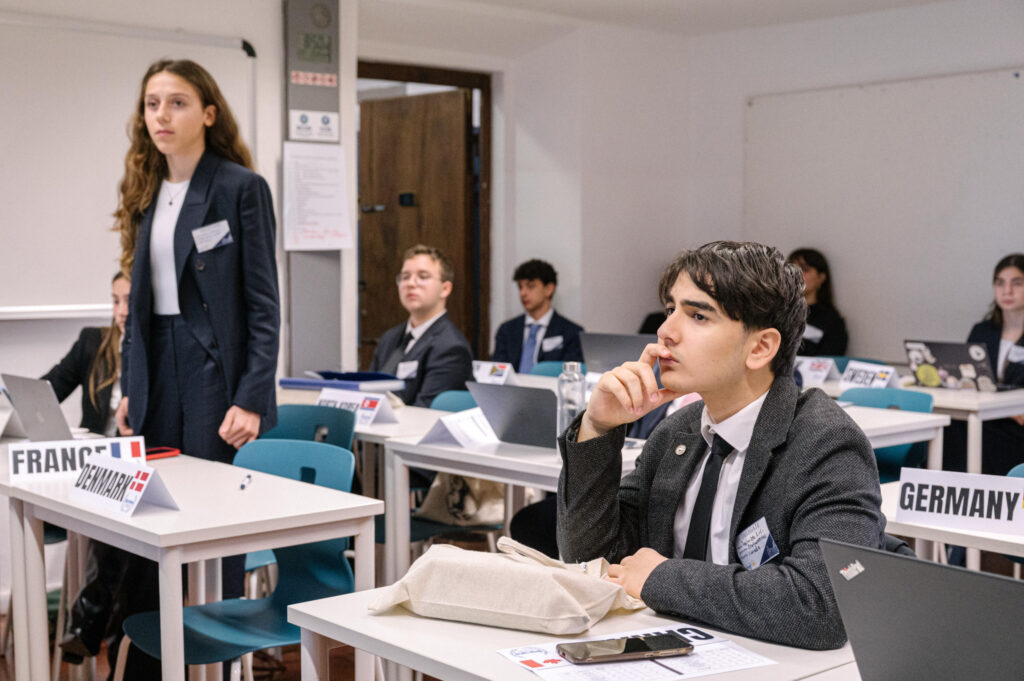
Engaging in serious conversations about the world’s future, this three-day conference gave students a chance to simulate the work of the United Nations and try their hand at international diplomacy. ISF’s historical villa near piazzale Michelangelo provided the setting for this year’s 250-plus participants to bring pressing global issues to the debate table. Students dressed and behaved like professional diplomats representing UN member states and engaged in respectful conversations. Under the guidance of ISF teacher and FLOMUN coordinator Amanda Brown Korsell, they had the opportunity to be protagonists in global politics and reflect on some of the most challenging issues we face today.

FLOMUN preparation begins at the start of the year and students learn about the structure and processes of the UN, including what the organization does. They reflect on its goal for ‘Peace, Dignity and Equality on a Healthy Planet’ and learn how they can actively take part. Participants draft papers describing their country’s opinion on subjects such as discussing a path towards lasting peace and security in post-conflict Palestine or evaluating the sustainability of nuclear energy. In researching a country’s position on a topic, students gain a deeper understanding of the complexities of international diplomacy. Ideology, history, culture and religion account for some of the reasons why opinions may differ between countries.
The rules stated by the FLOMUN Conference Guide clarify roles to play and dictate debate procedure. Grade 11 student Juliet spoke of her role as a chairperson as “a great leadership opportunity”, describing her responsibility to encourage more reserved delegates to speak and ensure everyone participated. Thor, Grade 12, acting as Director General, was interested in seeing how “people perceive decisions in a positive or negative manner” as different views were expressed. Committee advisors were kept busy with general organization, and their effort and enthusiasm ensured the conference’s success. Students debated deeply troubling issues such as climate change, human rights, immigration and rapidly changing geopolitical agendas, and they worked to find common ground between the countries they represented.
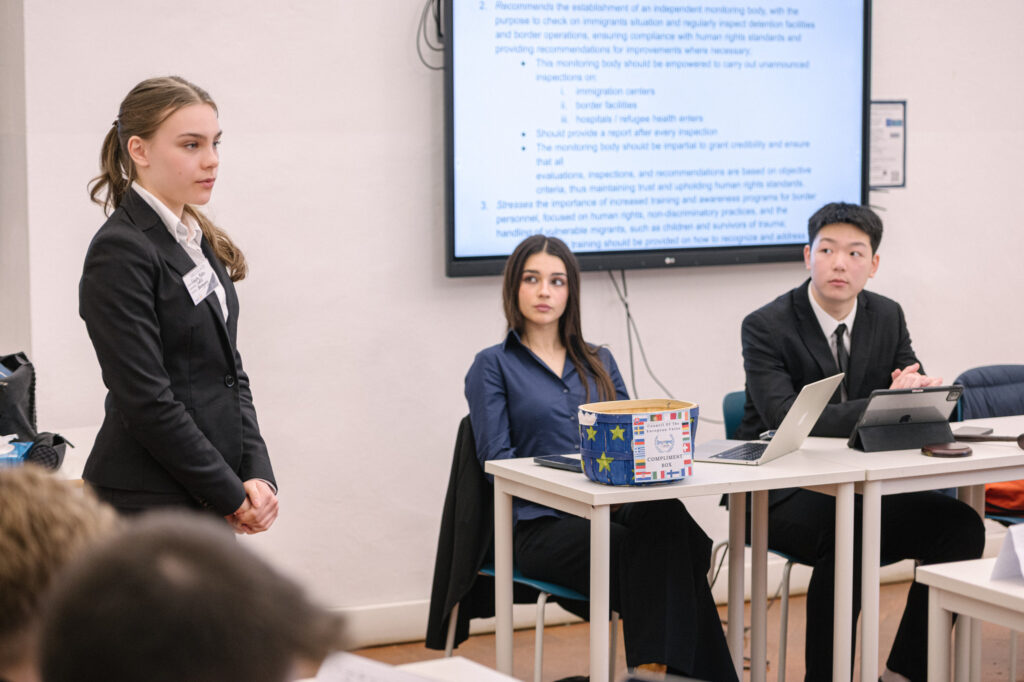
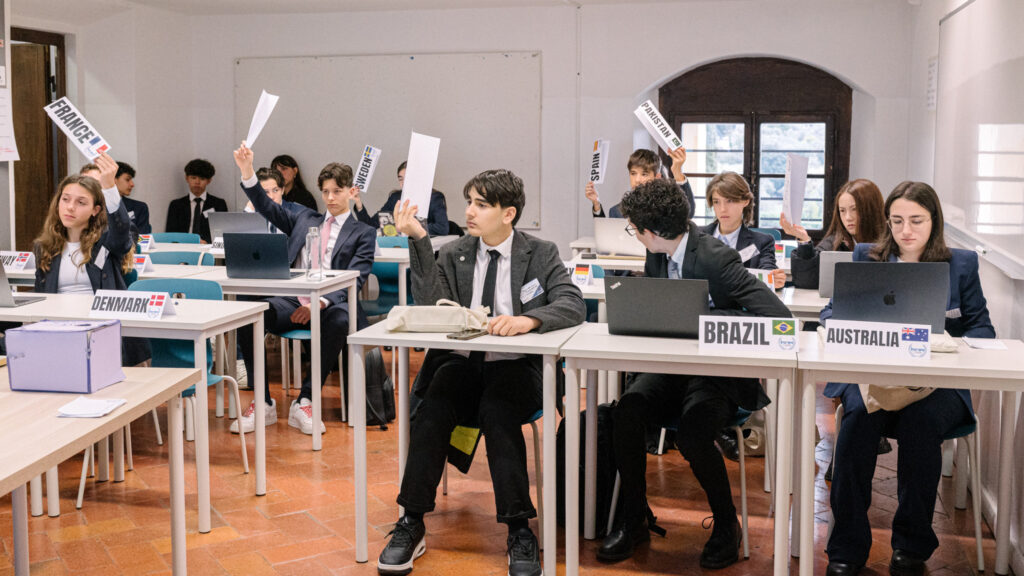
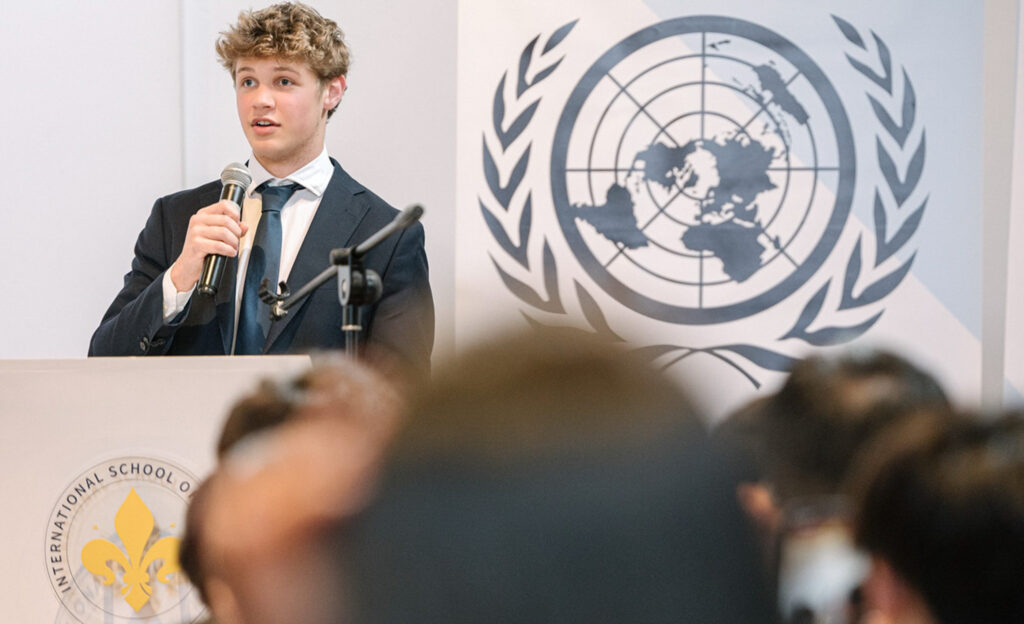
FLOMUN provides a powerful learning experience from political, social, economic and ethical perspectives. Delegates must research extensively, formulate compelling arguments and work collaboratively to draft resolutions. FLOMUN fosters valuable skills such as public speaking, negotiation and leadership, all of which are crucial for shaping future global citizens. This reflects ISF’s educational philosophy, where learning extends beyond the classroom into the real world. The conference provides a space for young people to develop an appreciation for diverse viewpoints and learn about real-world policymaking. By simulating the workings of the United Nations, FLOMUN empowers students to see themselves as changemakers, capable of influencing the future.