Empathy is the unexpected thread running through Palazzo Strozzi’s autumn exhibition. Opening September 25 and running through January 24, 2027, Broken: The Power of the Fragment brings together centuries, geographies, materials, artists and ideas, asking what fragments can tell us about a world defined by loss, rupture and impermanence.
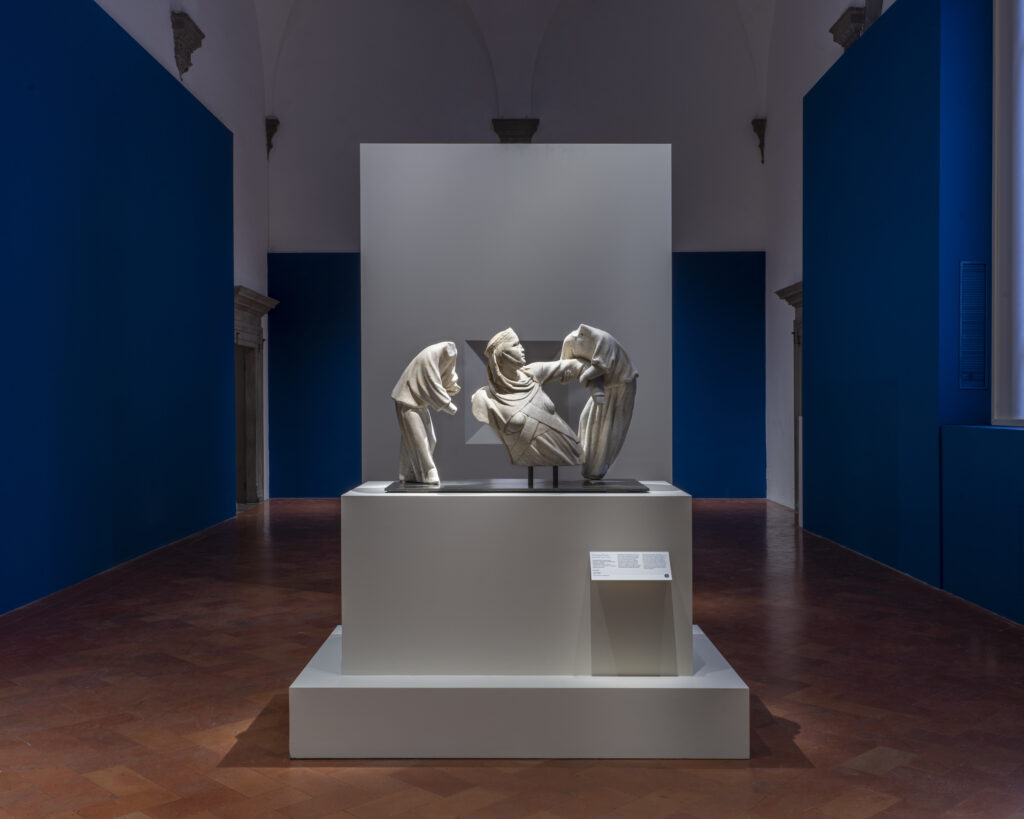
The exhibition opens with faces, introduced by Tuscan Renaissance sculptor Giovanni Pisano. His marble trio of figures—two headless, one limbless—remains united despite its physical incompleteness. Nearby, heads from different cultures and periods, from Greek and Roman to French and beyond, are arranged in a low-lit display case. Presiding over the rear of the room is a sublime, supersized head of Buddha, its nose and part of its skull missing.
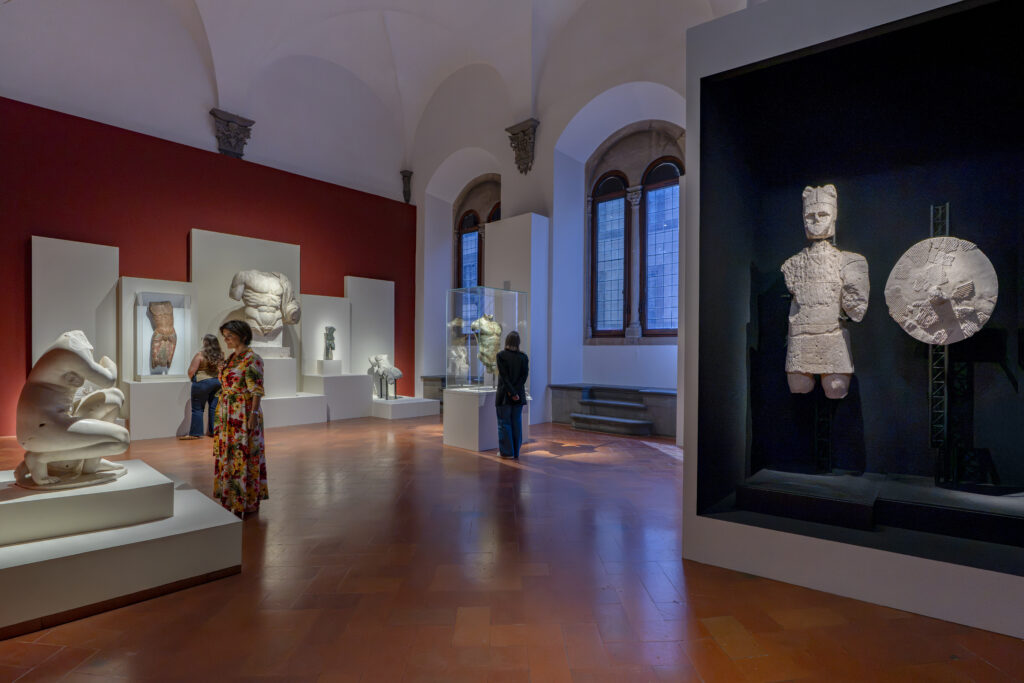
Room Two turns to bodies, with terracotta walls and dramatic lighting casting busts in stone, metal and wood into sharp relief. Here, fragments do more than preserve the human form: they can intensify a figure’s gesture, movement and emotion. Among the most arresting is the torso of a Huastec woman, her body twisted in apparent pain, scars bearing witness to the statue’s history.
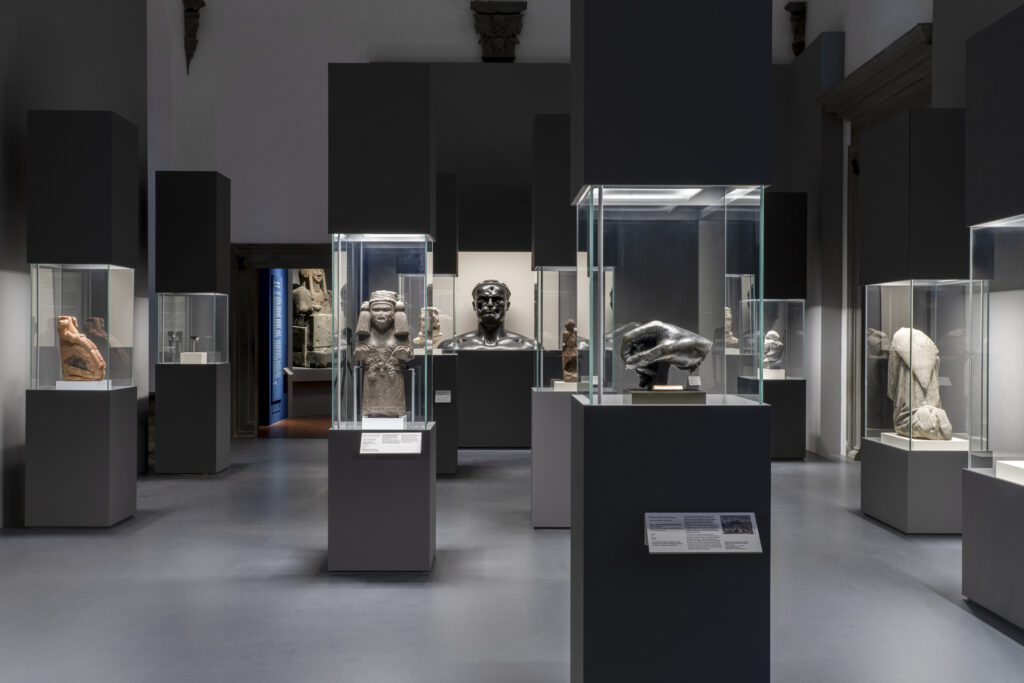
Iconoclasm dominates the third room, marked by stark grey walls and floors. The atmosphere is charged with the symbolism of power and its destruction. Cases display relics of conflict, including a headless Swiss figure kneeling in prayer and Adolfo Wildt’s monumental 1923 bust of Mussolini, whose face is punctured with holes left by pickaxes during the Liberation of Italy, an act of physical destruction that sought to erase the dictator’s image from public memory.
Room Four turns to war and colonialism, exploring contemporary questions of appropriation and restitution alongside the influence of the art market. One of the most moving works is a seated grave figure from Guzana, in present-day Syria. Dating to the tenth–ninth century BCE, it was excavated by a German archaeologist before being shattered into thousands of pieces during a Second World War bombing raid in Berlin. Considered beyond repair for decades, the sculpture was painstakingly reconstructed by conservators from some 27,000 fragments. The scarred surface now embodies resilience. Nearby, the battered beauty of Canova’s Bust of Religion tells another story of survival, after an artillery raid struck the plaster cast gallery at Possagno during the First World War.
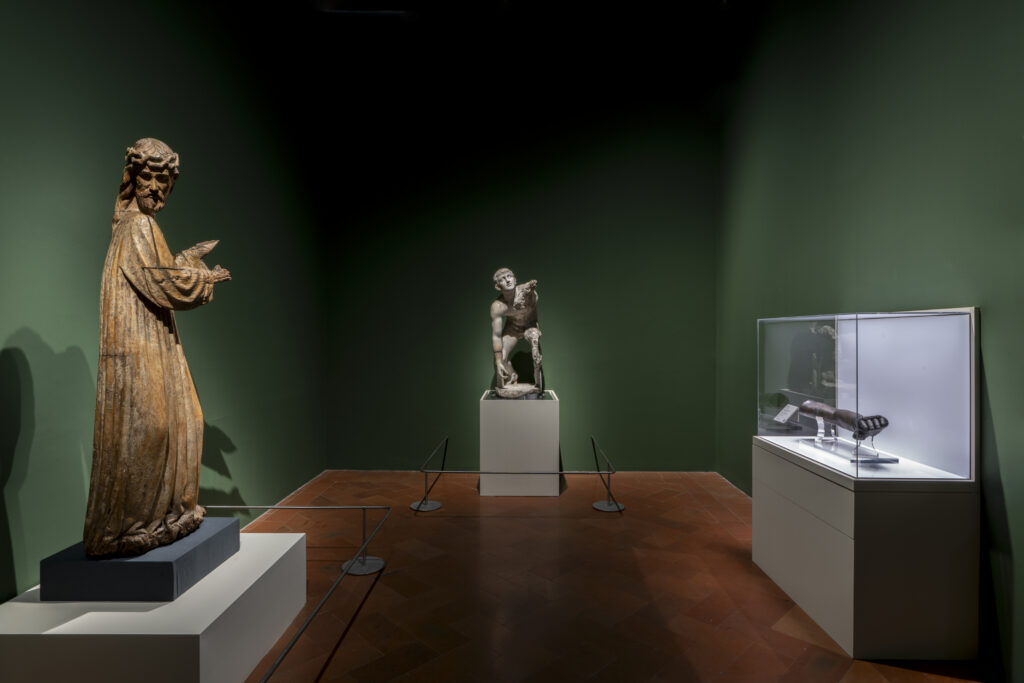
The force of nature takes centre stage in Room Five. For Florence lovers, a highlight is the penetrating gaze of a Christ Carrying the Cross, on loan from the Museo di San Marco. Restored for the exhibition, the work still bears sediments deposited by the devastating 1966 flood, ahead of the 60th anniversary of the alluvione this November. Equally mesmerizing is the Crouching Body, recovered from a Greek shipwreck and dating to the first century BCE, its surface selectively weathered by centuries beneath the sea.
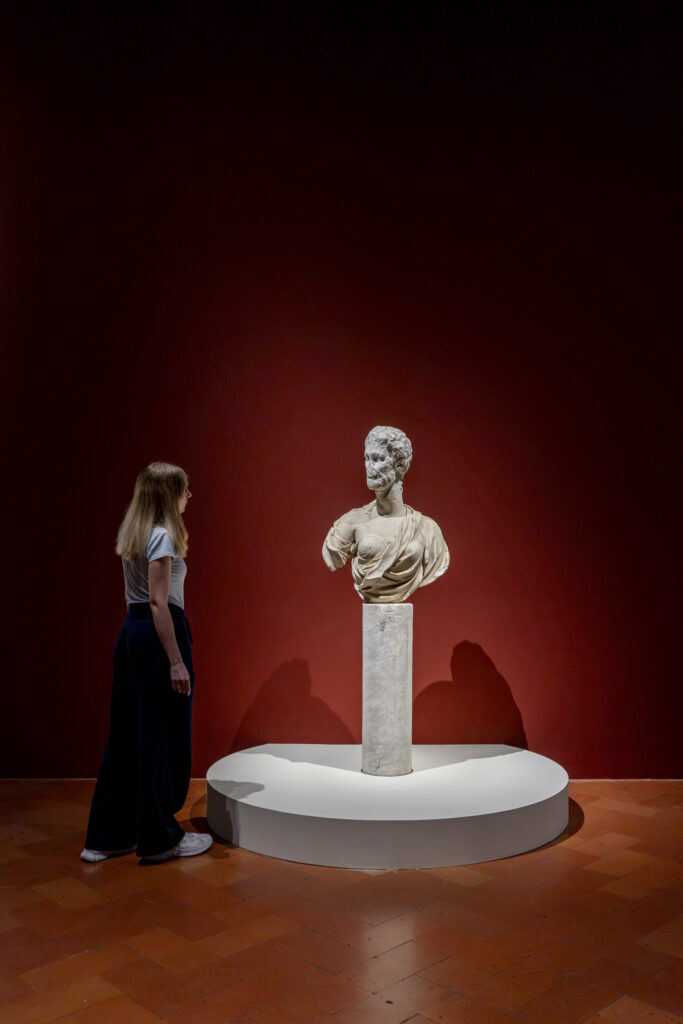
Room Six explores the reconstruction of wholeness through modern interventions. Titled The Reassembled Body, the display centres on Francesco Vezzoli’s gender-fluid 2023 The Swan, while Room Seven takes an unexpected detour into Dahn Võ’s meditation on the circulation of artworks, the formation of European collections, forced displacement and human trafficking. A Rimowa suitcase lies open on its side, beside a fragment of a foot and an angel whose detached wing is mounted on a wooden support, a sparse but eloquent installation of objects charged with histories of movement and loss.
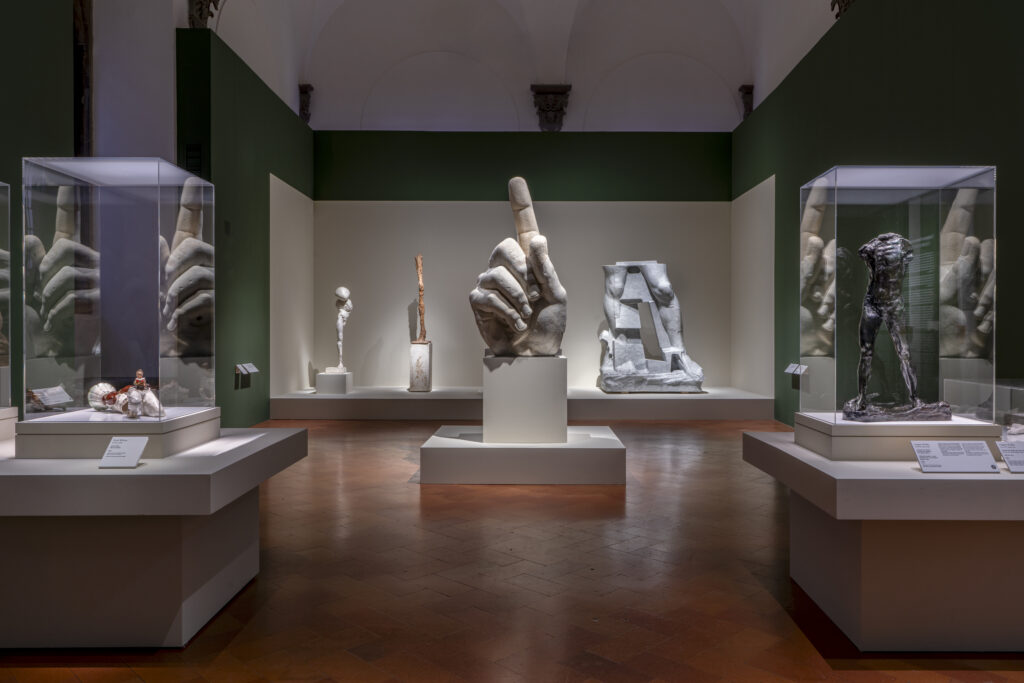
Rooms Eight and Nine deliver the kind of dramatic finale for which Palazzo Strozzi exhibitions are known. Two monumental works dominate: a colossal raised index finger associated with Constantine, dating from between the first and fourth centuries CE and discovered in Rome, and Julius von Bismarck’s spectacular 2023 mixed-media Elephant in the Room. Yet there is no shortage of quieter moments, from the haunting sculptures of Louise Bourgeois to Auguste Rodin’s anatomical dissection and Adrian Villar Rojas’s robotic reconstruction of Michelangelo’s David.
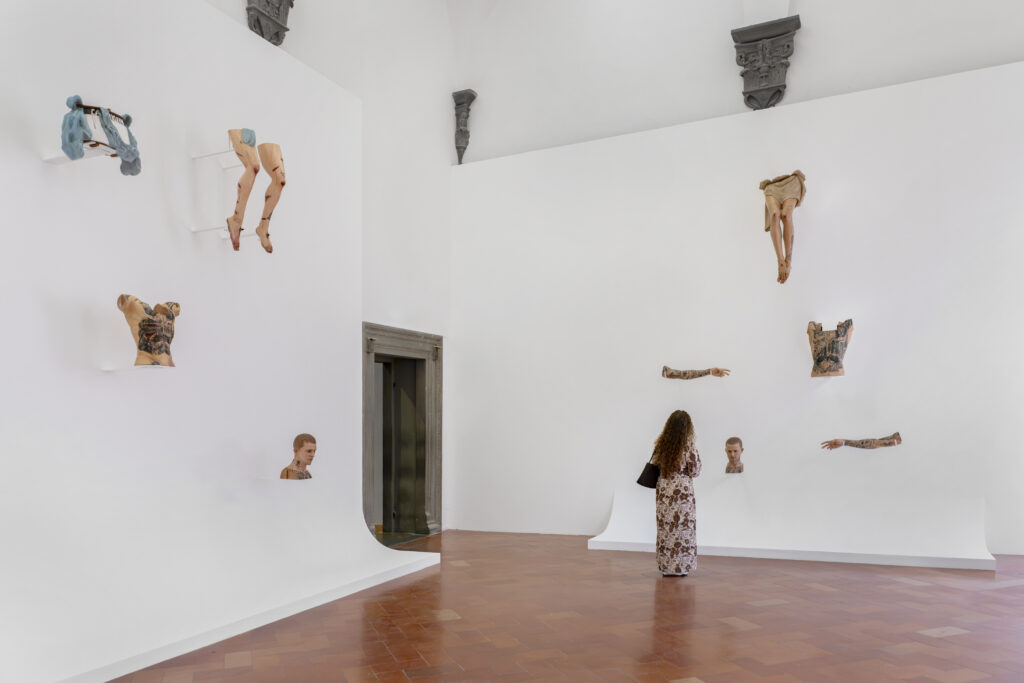
The exhibition closes with Hawaiian artist Paul Pfeiffer’s exploration of the machinery of celebrity and the making of modern icons. Muscles, tattoos and blood become fragments of identity in works by sculptors from Mexico, Spain and the Philippines, including a likeness of Justin Bieber.
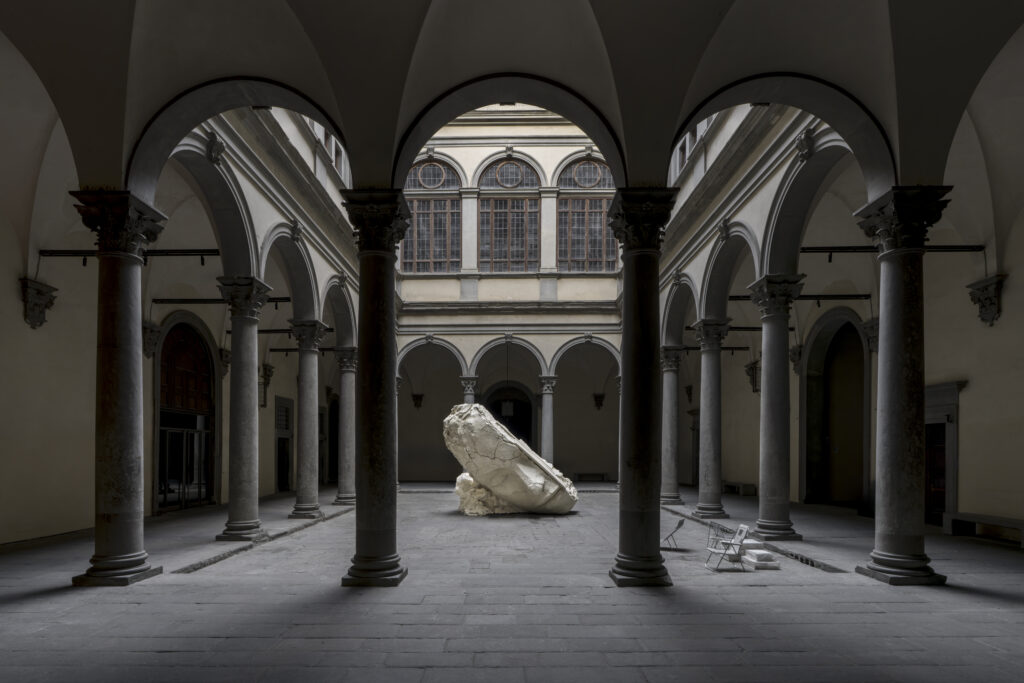
Outside the galleries, the courtyard offers a final meditation on incompleteness. Dutch-Belgian artist Mark Manders’s Silent Studio appears at first almost to have fallen from the sky: a fragile, apparently unfinished clay Titled Head surrounded by chairs scaled to 88 per cent of their actual size and scattered newspaper pages. The installation’s uncanny realism transforms the familiar courtyard into a scene of estrangement frozen somewhere between reality and illusion. Across nine rooms and centuries of human history, Broken suggests that a fragment is rarely simply what remains. It can be a record of violence, a vessel for memory, an object of desire or, perhaps most importantly, a starting point for imagining what might still be made whole.