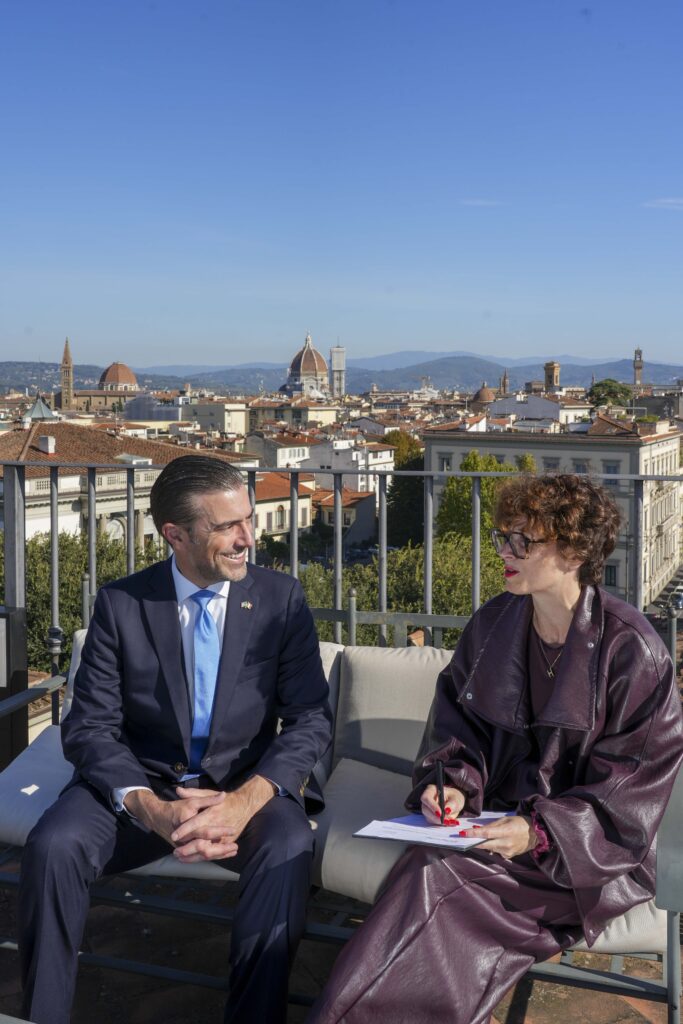
In his first months as U.S. Consul General in Florence, Joe Tordella reflects on the enduring ties between the United States and Tuscany, from his own Italian-American roots to the legacy of the 1966 flood.
How are you and your family settling into life in Florence and how do you find the city’s international community?
We could not have asked for a warmer welcome. The international community here is exceptional. Florence attracts remarkable individuals from all around the world. I’ve met so many people, and the American presence in the city and region is especially strong. There are scholars, artists, entrepreneurs and families who have made their lives here, and you have a community that is deeply rooted and genuinely connected to Italian life. It is a privilege to serve it.
How do you spend your free time in Florence? Favorite places you’ve discovered so far and what’s on the bucket list?
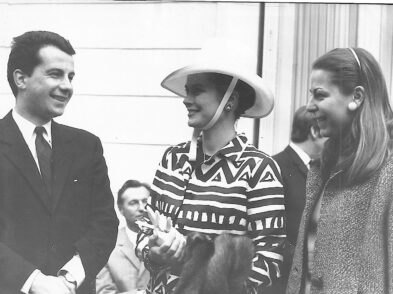
The honest answer is that I just arrived, so I am still taking it all in and I am open to suggestions! On a recent visit to the beautiful Villa Bardini, I took in the Foto Locchi Archive exhibition, which also included a companion exhibition featuring historic photographs that highlight the deep bond between Florence and the United States in honor of America’s 250th birthday. Last month, I had the honor of visiting the Florence American Cemetery, where 4,392 American service members who lost their lives during World War II are buried and the names of 1,409 service members missing in action are inscribed on the Tablets of the Missing. I also visited Palazzo Strozzi and the Broken exhibition, which I very much enjoyed. Visiting Palazzo Medici Riccardi was also a special treat, as was seeing Jim Belushi’s musical performance at Teatro Niccolini, Florence’s oldest theater. There is just so much to take in. The good news is that I have three years here and plenty of time to explore Florence and Tuscany.
Tell us about your Italian ancestry.
Like 17 million Americans, my family’s story runs through Italy. About 100 years ago, my family left Catanzaro for the United States. Growing up in New Jersey as an Italian-American, Italy was present in our family stories about our great-grandparents, in the traditions maintained by many of the families in my neighborhood: the food, holidays, large and close families. My great-grandparents left in search of opportunity in America and, a few generations later, a member of their family has returned to Italy to represent the United States. The significance is not lost on me. It’s the American dream coming full circle.
During your career you have been overseas in various different postings: previously as Deputy Chief of Mission in La Paz, Bolivia, as well as embassy postings in Barbados, Israel, Libya, Moldova, Pakistan, the Philippines, Russia and Saudi Arabia. In what way does a posting like this in Italy differ from your prior diplomatic experiences?
Serving in such a wide range of regions has taught me that there is one constant in diplomacy. Strong relationships are always the foundation of our work and that begins with genuine curiosity about local cultures, history and perspectives. I think people can tell when that curiosity is genuine and when it is forced. Serving in this region of Italy differs from some of my previous assignments because our foundation is already so solid and our ties go back to the founding of the United States. Here the question is less about building a relationship and more about how far we can take one that is already strong. In this district that means more than 400 U.S. companies, world-class universities and research centers, and a constant flow of students, travelers and families in both directions.
What made you switch from the private sector as a strategy consultant for IBM and Booz Allen Hamilton to the U.S. diplomatic corps?
I’ve always been drawn to the private sector and thought I’d go to Wall Street like others from my part of New Jersey. I had interned at Merrill Lynch throughout college and thought that’s where I would end up. I arrived at graduate school in London two weeks after the September 11 attacks, however, and immediately felt like an informal diplomat. As an American student abroad, even in a familiar country that is one of our closest allies, I helped defend the United States, our foreign policy, our goals and our values, and I realized that I wanted to build a career around that. That planted the seed for eventually joining the Foreign Service. After graduate school, I spent several years working in the private sector, and when I finally received an offer to join the State Department, I never looked back. I’ve now been a diplomat for nearly 20 years and it’s the best career I could imagine.
You became U.S. Consul General in Florence this August. Can you reassure our audience about the future of the U.S. Consulate in Florence, given last year’s concerns about a potential closure? What can we expect to be the focus during your tenure?
The U.S. Consulate General in Florence is open for business and, if anything, we are busier today than when we first started answering this question. I’ll just add that Florence is one of a small number of diplomatic posts around the world where the Consul General receives a diplomatic commission signed by the Secretary of State. The State Department assigned me here for the next three years and I arrived with a commission signed personally by Secretary Marco Rubio himself.
Our team is laser-focused on three priorities. Our first priority is to serve and protect American citizens. Around 80,000 U.S. citizens permanently reside in our consular district, which covers Tuscany, Emilia-Romagna and the Republic of San Marino. More than 18,000 American students are enrolled in dozens of U.S. university programs throughout our consular district and nearly four million Americans visit our consular district annually. The Consulate is always ready to help them whenever they need us, working every day in close coordination with local authorities.
Our second priority is to create more economic opportunities in both directions. I want to help American businesses find new opportunities in Tuscany, Emilia-Romagna and San Marino. Hundreds of U.S. companies operate here and cutting-edge Italian companies are expanding investments in the United States. These are relationships that matter for both of our countries. They create meaningful jobs and deepen the already solid ties between this region and the United States. This region has extraordinary strengths, from pharmaceuticals to new technologies, from advanced manufacturing to engineering. Our goal is to turn these strengths into new investment, new partnerships and new growth, both here and in the United States.
Our third priority is to strengthen the ties between our societies. I am thinking of universities, youth exchanges and culture, but also of cooperation with local institutions to promote security, transparency and trust. These relationships are not built in Florence alone. I want to get to know our entire district well, to listen to institutions, businesses, universities and local communities, and to understand where the Consulate can make a difference.
I am fortunate to lead a very experienced team. These three priorities will guide our work: serving Americans, expanding prosperity and strengthening the ties between our countries.
Voter support rallies have recently taken to the streets of Florence ahead of the U.S. Midterms. How many eligible American voters are estimated to be living in Tuscany and Emilia-Romagna, and what practical steps can they take to participate in the midterms from Italy?
We help every eligible American vote and our team has been connecting with U.S. citizens in Florence and in cities all around the district for many months now, helping individuals who are traveling or live and study abroad to register to vote, and providing many others with information on how to register and vote online if their state allows it.
With Election Day on November 3, time is short, so here is what to do now:
• Request your ballot today if you have not already, by sending the Federal Post Card Application (available at FVAP.gov) to your local election office in the state where you last lived. Many states let you receive your ballot by email or online.
• Return it as early as possible, following your state’s rules on deadlines and return methods.
• Use the backup ballot if yours has not arrived. The Federal Write-In Absentee Ballot, also on FVAP.gov, can be filled in and sent right away.
We accept completed ballots at the Consulate to send to the United States through diplomatic mail free of charge. Although we recommend dropping off ballots a month ahead of each election, some states will accept ballots that arrive late as long as they are postmarked before Election Day.
We’re coming up to the 60th anniversary of the Florence flood. Are there plans for the U.S. Consulate General in Florence to commemorate the occasion or to work with local institutions on initiatives recognizing the American volunteers who helped the city recover?
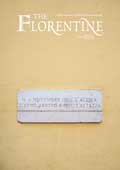
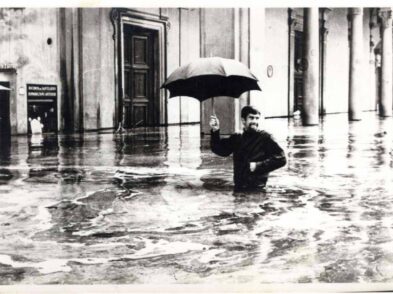
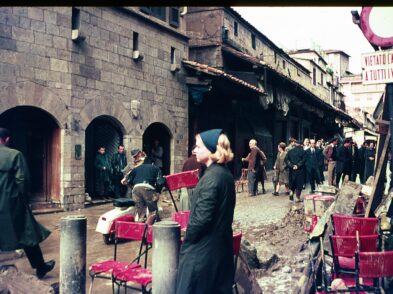
November 4, 1966 remains an important date in the U.S.-Florence relationship. When the Arno flooded the city, Americans were among the first to respond. U.S. Consul General Joseph Wheeler, who had arrived in Florence less than a month before the flood, led his team to assist U.S. citizens caught in the disaster and supported the relief effort. U.S. Army personnel from Camp Darby helped move supplies and damaged materials. In the United States, American scholars created the Committee to Rescue Italian Art, with Jacqueline Kennedy as its honorary president. The committee raised about $2.5 million, shipped emergency conservation materials and sent American conservators to work alongside Italian colleagues. And of course there were the young Americans, many of them students, who joined the Angeli del Fango to help clean up the city and rescue priceless works of art from the mud. Senator Ted Kennedy is probably the most famous of the Mud Angels. Schoolchildren in the United States sent letters of support to Mayor Bargellini, sometimes even including some of their small financial savings in the envelope. Americans felt a strong sense of solidarity with the people of Florence as we continue to feel today.
Sixty years later, we are proud to grant the Consulate General’s patronage to Rising from the Arno, a week of events from November 1 through November 8 commemorating 60 years of art, resilience and stewardship in Florence, organized by Splendor of Florence, a U.S.-based nonprofit. The program grows out of the Friendship Pact between Florence and Providence, Rhode Island, and it is being developed alongside Florentine institutions. It includes concerts, special tours of restoration projects and cultural institutions, and a business forum with Rhode Island and Florentine business leaders.
We will also join the City of Florence, the Region of Tuscany and other friends in honoring the victims and the solidarity that helped the city rise again at the November 4 commemoration that is being coordinated by Palazzo Vecchio.
Does the U.S. Consulate have plans for Thanksgiving? Do you have a Thanksgiving message for our readers?
Thanksgiving is one of the holidays I miss the most when I’m away from the United States. I imagine every American abroad feels that same distance, which makes me all the more grateful to share this one with new friends and colleagues. And this year, as the United States marks its 250th anniversary, it carries special meaning. For my first Thanksgiving in Florence, I will be giving thanks for the warm welcome my family and I have received, and for the centuries-old friendship between the United States and Italy and between the United States and the Republic of San Marino. I wish all Americans a very Happy Thanksgiving, and to our Italian and Sammarinese friends, thank you for making us feel at home.
If you are an American citizen in need of assistance, the Consulate team stands ready to help.
Services for American citizens range from issuing passports and registering U.S. citizen births abroad to assisting Americans in emergencies such as medical crises, arrests or lost travel documents. The U.S. Consulate General in Florence team also provides information on legal and medical resources and offers notarial services for official documents. For a complete list of services offered, visit the consulate’s website.
Lungarno Vespucci 38
+39 055 266951