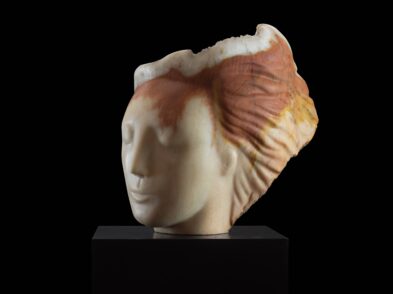
The Livorno Torso, a remarkable bronze belonging to the Medici Grand Bronzes collection, has returned to public view at the National Archaeological Museum of Florence following a major restoration and interdisciplinary research project involving Italian and international specialists.

The conservation work, launched in 2024, was made possible thanks to the support of Friends of Florence, the expertise of restorer Nicola Salvioli and the vision of Mario Iozzo, former director of the museum. The intervention combined complex conservation challenges with advanced scientific analysis of the metal alloy and ancient manufacturing techniques.
According to museum director Daniele F. Maras, the project became a wide-ranging investigation into the sculpture’s long and mysterious history. “It was a fascinating inquiry in which scientific and humanistic disciplines intertwined through restoration work, tracing the bronze’s journey from its creation to its prolonged submersion in the sea, its presence in the Medici collections and, finally, in the museum. It highlights the museum’s role as an active research centre for archaeological heritage.”
Friends of Florence president Simonetta Brandolini d’Adda highlighted the project’s scientific and conservation value, noting that the restoration has improved both the legibility and stability of the work, while deepening understanding of its materials and techniques. She also expressed gratitude to donors Michael and Lauri Corliss, whose contribution made the project possible.

The Torso has been part of the Medici collections since the time of Cosimo I de’ Medici (1537–74) and is prominently featured in Johann Zoffany’s famous painting The Tribuna of the Uffizi (1772–78), a testament to its longstanding status as a prized masterpiece. Yet its origins remain uncertain. Scholars have long debated whether it is a Greek original or a Roman copy, and whether it was recovered off the coast of Livorno or always belonged to the Medici galleries. What is certain, confirmed by recent analyses, is its prolonged underwater exposure.
Like many bronzes from the Medici collections, the sculpture had been covered in thick dark surface layers known as “Lorrain patinas”, which were carefully removed to allow conservation of the metal corrosion beneath. This process revealed subtle variations in the bronze’s surface tones and enabled researchers to map marine concretions, shell deposits and internal residues still embedded within the sculpture.

To address unanswered questions about the work, a diagnostic campaign was undertaken using both non-invasive and minimally invasive techniques to study the alloy composition and its deterioration processes. In June 2024, the sculpture was also analysed at the Institute Laue-Langevin in Grenoble, where neutron imaging technology capable of penetrating dense materials was applied for the first time to a monumental bronze sculpture.
The restoration has generated significant scientific insight, which will be presented at a study day scheduled for September 17 at the museum.
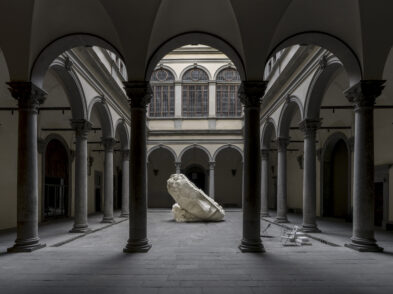
After spending the summer on display at the National Archaeological Museum, the Livorno Torso will travel to Palazzo Strozzi on September 25 to join the major exhibition Broken. The Power of Fragments, running until January 24, 2027. The show will explore the concept of fragmentation from archaeology to contemporary art.