The Arno was already behaving strangely. For days, rain had fallen over Florence, swelling the river until it rushed through the city like a torrent. On November 4, 1966, the water broke its banks, flooding streets, homes, churches and museums, and threatening some of Italy’s most precious cultural treasures. For a group of American students spending the academic year in Florence, an overseas study programme suddenly became an experience they would never forget.
In Mud Angels Recovered: FSU’s First Year in Florence, a 2016 documentary by Breanna Bruner, former students and faculty recall the flood, the shock of its aftermath and the unexpected role they played in helping the city recover. Their testimonies offer a personal perspective on a defining moment in Florentine history, when the destruction of cultural heritage was met with an extraordinary display of international solidarity.
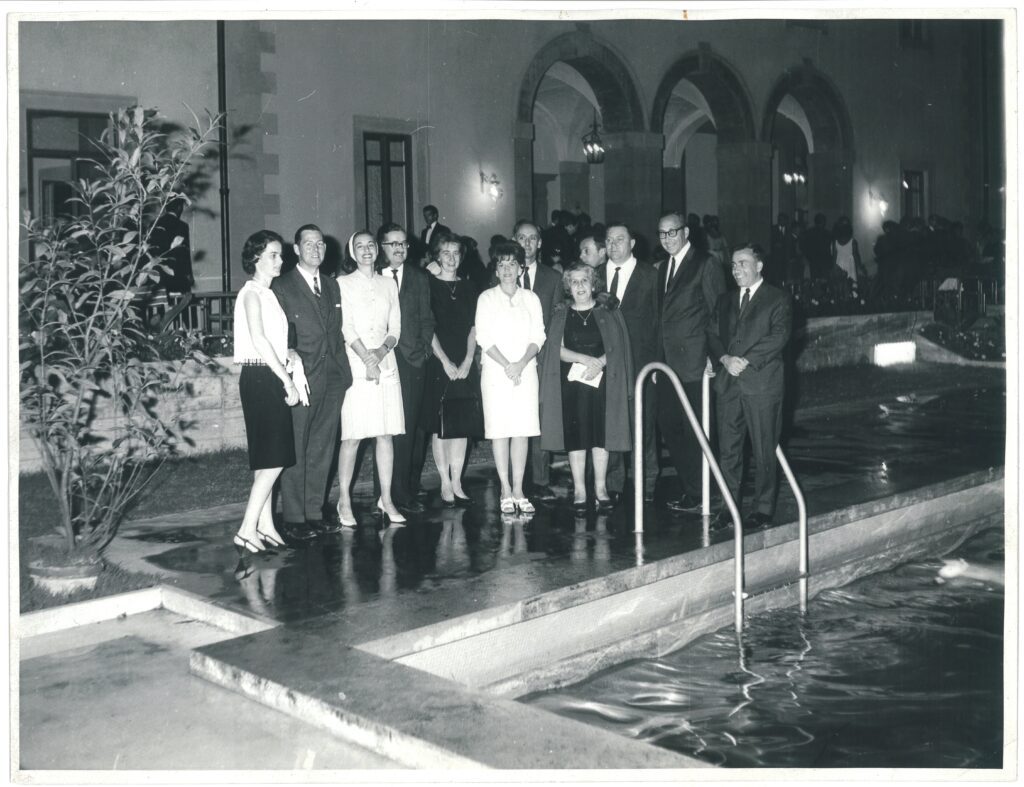
The story began two years earlier. In the summer of 1964, Dr. Ross Olgesby was inspired to establish an overseas programme at Florida State University (FSU) that would welcome students from all academic disciplines. By the autumn of 1966, the Florence programme was in its first year. Within weeks, its students would find themselves immersed in an emergency far beyond the classroom.
“We walked down to the Arno just to look at it,” recalls Ernie Brock, one of the FSU students in Florence at the time. “The Arno was practically a rapids. It was just so full and rushing there. It was very, very strange.”
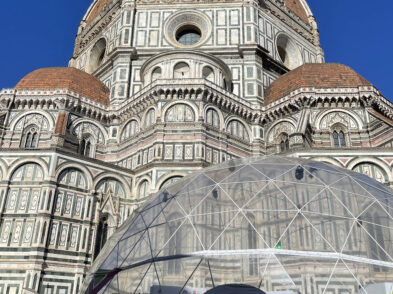
The following morning, students ventured out to see what had happened. Clint Fountain remembers walking towards the Duomo with a fellow student. “The water was flowing pretty good around it and it was only about knee deep. So we waded over to the Baptistery and stood on the steps and watched it for a few minutes.”
What they encountered was a city transformed. Cathy Williams remembers the immediate concern for Florence’s architectural and artistic landmarks. “We were all worried about the Uffizi and the Ponte Vecchio, if the Ponte Vecchio had gone down.”
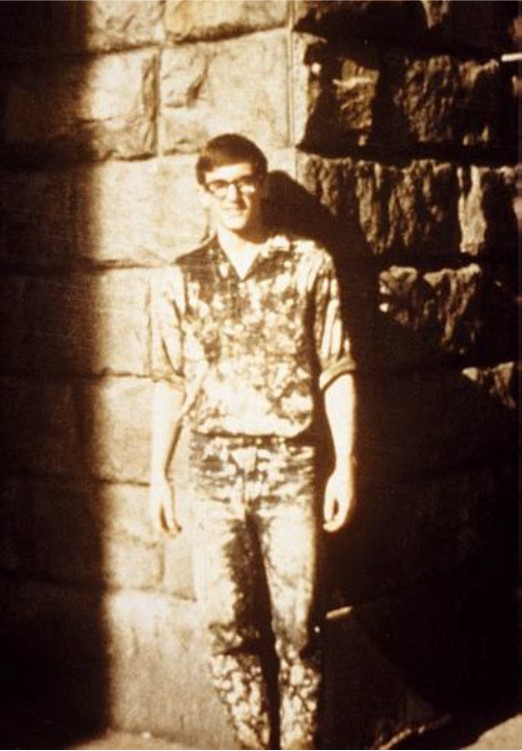 Mud Angel Clint Fountain. Photo courtesy of FSU Florence
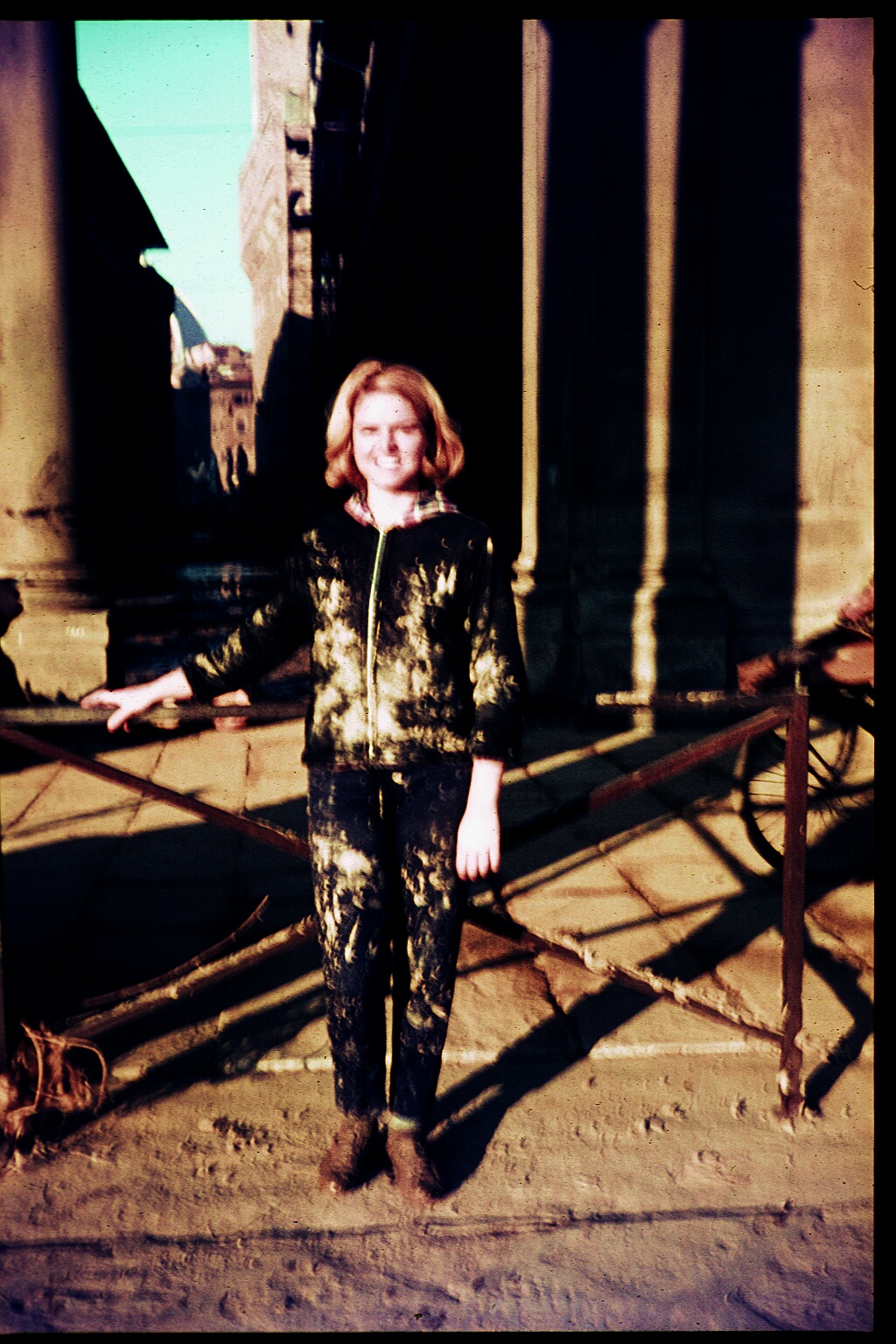 Mud Angel Harriet Roberts Coverston. Photo courtesy of FSU Florence
Inside the Baptistery, the damage was already visible. Brock, who had a particular attachment to Donatello’s wooden Penitent Magdalene, initially feared for the sculpture’s survival. Looking into the darkened interior, he could still make out its silhouette on the pedestal. But the building itself had suffered. The monumental doors, decorated with gilded panels, had swollen and buckled in the water. “The panels had all popped off the door, and they were all lying in the mud.” The sight made him realize that the damage to Florence’s artistic heritage would be extensive.
Yet it was not only the destruction of monuments and artworks that stayed with the students. The flood left a visceral impression, too. Patricia Strait remembers the mixture of oil and mud that coated the streets, the result of water carrying fuel and debris through the city. “The thing that probably stays with most of us was the smell of oil and mud together,” she says. “The dirt stuck to the oil. So, there was a slick on everything.”
For Williams, one of the most enduring memories was the expression on people’s faces in the immediate aftermath. “I still remember people, the vacant looks, the shock,” she says. “It’s before the anger and the frustration starts. It’s the blank look, the dead look before you get busy and start shoveling.”
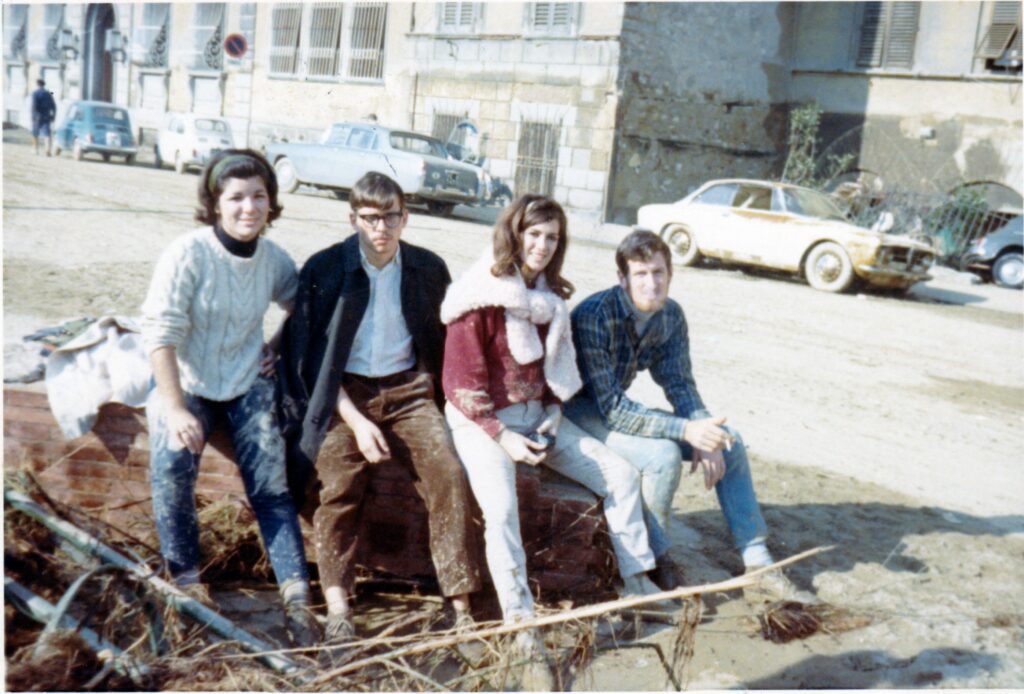
Soon, there was work to be done. Volunteers were needed to rescue objects from flooded buildings, and the FSU students joined the effort to salvage Florence’s cultural heritage. Several spent days working at the Biblioteca Nazionale Centrale, where manuscripts and books had been submerged in muddy water. The irony was devastating: some of the library’s oldest collections, including fragile parchment manuscripts, had been stored in cellars and on the lowest floors. “There were tables full of waterlogged manuscripts and everything,” Brock remembers. The scale of the task was overwhelming, with books and documents needing to be handled individually before they could be dried and assessed.
Strait recalls holding a muddy copy of Machiavelli’s The Prince and wondering what else might be lost in the flooded basement. “You had to literally do it book by book. And that’s what took so long.” The work demanded patience and specialist knowledge. Scholars carefully examined damaged manuscripts, gently lifting pages to see whether the writing remained legible and identifying works that might otherwise have been lost. Alongside librarians, restorers, townspeople and other volunteers, the students became part of a vast effort to save the city’s collections.
Life outside the rescue sites was equally difficult. Water and heating were scarce, and the students struggled to maintain basic hygiene. “We were using Coca-Cola, wine, lemonade, anything that was bottled,” Strait recalls. “Water was very scarce for brushing teeth.” At the end of each day, Brock remembers, some students went to the lake at the Fortezza da Basso to rinse off the mud, despite the water being filthy. The physical discomfort was compounded by uncertainty about what would happen next.
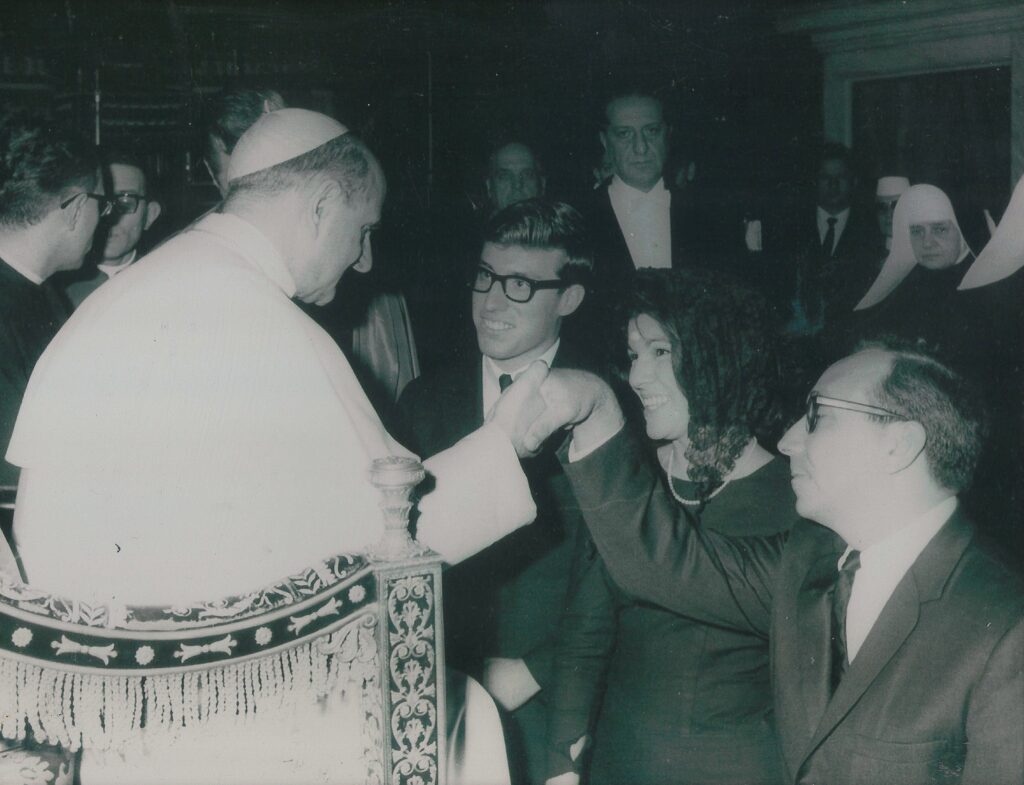
Around ten days after the flood, the students were instructed by the Italian government to leave Florence, amid concerns about water supplies and the risk of disease. The group travelled to Rome to recover before returning to their studies. Brock remembers the reception organized for them there, where they were presented with the keys to the city in recognition of their efforts.
But their departure from Florence did not mark the end of the story. The students had arrived to study abroad; they had become volunteers in a city fighting to recover its identity. Newspapers and journals began referring to them as Angeli del Fango—Mud Angels—a name that would become synonymous with the thousands of volunteers who came to Florence from across Italy and the world. FSU and Stanford students were among those first associated with the term, although they were far from the only young people involved.
“We were sort of surprised by it,” Brock says. “Young people came from all over Europe and Italy too, and they were part of the effort, and they were Angeli del Fango too.”
For Williams, the experience left a permanent mark. “My Italian may stink, but I know what fango means. I’ll never forget what fango means.”
The flood also transformed the students’ relationship with Florence and with one another. Charlene Cappellini, an FSU resident assistant at the time, remembers how the emergency brought the group together. Students who might initially have been focused on their studies suddenly found themselves hauling water, shovelling mud and working alongside Florentines. “All of a sudden, they pulled up their bootstraps and these kids were hauling water. They were going and helping in the Biblioteca,” she recalls. “From that point on, they became more interested. It seemed to me, they became more tolerant. They became more accepting.”
When the students were asked whether they wanted to remain in Florence for the rest of the academic year, the decision was unanimous. For Williams, staying was almost inevitable. “How could you? How could you not? Because you’re not just there and oblivious to it all. You’re in the middle of it. You’re in line for the water with those military guys coming in with the tanks, giving out water. You’re in those lines, too.”
The FSU students resumed classes in late November after returning from Rome, and Florence gradually began functioning again around late December. They remained until the end of the spring semester, as originally planned.
Watch the documentary
Mud Angels Recovered: FSU’s First Year in Florence (2016), directed by Breanna Bruner, revisits the experiences of Florida State University students and faculty during the 1966 Florence flood.
Watch on YouTube.