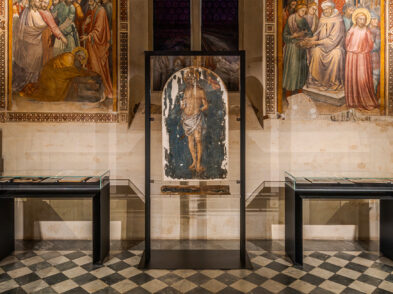
A steep, narrow staircase leads down into a former cellar beneath Palazzo Machiavelli in the Oltrarno. More than 600 years old, the partially underground space once housed the palace’s kitchens, where bread was baked, wine stored and the largely invisible work of running the household took place. Today, it has a different purpose: providing a place for contemporary artists to experiment, research and develop their practice. This is Chiasso Perduto, an independent space dedicated to artistic residencies and experimental research in central Florence. Rather than serving simply as an exhibition venue, it invites artists to engage with a place, its history and culture, using these encounters as starting points for new work.
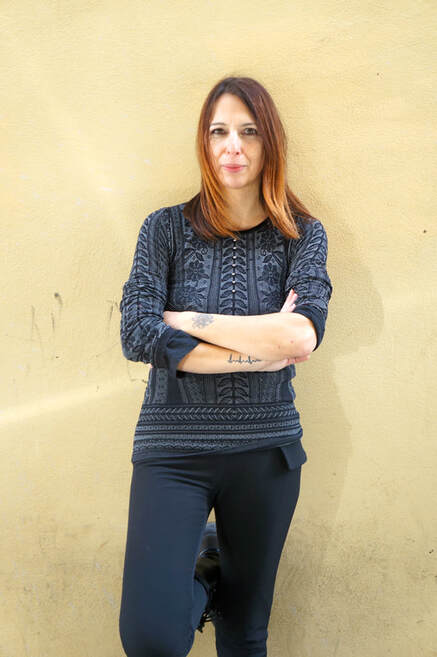 Francesca Morozzi
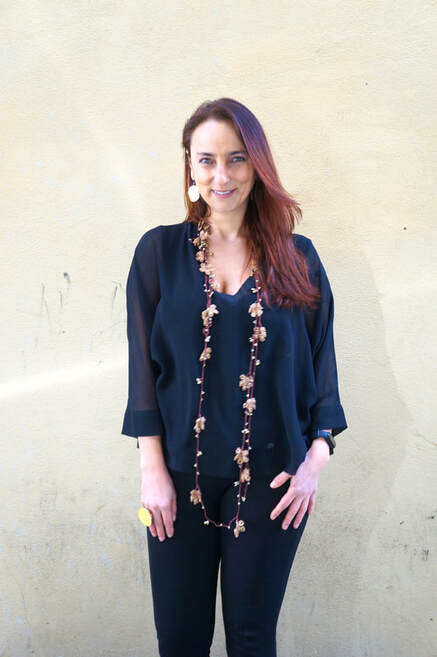 Sandra Miranda Pattin
The project began taking shape eight years ago, when artist and curator Francesca Morozzi started restoring the cellar. Previously used as a plumber’s workshop, the space was in a poor condition, but its character was worth preserving. The restoration retained the identity, allowing the architecture to remain integral to the artistic projects developed there. Morozzi oversees exhibition design, working alongside Colombian artist and curator Sandra Miranda Pattin, who guides artists throughout their residencies, from initial research to final presentation.
“We always try to think about how we can stimulate a reaction from the artists, which, of course, depends on each artist’s practice,” explains Miranda Pattin. “In the first few days, we have very intense dialogue and introduce exercises and activities.” The residency offers a form of learning outside an academic setting, bringing together emerging artists and those with established careers. Selection is based on portfolios and video interviews, with the curators considering whether applicants are at the right point in their development to benefit from the experience.
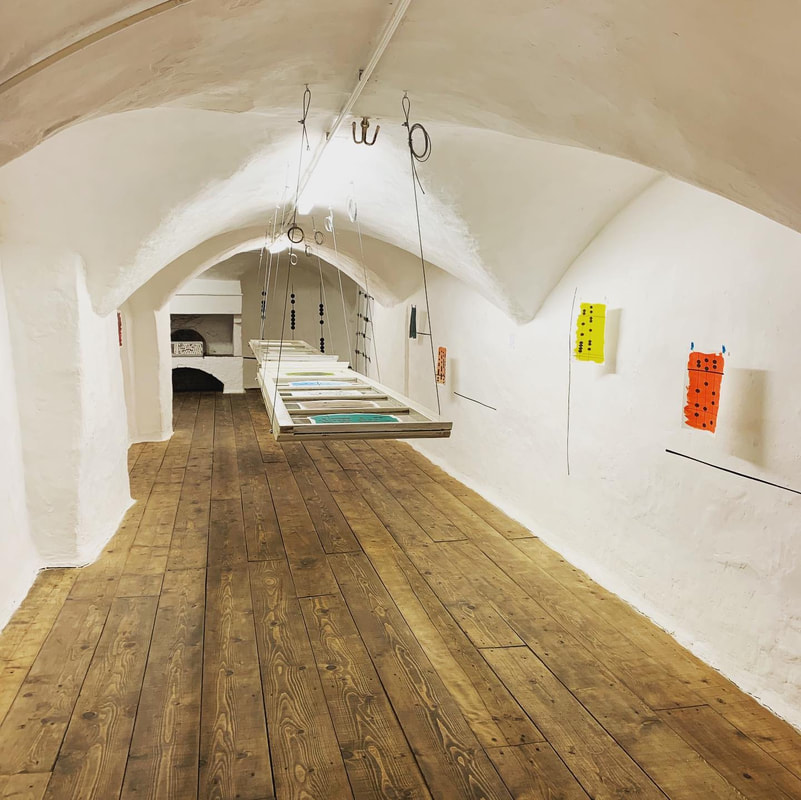
A public presentation is an important part of the process. Rather than keeping research confined to the studio, Chiasso Perduto invites visitors to encounter the results in the environment where they were created. “The reason we have a public opening is to give the artists some healthy pressure, to have something more tangible around their research,” says Miranda Pattin. “Many residencies don’t do that, but when you return to your usual routine in your studio, you can lose a little of what happened in that research space. An exhibition makes it more real and tangible. Of course, it’s also a way to celebrate what has happened.”
Open Studio: three perspectives on belonging
This approach came together in Open Studio, held on October 24 and 25, which presented the results of Chiasso Perduto’s first group artist residency. The project brought together Sara Zunino, Elie Chammaa and Joy Nevermind, three artists living and working in Florence whose backgrounds span Liguria, Lebanon and Peru. The residency invited them to explore migration not simply as movement between geographical locations, but as a condition that shapes identity, memory, belonging and perception. What does it mean to inhabit a place different from the one where we grew up? How much of what we leave behind continues to define us, and how does a new city change our sense of ourselves? The resulting works, Oblio, Un pesce fuor d’acqua (A Fish Out of Water) and LOOP, approach these questions through different materials and perspectives, making Florence an active part of their investigations.
Sara Zunino | Oblio
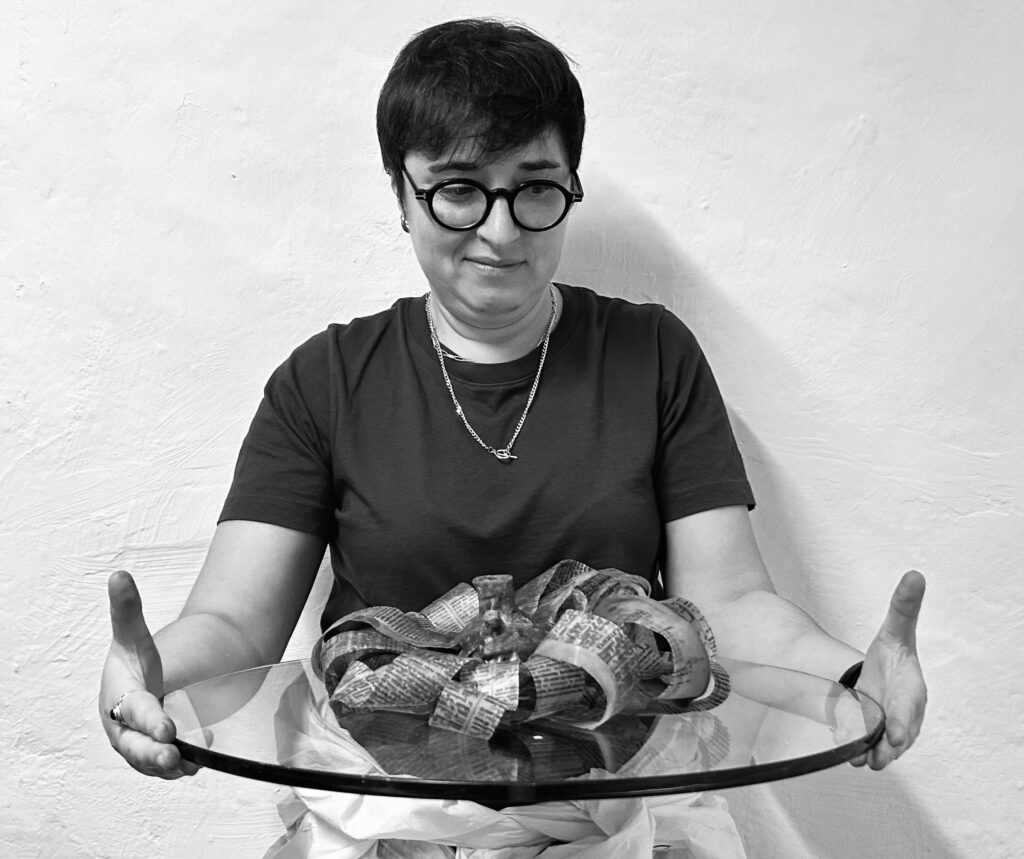
Born in Isernia and raised in Liguria, Sara Zunino explores memory, migration and the forms of invisibility that permeate contemporary society. In Oblio (Oblivion), everyday objects acquire new symbolic weight. A simple plastic bag recalls those given to migrants arriving on Italian shores, containing essential supplies. The bag becomes a symbol of what remains of home when individual identity risks being reduced to numbers. The few personal belongings a migrant adds to the contents of the bag can turn an otherwise identical container into something individual: a reminder of who they are and where they come from.
Zunino also turns her attention to the mop, using it to explore cleaning and care work, often performed by foreign workers and largely invisible within the spaces it keeps functioning. Such labour tends to disappear precisely when it is carried out, despite being essential to everyday life.
The artist draws on her own experience of having to work in cleaning, despite being a teacher. “I suddenly disappeared,” she explains, describing how her work remained visible while she felt that she, as a person, had become invisible. Through these objects, Zunino questions how society decides what deserves attention and what can remain in the background.
Elie Chammaa | Un pesce fuor d’acqua
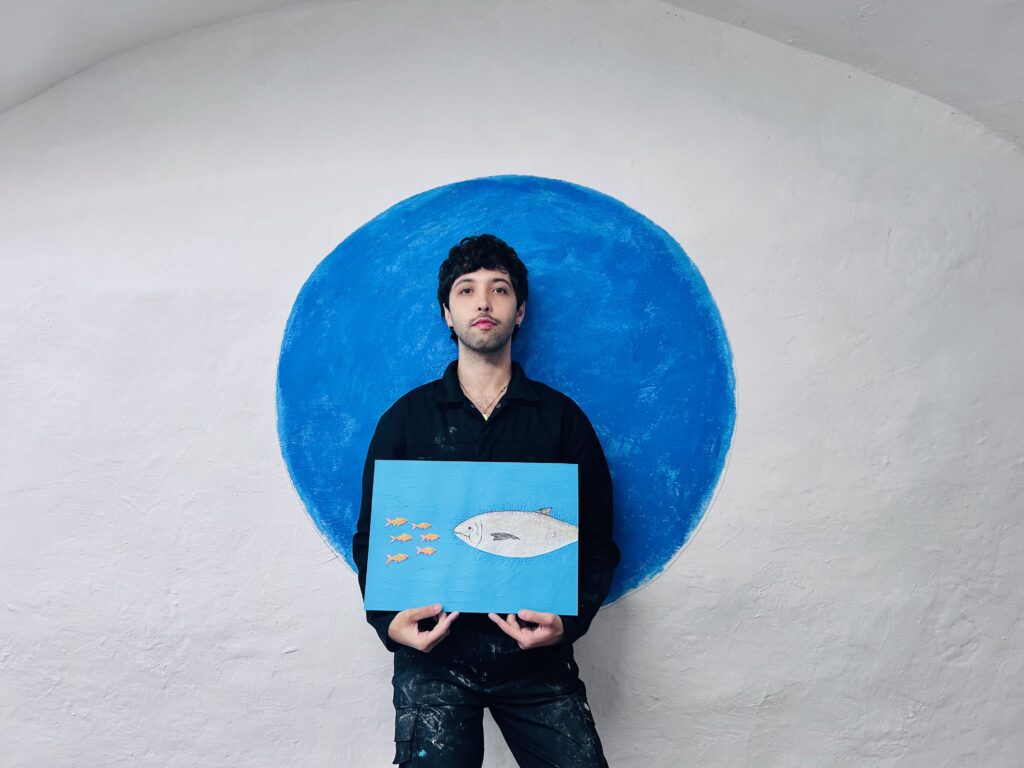
For Lebanese artist Elie Chammaa, born in Beirut and living between Beirut and Florence, the Arno provides the starting point for a reflection on belonging.
In his predominantly painting-based practice, autobiographical experiences intersect with themes of identity, vulnerability and loneliness. Here, the fish, a silent, almost unnoticed presence in the river, becomes a metaphor for someone searching for their place within an established social and cultural environment.
Chammaa was struck by the large fish in the Arno that pass largely unnoticed. The image also reflects his own experience of living in Florence, which he describes as a succession of ups and downs. Having grown up in Lebanon, marked by instability and conflict, adapting to a safer environment was not necessarily straightforward.
In his works, the fish shifts between threat and comfort. At times, it represents the anxiety of arriving somewhere unfamiliar; elsewhere, it evokes the carefree life left behind or the gradual process of regaining control. Through mural painting and sculptural interventions, Chammaa turns the river into an imaginary landscape where feeling out of water becomes a universal question of the distance between where we find ourselves and where we feel we belong.
Joy Nevermind | LOOP
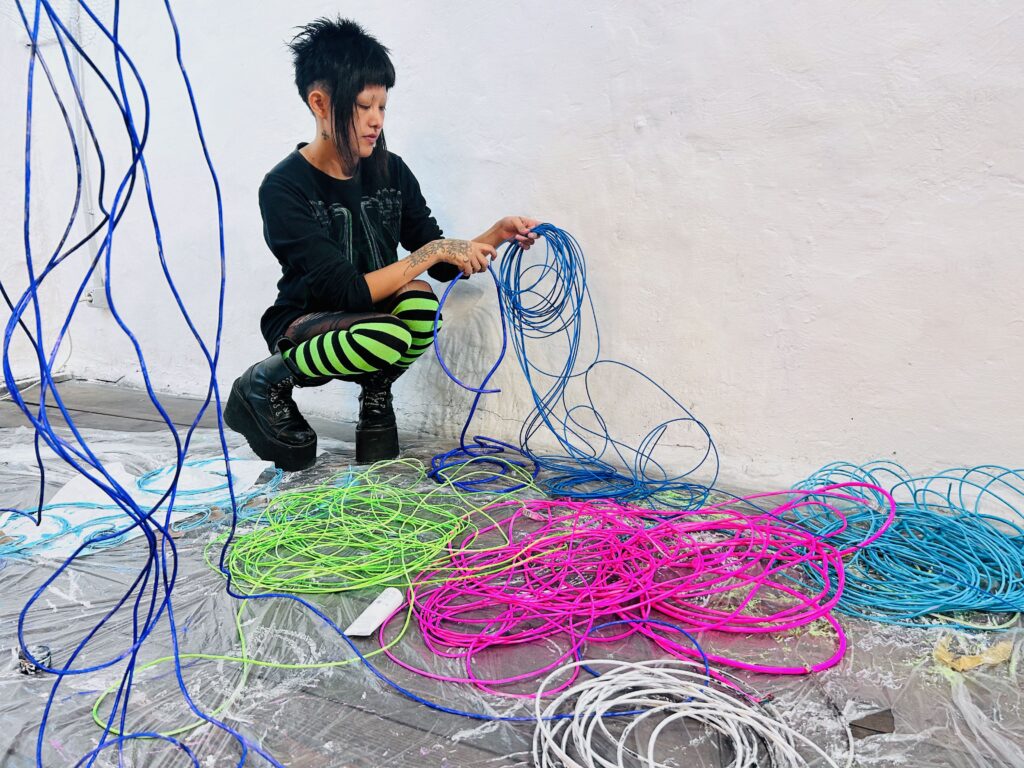
Peruvian artist Joy Nevermind (Andrea Joy Bravo) explores displacement through the relationship between physical space and the virtual world. Influenced by kawaii and cyberpunk aesthetics, her work examines how digital environments, video games and virtual identities shape our perception of reality. In Florence, a city dense with historical imagery and architectural detail, she considers how unfamiliar surroundings can produce a sense of perceptual overload. Her starting point is the ornamental patterns on metal plaques set into the ground, which she reworks through illuminated cables, installation and video. The resulting environment moves between physical presence and digital immersion. Fluorescent cables evoke technology, while video projections create uncertainty about what is physically present and what belongs to the virtual world.
The installation also features Yukio, an alter ego developed by Nevermind as a possible evolution of herself, a human-cyborg figure imagined as physically and psychologically more advanced than a human being.
A lock of the artist’s own hair introduces an intimate autobiographical element. Having arrived in Florence a year earlier, Nevermind uses hair that has grown during her time in the city as physical evidence of her experience, connecting her real body, virtual character and temporary surroundings.
For Nevermind, disorientation can be shared by migrants and tourists alike as they encounter an unfamiliar reality. LOOP translates that sensation into an installation that questions the boundary between the world we inhabit and the version of it we construct in our minds.
Find out more at chiassoperduto.com.